Environmental Film Festival @ IIC, New Delhi [Dec 6-8, Free Entry]: Registration Open – NoticeBard
Alert: Bengaluru In For A Severe Water Crisis, Warns Deputy Chief Minister
Chronology of Indian Environmental Laws
In the Constitution of India it is clearly stated that it is the duty of the state to ‘protect and improve the environment and to safeguard the forests and wildlife of the country’. It imposes a duty on every citizen ‘to protect and improve the natural environment including forests, lakes, rivers, and wildlife’. Reference to the environment has also been made in the Directive Principles of State Policy as well as the Fundamental Rights. The Department of Environment was established in India in 1980 to ensure a healthy environment for the country. This later became the Ministry of Environment and Forests in 1985.
The constitutional provisions are backed by a number of laws – acts, rules, and notifications. The EPA (Environment Protection Act), 1986 came into force soon after the Bhopal Gas Tragedy and is considered an umbrella legislation as it fills many gaps in the existing laws. Thereafter a large number of laws came into existence as the problems began arising, for example, Handling and Management of Hazardous Waste Rules in 1989.
Following is a list of the environmental legislations that have come into effect:
General
Forest and wildlife
Water
Air
General
1986 – The Environment (Protection) Act authorizes the central government to protect and improve environmental quality, control and reduce pollution from all sources, and prohibit or restrict the setting and /or operation of any industrial facility on environmental grounds.
1986 – The Environment (Protection) Rules lay down procedures for setting standards of emission or discharge of environmental pollutants.
1989 – The objective of Hazardous Waste (Management and Handling) Rules is to control the generation, collection, treatment, import, storage, and handling of hazardous waste.
1989 – The Manufacture, Storage, and Import of Hazardous Rules define the terms used in this context, and sets up an authority to inspect, once a year, the industrial activity connected with hazardous chemicals and isolated storage facilities.
1989 – The Manufacture, Use, Import, Export, and Storage of hazardous Micro-organisms/ Genetically Engineered Organisms or Cells Rules were introduced with a view to protect the environment, nature, and health, in connection with the application of gene technology and microorganisms.
1991 – The Public Liability Insurance Act and Rules and Amendment, 1992 was drawn up to provide for public liability insurance for the purpose of providing immediate relief to the persons affected by accident while handling any hazardous substance.
1995 – The National Environmental Tribunal Act has been created to award compensation for damages to persons, property, and the environment arising from any activity involving hazardous substances.
1997 – The National Environment Appellate Authority Act has been created to hear appeals with respect to restrictions of areas in which classes of industries etc. are carried out or prescribed subject to certain safeguards under the EPA.
1998 – The Biomedical waste (Management and Handling) Rules is a legal binding on the health care institutions to streamline the process of proper handling of hospital waste such as segregation, disposal, collection, and treatment.
1999 – The Environment (Siting for Industrial Projects) Rules, 1999 lay down detailed provisions relating to areas to be avoided for siting of industries, precautionary measures to be taken for site selecting as also the aspects of environmental protection which should have been incorporated during the implementation of the industrial development projects.
2000 – The Municipal Solid Wastes (Management and Handling) Rules, 2000 apply to every municipal authority responsible for the collection, segregation, storage, transportation, processing, and disposal of municipal solid wastes.
2000 – The Ozone Depleting Substances (Regulation and Control) Rules have been laid down for the regulation of production and consumption of ozone depleting substances.
2001 – The Batteries (Management and Handling) Rules, 2001 rules shall apply to every manufacturer, importer, re-conditioner, assembler, dealer, auctioneer, consumer, and bulk consumer involved in the manufacture, processing, sale, purchase, and use of batteries or components so as to regulate and ensure the environmentally safe disposal of used batteries.
2002 – The Noise Pollution (Regulation and Control) (Amendment) Rules lay down
such terms and conditions as are necessary to reduce noise pollution, permit use of loud speakers or public address systems during night hours (between 10:00 p.m. to 12:00 midnight) on or during any cultural or religious festive occasion
2002 – The Biological Diversity Act is an act to provide for the conservation of biological diversity, sustainable use of its components, and fair and equitable sharing of the benefits arising out of the use of biological resources and knowledge associated with it
Forest and wildlife
1927 – The Indian Forest Act and Amendment, 1984, is one of the many surviving colonial statutes. It was enacted to ‘consolidate the law related to forest, the transit of forest produce, and the duty leviable on timber and other forest produce’.
1972 – The Wildlife Protection Act, Rules 1973 and Amendment 1991 provides for the protection of birds and animals and for all matters that are connected to it whether it be their habitat or the waterhole or the forests that sustain them.
1980 – The Forest (Conservation) Act and Rules, 1981, provides for the protection of and the conservation of the forests.
Water
1882 – The Easement Act allows private rights to use a resource that is, groundwater, by viewing it as an attachment to the land. It also states that all surface water belongs to the state and is a state property.
1897 – The Indian Fisheries Act establishes two sets of penal offences whereby the government can sue any person who uses dynamite or other explosive substance in any way (whether coastal or inland) with intent to catch or destroy any fish or poisonous fish in order to kill.
1956 – The River Boards Act enables the states to enroll the central government in setting up an Advisory River Board to resolve issues in inter-state cooperation.
1970 – The Merchant Shipping Act aims to deal with waste arising from ships along the coastal areas within a specified radius.
1974 – The Water (Prevention and Control of Pollution) Act establishes an institutional structure for preventing and abating water pollution. It establishes standards for water quality and effluent. Polluting industries must seek permission to discharge waste into effluent bodies.
The CPCB (Central Pollution Control Board) was constituted under this act.
1977 – The Water (Prevention and Control of Pollution) Cess Act provides for the levy and collection of cess or fees on water consuming industries and local authorities.
1978 – The Water (Prevention and Control of Pollution) Cess Rules contains the standard definitions and indicate the kind of and location of meters that every consumer of water is required to affix.
1991 – The Coastal Regulation Zone Notification puts regulations on various activities, including construction, are regulated. It gives some protection to the backwaters and estuaries.
Air
1948 – The Factories Act and Amendment in 1987 was the first to express concern for the working environment of the workers. The amendment of 1987 has sharpened its environmental focus and expanded its application to hazardous processes.
1981 – The Air (Prevention and Control of Pollution) Act provides for the control and abatement of air pollution. It entrusts the power of enforcing this act to the CPCB .
1982 – The Air (Prevention and Control of Pollution) Rules defines the procedures of the meetings of the Boards and the powers entrusted to them.
1982 – The Atomic Energy Act deals with the radioactive waste.
1987 – The Air (Prevention and Control of Pollution) Amendment Act empowers the central and state pollution control boards to meet with grave emergencies of air pollution.
1988 – The Motor Vehicles Act states that all hazardous waste is to be properly packaged, labelled, and transported.
The above laws have been sourced from:
Environmental policy-making in India – The process and its pressure, TERI report.
Indian Environmental Legislations, list from the MOEF web site.
Strengthening Environmental Legislations in India, document by Centre for Environmental Law, WWF.
3,000 villages in Maharashtra may face acute drinking water shortage by year-end | The Indian Express
Watch “How This Robotic Farm Is Reimagining Agriculture” on YouTube
Indus Water Treaty – A Panel Discussion on Lok SabhaTV and an essay by Prof. Manohar Khushalani
Study on Water Management of the Indus River System
and its Implications for India’s Foreign Policy by Prof. Manohar Khushalani
Background
Two-thirds of India’s water resources potential come from only two river basins namely, the Indus and Ganga-Brahmaputra-Meghna (GBM). India occupies a unique position in this respect. There is abundance of Water and Hydro Power potential within the country and in its neighbouring states. The potential can be used both constructively as well as destructively.
India, Nepal, Bangladesh, Bhutan, Tibet, all share the Ganga- Brahmaputra- Meghna River basin. The Indus River Basin is shared by Tibet, Pakistan, India and Afghanistan
Pakistanis complain that numerous new Indian projects on the Jhelum and Chenab will create substantial live storage even in run-of-the-river hydel dams. This will empower India to reduce flows to Pakistan during the crucial sowing season, something that actually happened for a couple of days when the Baglihar reservoir was filled by India after dam completion. If as a result of better coordination between the two countries the dam had been filled up during monsoons it would have actually helped Pakistan . Understanding each other’s needs and constraints the key.
The average supply of water that reaches Pakistan is 104 million acre feet while the water that is consumed is 70 million acre feet. “The mismanagement in Pakistan was resulting in the loss of 34 million acre feet of water”, informed Mr. Qureshi when asked by Pak media as to whether Pakistan had taken up the issue, in Thimphu , of India trying to block the flow of rivers.
The total area of the Indus Basin, the area draining the, Himalayan water into the Arabian Sea, is about 365,000 square miles (934,000 sq.km), larger than Pakistan’s total area. The Indus River system consists mainly of the Indus River and its major eastern tributaries, the Jhelum, Chenab, Ravi, Beas and Sutlej Rivers. A number of rivers join the Indus on its west side. The largest is Kabul with its main tributary, the Swat River
The Indus Water Treaty is well known. The Treaty gave India exclusive use of waters of the eastern rivers, Ravi, Beas and Sutlej. Pakistan was given those of the western rivers – the Indus, Jehlum and Chenab. The division of the Indus river waters is a parallel of the partition of land between India and Pakistan.
Signed in 1960 by Prime Minister Jawaharlal Nehru and the then Pakistan President Ayub Khan, the Indus Water Treaty was brokered by World Bank. It is an surprisingly over generous water-sharing treaty, and is the only pact in the world that compels the upper riparian state to defer unequally to the interests of the lower riparian state.
The treaty gives Pakistan control over the three so-called “western” rivers – that flow from Jammu and Kashmir before entering Pakistan. On the other hand, India gets to control the three eastern rivers – Ravi, Beas and Sutlej that flow from Punjab.
This so called parity in the number of rivers is, however, quite misleading. It was what would constitute a himalyan blunder. The three rivers that India gets to control have an awfully low volume of waters compared to the other three. In all, Pakistan gets a whopping 80 MAF of water every year which is a massive 84 per cent share of the total waters, while India gets to use only 16 per cent. (Source: Wikipedia)
However it contained provisions for India to establish run-of- the-river power projects with limited reservoir capacity and flow control needed for feasible power generation. Availing the provision, India established several run-of-the-river projects most of which were not objected to by Pakistan. However, in case of Baglihar and Kishan-Ganga projects, Pakistan claimed that some design parameters were more lax than needed for power generation and provided India with excessive ability to accelerate, decelerate or block flow of river. This, it was felt, may give India a strategic leverage in times of tension or war.
During 1999-2004 India and Pakistan held several rounds of talks on the design of projects, but could not reach an agreement. After failure of talks on January 18, 2005 Pakistan raised six objections and took up the matter with the World Bank, which was a broker and signatory of Indus Water Treaty. In April 2005 the World Bank determined Pakistani claim as a ‘Difference’, a classification between less serious ‘Question’ and more serious ‘Dispute’ and in May 2005 appointed Professor Raymond Lafitte, a Swiss civil engineer, to adjudicate the difference.
Lafitte declared his final verdict on February 12, 2007, in which he partially upheld some objections of Pakistan declaring that pondage capacity be reduced by 13.5%, height of dam structure be reduced by 1.5 meter and power intake tunnels be raised by 3 meters, thereby limiting some flow control capabilities of earlier design. However he rejected Pakistani objections on height and gated control of spillway declaring these were conforming to engineering norms of the day.
Both parties (India and Pakistan) have already agreed that they will abide by the final verdict. This peaceful settlement of the only major discord in nearly half a century is an even greater achievement, considering the fact that the two neighbors have gone to war thrice on other issues.
On the flip side, according to one estimate, the Kabul river accounts for 20 to 30 MAF of total annual flows, the main Indus 100 MAF and the Jhelum and Chenab 60, while the Ravi, Beas, and Sutlej add another 40 MAF or so. Looking at it mathematically, India gave far more water to Pakistan than it got. Secondly China has built Senge-tsangpo hydropower station with cap of 6400 mw tributaries and upper reaches of Indus in the Ngari Prefuncture of Tibet, with no objections raised by Pakistan.
India has made large investments in water infrastructure, much of which brings water to previously water-scarce areas and some of it diverts water from flood prone areas. This has resulted in an economic shift, with once-arid areas or previously flood prone zones becoming the centers of economic growth, while the traditionally well-watered areas have seen comparatively sluggish growth. For the most part the results of this “hydraulic infrastructure platform” have been spectacular both nationally (through the production of food grains and electricity, for example) and regionally (where such projects have generated large direct and equally large indirect economic benefits). The poor have benefited hugely from such investments. The incidence of poverty in irrigated districts is one third of that in unirrigated districts .
The privatisation of Power has also contributed to this growth. The Mushrooming growth of large scale Hydro Power companies such as JP Hydro, Larsen and Toubro, GVK Power, Tata Power have contributed to greater availability of this clean source of power. Partial privatization of public sector companies such as NHPC and Power Grid Corporation has improved the climate for this source of power. Even the hitherto coal and gas based power generators such as NTPC have turned to Hydro Power. This augurs well for hydropower in India.
The first decade of the millennium has been marked by what has often been described as oil wars – confrontation over dwindling hydrocarbon fuel resources. Will the next decade be marked by confrontation over water and hydro energy, or will it be known for cooperation over sharing the natural resources?
How India manages its relations with its neighbours is going to be a key to the kind of economic progress it can make along its borders. Water is a key issue in its relationship with its neighbours. Even though it is a renewable resource it cannot be denied that fresh water is a dwindling resource. The key to India’s relationship with Pakistan, which have been largely conflict ridden, is a sharing of the waters of the Indus Basin, which could in fact be considered to be one of the success stories and perhaps an example for the rest of the world about how seemingly intractable bones of contention can be resolved through a rational and conciliatory approach.
Instead of going through the complications of assessing water requirement downstream of each of the rivers, a metaphorical knife was used to cut off and hand over three rivers to Pakistan and three to India. On the face of it, since all the six rivers of the Indus Basin run first through India and then go to Pakistan it seemed to be a brilliant stroke of statesmanship – an apparently visionary approach which made India willingly part with three of the six rivers even while it retained the right to draw power through run of the river schemes on those three rivers. Has the policy worked successfully only because India might have given more than it got? Out of the three bilateral issues, namely one in Baglihar, a conflict of interest arose which was resolved amicably. What about the other pending bones of contention namely the Tulbul Navigation Project and the 330MW Kishenganga Project? The negotiations stalled for long.
The unprecedented 2010 floods in Pakistan may have abated but the havoc caused by them have cast an unimaginable havoc on its economy. Conservative September estimates suggested that over 2000 persons had died and 21 million became refugees in their own country. Secondary damages to agricultural land and animal husbandry will take years to recoup. At one point about one-fifth of Pakistan’s total land area had gone under water. Flood waters had destroyed crops; an estimated 700,000 acres of cotton, 200,000 acres each of rice and sugar cane and 300,000 acres of wheat. This heavily impacted the agricultural economy which contributed 20.4% of Pakistan’s GDP in the earlier year. The cascading effect into industry and trade is has added to its economic woes.
Scientists have described this catastrophe as a once-in-a-century flood. Out of a Population of 168 million nearly 21 milion people have been affected by floods out of a total area of Pakistan of 796 095 square kilometers, the Flood-affected area is 160 000 square kilometers. In a country where already a large percentage of the population is living as refugees, an additional 1.85 million homes have been destroyed or damaged due to floods.
Pakistan is, thus at a fork in the road. It can either continue confrontationist policies which underlie present arrangements (or lack thereof) and face similar or perhaps bigger flood disasters in future, if anticipated climate change effects do materialise. Or it can chose to cooperate with countries in the Indus basin with a view to building an integrated system of storage dams, flood control installations and power generation stations which will help to modulate flows and avert floods, thereby benefitting Pakistan’s agriculture particularly its struggling farmers. The attendant hydropower potential is also huge and can be tapped for the energy-hungry Pakistani economy, as well as cross-border sales to India. The big question is whether the Pakistan’s rulers can change their confrontationist mindset to make this possible. If there was no deficit of trust India could have stored water even in the eastern rivers of the Indus basin to be used as a kind of buffer during floods. But, for that an integrated basin management is required, because the mighty rivers, follow their own course, they do not recognize man made political boundaries
For that a reality check is required in both the countries. A recent example of this was a very honest admission in 2010 by the former Pakistan Foreign Minister. While it is this kind of statesmanship and honesty that will help in getting a fresh look at this issue, on the other hand the sacking of the Pakistan’s Indus Commissioner, Syed Jamaat Ali Shah, who amongst other reasons was also discredited for making a similar pragmatic observation and the departure from Government of the pragmatic Shah Mehmood Qureshi, perhaps, indicates that moderates in Pakistan may not be able to mellow the debate.
There is a very good logic in understanding the socio-economic needs of the entire region namely Kashmir, Punjab in India and Pakistan, Pakhtoonkhwa, Sindh, Gujarat and Rajasthan. Assessing the genuine needs of populace in the two countries and trying to involve a cross border management plan for the entire region could perhaps become a key to breaking down the borders between the two countries and expanding the scope of cooperation in the region. Is it possible to achieve the impossible? But this is what all dreams are made of.
Of late, Pakistani militants, for lack of issues which could build up anti India sentiment, have started to focus on the Water as a contentious issue. It is therefore important to bring down the rhetoric by using an objective approach.
It will research long term implications for Indus basin countries (India, Pakistan and Afghanistan) in terms of water availability (for agriculture and individual consumption), hydropower, downstream economic impact , and social, political & security effects under (a) the present dispensation and (b) an optimally integrated river management along the lines of the Tennessee Valley Authority .
Kerala Floods As Water Level Rises, Mullaperiyar Dam In Kerala To Be Opened
The Tamil Nadu government, which owns and operates the dam located upstream of Idukki Dam, has informed that it may release water into the Periyar river on the Kerala side from Mullaperiyar reservoir due to higher inflows, an official release said.
Read More
https://www.ndtv.com/kerala-news/kerala-floods-as-water-level-rises-mullaperiyar-dam-in-kerala-to-be-opened-1900650
World’s Tallest Dam, Pancheshwar, an ambitious Indo-Nepal venture
About Pancheshwar Multipurpose Project
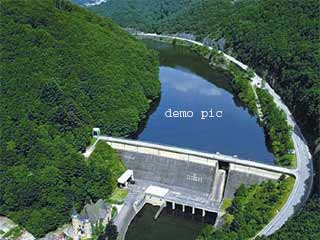
The Mahakali River basin, upstream from the proposed Pancheshwar High Dam site has drainage area of 12,100 Km2. PMP has been identified as a huge storage scheme to be developed so as to maximize peak power benefit in the order of 6,720 MW (Pancheshwar High Dam-6480 MW and Rupali Gad Re-regulating Dam-240 MW) with an annual average energy production of 12,333 GWh. The Poornagiri re-regulating dam is an alternative of Rupali Gad Re-regulating Dam from which additional 1000 MW power will be generated (PACO report, Additional Service, section 3, June 1992).
Location and Accessibility
The project area lies between 29° 07′ 30″ and 29° 48′ North latitude and 79° 55′ and 80° 35′ East longitude. It lies in the Mahakali zone of the Far Western Development Region of Nepal covering some parts of Darchula, Baitadi and Dadeldhura districts bordering India. At present, the Project site can be accessed by vehicle only through India. However, it can be accessed through Nepal by two days walking from Patan, Baitadi.
Pancheshwar High Dam
Pancheshwar High Dam project has been conceived as a huge storage scheme having a 315 m high rock fill dam with a central earthen core. With the “Normal Maximum Water Level” of 680 m elevation the reservoir area extends to 65 km upstream in Baitadi and Darchula districts. The crest length and the crest elevation would be 860 m and 695 m respectively. The “Normal Maximum Water Level” would provide live storage of 6.56 billion m3 of water and capable of generating 10,671 GWh of energy. Two identical underground powerhouses, one on each bank in Nepal and lndia of capacity of 324 MW have been proposed comprising 6 generating units of vertical Francis turbines having 540 MW capacity of each will be installed. Total installed capacity of the high dam project will be of 6480 MW.
A re-regulating dam at Rupaligad is conceived as integral component of PMP to minimise social and environmental Impacts due to high fluctuation of water level and flow in downstream when high dam power plants operate at peaking load. Poornagiri Re-regulating Dam has been identified as an alternative of the Rupaligad RRD.
Rupaligad Re-regulating Dam
An 83 m high concrete gravity dam on Mahakali River near Samniya settlement is proposed as Rupali Gad Re-regulating Dam which is about 25 km downstream from Pancheshwar High Dam. The dam site is located at about 1.75 km downstream from the confluence of Rupali Gad with Mahakali River in Dadeldhura District. At maximum water level of 420 masl, it stores 70 million m3 of water as live storage and produces 240 MW power with 1662 GWh of annual energy.
Poornagiri Re-Regulating Dam
This dam is located at 64 km downstream from High dam. DPR study of 1995 has proposed two options; (a) 117 m high rock fill dam, and (b) 124 m high concrete gravity dam. These are for re-regulating the water of the high dam. The power production of the dam is 1000 MW in both options.
Copyright © Pancheshwar Multipurpose Project.
Additional Information provided by Nepal Energy Forum
Pancheshwar project will have tallest dam in the world
Interview with Mahendra Gurung, CEO of Pancheshwar Development Authority
The proposal to build Pancheshwar Multi-purpose Project on the Mahakali River in far-western Nepal was floated by Nepal and India almost two decades ago. However, nothing happened for a long time. Things finally started moving forward when Indian Prime Minister Narendra Modi visited Nepal in August 2014. Then in September 2014, the governing body of the Pancheshwar Development Authority, the project implementing body, met for the first time. This led to formal establishment of the PDA. Recently, WAPCOS Ltd, an Indian state-owned company hired to prepare the detailed project report, submitted the final draft of the DPR. Report says Pancheshwar, along with Rupaligad project, can generate around 12 billion units of electricity per year. Rupak D Sharma of The Himalayan Times caught up with PDA CEO Mahendra Gurung to know more about findings of study conducted by WAPCOS.
WAPCOS has just submitted the final draft of detailed project report (DPR) of Pancheshwar Multipurpose Project. How different is it than the previous ones?
Nepal had initially prepared the DPR of Pancheshwar in 1995. Then in 2003, India came up with its own
project report. India had largely prepared the report based on data used in DPR prepared by Nepal. The 1995 DPR had said the installed capacity of the project would be 6,480 megawatts. But the latest report says the installed capacity of the project would be 4,800 MW. In other words, there has been a downward revision in the project’s installed capacity. This is one of the differences.
Why was the figure revised?
Although the 1995 DPR was said to have been prepared on the basis of studies conducted from 1962 to 1992, not all data were collected from the Mahakali River where the project is being built. It is now known that the report had also used data collected from Karnali Chisapani. Also, research has shown that the country had started keeping records of Mahakali River from 1985 or 1986. So, the 1995 DPR was prepared based on data collected since 1985 or 1986. But when WAPCOS Ltd conducted its study in 2015, it used the previous data and data obtained after 1995 as well. So, this study is more in-depth. During the course of study, WAPCOS found that the level of precipitation, or rainfall, had fallen for five consecutive years from 1995 to 2000, indicating reduction in water level in the river. This is one of the reasons why the installed capacity had to be revised. Another reason for downward revision is the provision in the Mahakali Treaty signed by Nepal and India in 1996, which says five per cent of the water in the river should not be used for electricity generation. This means the latest figure on installed capacity was derived without factoring in power that could have been generated through five per cent of the water in the river. However, in reservoir projects, like Pancheshwar, megawatt alone does not reflect the true picture. This is because electricity generation through reservoir projects depends on when and how the water is used.
Could you please elaborate on what you just said?
What I’m trying to say is reservoir projects give us the option to use all the water at once or use a certain quantity of water multiple times to generate electricity. So, the quantum of energy that we generate per annum is more important than megawatts. And the latest report shows the project can generate almost similar quantum of electricity as estimated in 1995. However, this is just a draft report. Now, governments of both the countries will have to review the findings and lay their suggestions, following which the DPR would be finalised.
WAPCOS has also submitted a report on development of Rupaligad re-regulating dam, isn’t it? What does it say?
Pancheshwar project is expected to release huge quantity of water for certain hours every day when electricity is being generated. If all the water released by the project is allowed to flow downstream, it’ll create havoc in settlements located on river banks. This is why we are building a re-regulating dam. This dam will regulate the flow of water released by Pancheshwar project to support irrigation in Nepal and India. The dam will also control floods. The 1995 DPR prepared by Nepal and the Indian report of 2003 had recommended that Rupaligad dam be built 25 km away from Pancheshwar’s dam site. But the latest report has said this distance is insufficient and has proposed development of Rupaligad dam at a distance of 27.5 km from Pancheshwar dam site. However, the installed capacity of the Rupaligad project has remained unchanged at 240 MW. Another good news is that annual energy generation capacity of this project has been revised upwards to around 1,500 or 1,600 gigawatt-hours (1.5 or 1.6 billion units).
Will these dams be quake resistant, as far-western region is also said to be earthquake prone area?
We had previously conducted geological study in the area where the projects are being developed. Recently, an in-depth seismic study was also conducted. Based on these studies, we have also reviewed the designs of the two dams. These dams will be able to withstand earthquakes of up to 8.5 magnitude.
How many families do you think need to be relocated from the project site?
The area where the project is being developed is mostly covered by hills and does not have many human
settlements. As per the latest data, 22,765 people will have to be relocated in Nepal. This is an indication that land acquisition will not pose a big problem for us. However, I don’t have exact data on Indian families that will be affected by Pancheshwar and Rupaligad projects. We will have to conduct a detailed study in this regard.
How big will the reservoir be?
The reservoir will stretch 65 km upstream from the Pancheshwar dam site. It can store six billion cubic metres of water.
And how tall will the dam be?
It would be around 315 metres tall. Once the construction of this dam is over, it would be the tallest in the world. However, some experts are against the idea of creation of tall dams. But had India not built Tehri Dam, which is one of the tallest dams in the world, Dhauliganga flood of 2013 would have swept away Haridwar and Rishikesh.
How much do you think would the entire project cost?
As per latest estimates, it would cost INR 300 billion (Rs 480 billion) to build the project. This cost includes construction of both Pancheshwar and Rupaligad projects. This means per MW construction cost of the project hovers around Rs 95 million. So, we can say this project is going to be one of the cheapest projects being developed in the country.
And how much do you think would it cost to generate each unit of electricity from the project?
The electricity production cost hovers around INR five-six (Rs eight to Rs 9.6) per unit. This price is
quite high considering the cost of electricity in India. So, we are scouting for options to reduce the production cost.
What if the energy produced by the project becomes surplus for Nepal. Against that backdrop, can Nepal sell electricity in India?
Mahakali Treaty says a portion of Nepal’s share of energy shall be sold to India. The treaty also says that the quantum of such energy and its price shall be mutually agreed upon by the two parties. So, we have the option of selling electricity to India. Currently, India has shown interest to purchase electricity from us. But it has said Nepal should explicitly say the quantum of energy that it intends to sell at the earliest. This is because India can create its energy policy based on the quantum of electricity that we plan to sell. Also, India has said electricity should be sold at a competitive price. We have delivered this message to the government.
How will Nepal and India share costs to develop the project?
Mahakali Treaty says the project cost will have to be borne by both the countries in proportion to the benefits they reap. However, as of now, we don’t know how much each country has to invest. We’ll discuss this matter in the coming days. What is currently known is that electricity generated by the project will be distributed equally. For this, power houses comprising six turbines with electricity generating capacity of 400 MW each will be built on two banks of the river. The power generated from one bank, which falls in the Nepali territory, will be used by Nepal and the power generated from the other bank, which falls in the Indian territory, will be consumed by India. However, we are yet to determine other benefits that the two countries are likely to reap from the project. Some other benefits of this project are irrigation and flood control. In terms of irrigation, India will benefit the most. This is because India has lots of agricultural land, whereas we don’t have much irrigable land in our territory. This means we will not be able to take maximum benefit from the irrigation project even though Nepal can exercise its prerogative over water use. Latest studies show that even if we supply water to all the agricultural land from Kanchanpur to Kailali through this project, we cannot irrigate more than 100,000 hectares of land. In contrast, India has already said the project will help it to irrigate 1.6 million hectares of land.
Mahakali Treaty had become a political hot potato some two decades ago and had even split one of the largest political parties? Do you think similar differences will surface this time?
Most of the political parties have now become mature. Also, most of the political leaders have been engaged in this project. For instance, the treaty was signed when Sher Bahadur Deuba of Nepali Congress was the prime minister. At that time, KP Sharma Oli of the Communist Party of Nepal-Unified Marxist Leninist had backed the treaty. He is now the country’s prime minister. Lately, it’s the Unified Communist Party of Nepal (Maoist) and its splinter groups that create obstructions for hydro projects. But the concept of the Pancheshwar Development Authority (PDA) had taken a concrete shape during the time when Pushpa Kamal Dahal (Prachanda) was the prime minister. At that time, the management structure of PDA was also created. Then during the time when Madhav Kumar Nepal was prime minister, Terms of Reference of PDA was framed. So, major political leaders are aware of Pancheshwar project. However, if the project hits a major roadblock, locals, who are tired of waiting for implementation of the project, would protest.
So when will the commercial operation of the project begin?
If everything goes smoothly, we’d be able to complete all pre-construction works within three years. During the pre-construction phase, we will divert the flow of water from the river through tunnels. We will be building eight diversion tunnels for the purpose. We will also have to build access roads and suspension bridges to link both the dam sites. Also, hydro-metrological stations have to be renovated or set up. Once these works are complete, it will take another eight to 10 years to build the projects. Within this period, some units (turbines) will come into operation. But at least 10 to 12 years will be required to fully complete the project. During my three-year tenure as CEO, I intend to initiate the work of building the tunnels. It is my wish to see prime ministers of both the countries inaugurate the work.
Lastly, what do you intend to do in 2016?
We will set up our headquarters in Mahendranagar. We will also start building suspension bridges and access road to link project sites. We will also renovate or set up hydro-metrological stations. Besides, we will also finalise administrative and financial by-laws to ensure smooth operation of PDA.
Source :
The Himalayan Times.
www.nepalenergyforum.com
Women Led Nirmal Bharat Abhiyan by Urvashi Prasad
Background
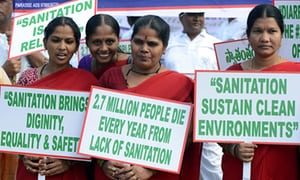
Sanitation is a key issue for women, consistent with their need for privacy, dignity, safety and self respect. Lack of basic sanitation and safe water significantly impacts the health and safety of women and leads to low enrollment and high drop out particularly for adolescent girls at puberty in schools. Menstruation, pregnancy, and postnatal recovery also become problematic if there are not adequate sanitation facilities to properly manage them.
The issue of poor sanitation and hygiene impacting women becomes even more critical when we look at the alarming status of sanitation facilities in the world. It has been estimated that 2.6 Billion worldwide out of which 1 billion women have no access to sanitation facilities. With around 60% of all open defecation in the world being in India and manual scavenging still prevalent in about 8 lakh insanitary latrines out of which around 5 lakh are in rural areas and around 3 lakh in urban areas alone as per census 2011 the sanitation scenario in India is rather poor.
Clearly we must pay greater heed to women’s voices in our development thinking, planning and action and give sanitation higher priority. There are many examples of the key role which women have played in bringing about better environmental awareness and health in different parts of the world. This issue is not of resources alone but of purposeful and genuine community participation and management in which the central role of women is recognized.
The importance of involving both women and men in the management of water and sanitation has been recognized at the global level, starting from the 1977 United Nations Water Conference at Mardel Plata, the International Drinking Water and Sanitation Decade (1981-90) and the International Conference on Water and the Environment in Dublin (January 1992), which explicitly recognizes the central role of women in the provision, management and safeguarding of water and sanitation. The close interlinkages between gender equality and women’s empowerment (goal 3), and target 10 on access to water and sanitation are illustrated in the table below:
| MDG relevant targets | Ensure environmental sustainability (Goal 7 )
Halve by 215 the proportion of people without sustainable access to safe drinking water and basic sanitation (target 10) |
|
| Contribution of domestic water supply and sanitation | Contribution of sound water resources management and development | |
| Promote gender equality and empower women ( Goal 3) | Reduced time, health and care –giving burdens from improved water services give women more time for productive endeavors, adult education, empowerment activities, leisure
Convenient access to water and sanitation facilities increase privacy and reduce risk to women and girls of sexual harassment/assault while gathering water. Higher rates of child survival are a precursor to other demographic transition to lower fertility rates; having fewer children reduces women’s households responsibilities and increases their opportunities for personal development. |
Community based organizations for water and sanitation management can improve social capital of women by giving them leadership and networking opportunities and building solidarity among them. |
- Source: Millennium Project Task Force on Water and Sanitation, Health, Dignity and Development: What will it take? Stockholm, Stockholm International Water Institute, 2005.
The sanitation challenge that rural India, with its large population size & different hydro-geological regions faces and traditional cultural practices in the area of sanitation is unique and unparalleled in the world. To address this challenge, for over a decade, the Ministry of Drinking Water and Sanitation, Government of India has been running a Total Sanitation Campaign (TSC). TSC seeks to provide access to individual toilets to all rural households, toilet units in all Schools and Day care Centres “Anganwadis” and waste management to ensure clean environment in the villages. To give a fillip to the TSC, Government of India also launched the Nirmal Gram Puraskar (NGP) that sought to recognise the achievements and efforts made by Gram Panchayats in ensuring full sanitation coverage.
The TSC has been recently revamped as the Nirmal Bharat Abhiyan(NBA), “Clean India Campaign”. The NBA has key objectives as the acronym suggests- First it aims at making Gram Panchayats (GPs) “Nirmal” which means each and every individual in the village has a good quality toilet which is usable and sustainable, all people have access to water and each village has a self sustainable solid and liquid waste management system so as to ensure clean and healthy living environment. The second is that it sets time bound targets to ensure that “Bharat” becomes Nirmal which means that NBA entails creation of awareness and provision of sanitary facilities to entire communities in a phased, saturation mode with creation of ‘Nirmal Grams’ as outcomes. Under the Nirmal Bharat Abhiyan women have been given a central role in planning and implementing of the sanitation programme.
Role of women in Nirmal Bharat Abhiyan
The Nirmal Bharat Abhiyan (NBA) gives a special focus to address the sanitation needs of women who play a key role in planning, implementation, monitoring of the programme. Women as change agents in the Nirmal Bharat Abhiyan (NBA) have had a tremendous impact in many Panchayats. They have been involved not only in mobilizing communities to create a demand for sanitation facilities but also actual construction of toilets and managing production centers and rural sanitary marts for provision of affordable sanitary ware.
Women as change agents for promoting sanitation
Women play a crucial role in taking up community mobilization and awareness generation in rural sanitation programme. The major themes have been women’s dignity, comfort, status, operation and maintenance, cost effectiveness, technological options etc. which are being used. Women as mothers can influence the practice of using sanitation facility among young girls and boys. The awareness building covers the entire community but is targeted more specifically at women since the absence of water and sanitation affects them more dramatically and more immediately. Sustained discussions compel women to examine the hardships in their lives and lead them to understand that most can be directly linked to the lack of access to convenient safe water sources, sanitation systems and hygiene. Once women become powerful stakeholders they are powerful advocates within the family to push for implementation of Water and sanitation (WATSAN) projects in the village. IEC strategies need to be more gender sensitive keeping in view that women are less mobile and literate than men and use different communication strategies.
Recently a national communication strategy framework under NBA has been developed by Government of India in coordination with UNICEF giving emphasis on Inter Personal Communication (IPC) at the grassroots level. Women are envisaged to play a key role in rolling out this communication strategy at the grassroots. In order to strengthen communication machinery at the village level with participatory social mobilization, guidelines for engagement of village level motivators (Swachchhata Doot / Sanitation Messengers) have been issued separately. As part of this strategy, in addition to Swachchhata Doots, field functionaries like Bharat Nirman Volunteers, ASHA, Anganwadi workers, School Teachers, majority of whom are women are being engaged at the village level for demand creation and taking up behaviour change communication. The motivator can be given suitable incentive from the funds earmarked for IEC. The incentive will be performance based i.e. in terms of motivating the number of households and Schools/ Anganwadis to construct latrines and use them. Even in a patriarchal State like Haryana, an innovative IEC tool of taunting the male chauvinism that if they do not provide for a toilet how can their women be safe and healthy. Women also have formed Vigilance Committees to monitor sanitation promotion. Slogans like “No toilet No bride” has become the launching pad for the IEC campaign there.

Women sanitary complexes
To address the sanitation needs of women NBA has the provision of setting up Women’s Sanitary complexes comprising an appropriate number of toilet seats, bathing cubicals, washing platforms, wash basins in a place in the village acceptable to women and accessible to them. These Complexes apart from providing easy access to sanitation and bathing facilities but also provide spaces for women to discuss their problems and organize themselves to undertake several of their common issues. The operation and maintenance of these facilities may be undertaken by Women’s Self Help groups/Village Panchayats. User families may be asked to contribute a reasonable monthly user charge for cleaning & maintenance. Maximum unit cost prescribed for a community sanitary complex under NBA is up to Rs.2 lakh. Tamil Nadu has pioneered in setting up Women’s Sanitary Complexes. However issues of operation and maintenance of these facilities has limited its expansion in other States where women’s SHG are not playing a key role
School sanitation and hygiene education (SSHE)
Considering the debilitating impacts of poor water and sanitation facilities on children’s health and learning ability, particularly for girls, SSHE component is an integral component of the NB A. The programme provides incentive of Rs. 35,000/- (Rs. 38,500 in case of hilly and difficult areas) for provision of child friendly toilets, urinals, handwashing facilities and health hygiene Education in all Government and Government aided schools. In this component separate toilet units for girls and boys are to be provided in all Co-educational schools, which are to be treated as two separate units. Under NBA 12,48,771 school toilets have been constructed out of which
The challenge now is to make SSHE component a gender sensitive programme, the key features of the which are given below:
Gender Sensitive School Sanitation Programme
- A minimum package of water and sanitation facilities with appropriate , child friendly and gender – sensitive designs are available in all schools.
- Provision of separate toilet and urinal facilities for girls: Safe location and lock
- Appropriate location of toilets for girls to ensure security and access
- Adequate ratio of toilets and urinals with more facilities for girls to reduce waiting time
- Privacy and security: Every cubical with doors and latches, walls at least 6 feet high
- Education on use and maintenance of facilities in schools : students clubs /committees. All children , all ages , all groups , are actively involved in school sanitation and hygiene education and both boys and girls share the responsibility of maintenance
- Urinals with foot rests to support squatting
- Sanitary napkin vending machines
- Safe disposal of sanitary napkins by setting up incinerators
- Menstrual hygiene and health education programmes.
Role of Women’s Self Help Groups (SHG) – Sanitation for Education, Health and Economic Empowerment
Women Self Help Groups are at the fore front of NBA. They are not only involved in construction of toilets as masons but also utilize group savings / bank linked finance as revolving fund for toilet construction. They act as a channel of communication at village level by becoming behavior change leaders through education and motivation to other women and by living within community, generating demand for sanitation facilities through communication and peer pressure, organizing discussions on sanitation related issues within their groups. SHGs operate Production Centres and Rural Sanitary Marts and provide both an alternative delivery mechanism for low cost, sustainable and easily available sanitary ware facilities in rural areas and create a sense of economic and social empowerment for the women. The sanitary napkin production units set up in some of the States of Tamil Nadu and Haryana not only address the special sanitation and health needs of women but also are providing employment. Recently NBA is being converged with the social development scheme of National Rural Livelihood Mission, implemented by Ministry of Rural Development wherein SHGs are being involved in undertaking sanitation promotion activities.
The making of a Nirmal village by Womens SHG
A unique public- private- community partnership between the SSHE programme of the NBA undertaken by the Panchayati Raj Members and the State Government, Tamil Nadu, TVS Motors a local Corporate company and the dynamic youth, children, girls, women SHGs and village community of Thiruvidandai Panchayat and Nemmeli Village Panchayat of Kancheepuram District of Tamil Nadu. The Tiruvidenthai Sanitary Napkin Unit was set up as a joint venture Unit with tripartite investments from Shri Cheema Foundation the Corporate Social Responsibility of a local company- TVS Electronics with the Government of India and women SHG . The unit was started with a twin objective of providing low cost high quality napkins to the rural women and adolescent girls in their vicinity itself and providing livelihood and income generation opportunities for women. The basic training for the unit was provided by Ms. Nagalakshmi of the Mother Teresa Group while the support for setting up unit, managerial and production facilitation is by TVS electronics. The unit has also innovated in producing a variety of models ranging from beltless, belt model, maternity special wings model, baby diapers, adult diapers all made from simple locally available materials like cotton, cloth etc.
To make these napkins easily available in schools and enhance their usage an innovative concept of vending machines was developed and these were set up in secondary and higher secondary schools wherein girls can purchase napkins by dropping a two rupee coin in an automatic vending machine as easily as they purchase a toffee or a snack! For safe disposal of the napkin a cost effective user friendly, simple manually operated technology of incinerators was developed and installed for composite waste disposal of sanitary waste in schools and women’s sanitary complexes. A comprehensive Menstrual Health Hygiene Education programme is also being undertaken in not only the schools of this village but several other villages of Tamil Nadu.
In just a year this innovative and successful women’s enterprise for addressing women’s sanitation needs and integrated menstrual health hygiene Education programme has not only transformed this small temple village of Tiruvidenthai into a women led Total sanitation Village “Nirmal Gram” but also become a role model for many other villages across several states in India to upscale SSHE programme for addressing the women’s sanitation needs during menstruation through public private partnership. As Amrita, a young college girl who has been at the forefront of the programme since her school days sums up “ My dream is to become doctor and to take care of the health of my village women . These simple sanitary napkins made by the self help group women has made me feel confident and helped many girls in my village to continue with their studies without being shy. I wish that all girls in India are able to use these napkins and feel confident both socially and economically.”
Woman Panchayat leader leads sanitation movement
Women Panchayat leaders have played a significant role in giving impetus to the NBA primarily because they are the ones who are primarily responsible for addressing the water and sanitation needs of their family specially the young children and understand both the problems and the practical solutions to providing safe sanitation in their home and village community. Smt. Varalakshmi Vijayakumar the President of the Thirukalukundram Panchayat Union is one such dynamic woman leader of Tamil Nadu and who has made a lifelong commitment to make her village and Panchayat Union a role model of best sanitation technology and practices in the country.
The sanitation journey for this young 35 year old woman, a mother of 10 year old daughter started when she left the comforts of a larger town at the age of 22 to get married and come and settle down in this small and remote village of Periakattupakkam. The village had almost nonexistent sanitation facilities and most people were defecating in the open. Women specially pregnant and older people faced special difficulties when they had to go far away to the field in the darkness of the night or early morning to defecate.
Realizing that many of the funds for development of her village lie with the Panchayat she decided to stand for elections for the post of President and got elected for her commendable work with the community and specially women.
When the incentive scheme of Nirmal Gram Puruskar (Clean Village Award) was announced she took up the challenge of motivating and mobilizing all the women’s groups, village community members, elders, Principal, teachers, youth, Health workers, anganwadi workers and other Panchayat members to take up the construction of toilets every individual households and Schools and Anganwadis. With door-to-door meetings and intensive and sustained awareness programmes on importance of toilet construction and use, within a short period of two years not only were all the households, Schools and Anganwadis were provided toilet but other environment friendly measures alike rain water harvesting, segregation of garbage, were also provided in the village. Another significant aspect was the huge amount of community contribution a total of Rs. 49,400 through individual contribution and Panchayat and SHG funds that was generated in construction of toilets Viz. Rs. 26400/ for household construction, Rs. 2000/ for schools and Rs. 1000 for anganwdis, Rs. 20,000 for Mini Power Pump. Her Panchayat also initiated 10 Solid and liquid waste management initiatives and 3 liquid waste management projects. The village also has a Womens Sanitary Complex built with a Government grant of Rs. 2,40,000 the operation and maintenance of which is done by the Women’s Self Help group. Proudly displaying the Momento she received from the President of India last year in the awards function held in Delhi she says she has announced that apart from this rain water harvesting systems have been provided in houses and the village also segregates its waste into biodegradable and non-biodegradable.
Woman presidents like Varalakshmi have proved that as long when Panchayats specially led by aware and empowered women work with commitment and passion they can transform the NBA into a mass movement and lead India far ahead on its march toward a Open defecation and disease free country.
Women in solid and liquid waste management projects
Women’s Self Help Groups have been actively involved in setting up Solid Liquid Waste Management initiatives in the village. Under NBA upto 10% of the project cost can be utilized for meeting capital costs incurred under this component. The activities include construction of common compost pits, low cost drainage, soakage channels/pits , reuse of waste water system for collection , segregation and disposal of household garbage, Biogas generation etc
Conclusion
I Building a gender sensitive sanitation policy and environment
- Any change in the appalling statistics of access to sanitation in India, particularly by the poor will depend on brining women in the Centre of planning and decision making. Women as managers of family health are the most important influence for change. Yet their voice is often suppressed and their role in planning and implementing sanitation programmes is thus by-passed. Efforts may be made to evolve policies that focus on women’s equal access to and full participation in decision-making at all levels. The Women leaders for Water Sanitation and Hygiene (WASH) are championing the role of women in decision-making, capacity building, educating children on sanitation and hygiene, and mobilizing political will around other priorities such as the linkages between water, sanitation, hygiene and HIV/AIDS. These leaders constitute the critical mass needed to get gender integrated into water and sanitation policies and programmes.
- It is crucial, first, to involve both women and men in water resource management and sanitation policies and to ensure that the specific needs and concerns of women and men from all social groups are taken into account. Second, it is vitally important to determine what people (consumers of water and sanitation) want, what they can and will contribute and how they will participate in making decisions on the types and levels of service, location of facilities and operation and maintenance. For reaching this second goal, it is indispensable to analyse a given target group from a gender perspective. Only then can efforts be truly effective and sustainable.
- As highlighted above some of the key components under NBA have specific and focused components for involvement of women and in the planning, and implementation of the sanitation programme. However the policy and implementation framework currently does not have a specific and detailed guidelines for including the gender perspective. A focus on gender differences is of particular importance with regard to sanitation initiatives, and gender-balanced approaches should be encouraged in plans and structures for implementation. Some of the simple measures that may be included are detailed guidelines on providing schools with water and gender sensitive latrines, and promoting hygiene education particularly menstrual hygiene in the classroom, design and the location of latrines to be decided by women close to home may reduce violence against women. Desegregated data on gender with respect to sanitation facilities also needs to be developed.
II Capacity development
- Building capacity means bringing together more resources, more people (both women and men) and more skills. Yet, when looking closely at capacity building in water supply and sanitation in developing countries, it becomes clear that most of the training is aimed at water resources and water supply specialists. Very few programmes and projects are aimed at expertise in social development, sanitation, or hygiene education that emphasizes a gradual scaling down to those responsible for operation and maintenance of water supply and sanitation, who are primarily women. Targeting women for training and capacity building is critical to the sustainability of water and sanitation initiatives, particularly in technical and managerial roles to ensure their presence in the decision-making process.
- NBA has revamped the communication and human resource development strategy. Several new institutions like Key Resource Centres, State Resource Centres, Block Resource Centres are being engaged to provide training of Village Water Sanitation Committee (VWSC) and Panchayati Raj Institutions(PRIs) members, block and district functionaries and grass root workers.
- The crucial aspect now is to build in a gender perspective in these institutions both in terms of number and level of participation of women in decision making positions of these institutions and developing a gender focused training programmes for specific targets groups.
- Capacity building may be undertaken at the level of policy makers, among institutions, local communities and women. These would include development of gender sensitive tools for the national sanitation programmes, generate gender disaggregated data, gender analysis, gender sensitive indicators, gender budget initiatives and training. Capacity building programmes may be designed for Women Panchayat leaders, SHG members, Women’s groups, NGOs, and other stakeholders in the areas of policy making, sustainable sanitation technologies, management and financial skills, monitoring and evaluation.
III Participation and equity in decision-making
Women are under-represented in the ‘water and sanitation world’, with careers and training in water and sanitation management dominated by men. Many women are leading efforts in their communities to gain access to adequate sanitation. The recent increase in the number of women appointed as water and environment ministers is an exciting trend which may provide an impetus to gender and water programmes. In late-2005, there were 40 women ministers of water or environment, representing every region and level of development in the world. As women get involved in the technical operations and management of water and sanitation services, they are increasingly seen as skilled workers capable of achieving high levels of training and expertise. Along with increased status, many women find themselves in a position to generate income as either a direct or indirect effect of improved sanitation. The International Water and Sanitation Centre studied 88 water and sanitation projects in 15 countries and found that
projects designed to run with the full participation of women are more effective and sustainable than those that are not. (2)
The service delivery institutions implementing various component of NBA must have equal if not more representation of women. The State Water and Sanitation Mission(SWSM), State Water and Sanitation Committees(SWSC), District Water and Sanitation committees, (DWSC) and importantly the cutting edge at the grassroots level the Village Health Water and Sanitation and Nutrition Committees. (VHWSNC) must have reservation for women who can play a very active role in giving focus on the gender perspective of the policy.
In many cases, showing that water and sanitation projects work better when women are involved has a greater impact on mobilizing finance for gender-biased projects than showing that access to water has an impact on gender equality. A study by the International Water and Sanitation Centre (IRC) of community water and sanitation projects in 88 communities in 15 countries found that projects designed and run with the full participation of women are more sustainable and effective than those that do not. This supports an earlier World Bank study that found that women’s participation was strongly associated with water and sanitation project effectiveness.
- Resource mobilization
- Considering the limited external financial assistance for sanitation Governments will have to continue to be primarily responsible for raising and using public funds for sanitation infrastructure needs. Formal and informal women’s organizations and networks can play important and stimulating roles in mobilizing resources for sustainable and equitable sanitation projects. The Women’s Self Help Groups in Tamil Nadu and Kudumbshree in the southern State of Kerela, in India are vibrant and self sufficient women’s institutions which are mobilizing financial, and technical resources for not only sanitation promotion but al so linking this with women’s empowerment. While their potential contributions are considerable, women in developing countries often lack access to tools such as computers and Internet to disseminate their ideas and apply for funds. Instructing women in project management and fund raising may empower them to launch new projects and to contribute to poverty alleviation independently. Ensuring that women are heard and are able to lead a sanitation movement will require institutionalizing women’s’ role and authority by identifying agents of change within communities. The experience on the ground (such as the Self Groups now operating in Tamil Nadu that offer experience that can be taken to scale, provided the capacity – building supports are made available to women leaders.
- Prioritizing women’s need will also mean changing the top-down models rather than a range of models that can respond to a variety of demands, requirement and financial capacities. Dignity , privacy and the importance of spaces for bathing and washing are all demand elements that need to be utilized . Technology and financial backups for a menu of options are therefore essential. Women’s knowledge and perspective must be central while drawing on local knowledge in choosing technologies that are suitable from both an environmental and cultural perspective. It is also important to training women in the new technologies like Ecosantiation, Solid Liquid Waste Management use of Non Conventional Energy sources in sanitation.
- Entrepreneurship opportunities to women’s Groups – Engagement and training of women and their federations to provide sanitation products and services are growing not just in numbers but is system of management and accountability. There are many business opportunities coming up in sanitation programmes like vermin composting and solid waste management, construction of public and school latrines, management of public latrines, production of sanitary napkins, managing Rural Sanitary Marts and production units.
- Convergence of programmes that work through women.
Most of the development programmes work through institutions and organizations and trained women volunteers. If these are converged at appropriate manner and level resources would not be wasted and impact would be greater. The coordinated approach from such functional units would help avoid duplication, greater value for investments. Public Private Partnership and Networking with Resource institutions and external support agencies like UNICEF, World Bank NABARD is crucial in the context. Recently NBA is being converged with the social development scheme of National Rural Livelihood Mission, implemented by Ministry of Rural Development wherein SHGs are being involved in undertaking sanitation promotion activities. Under NBA funds and technical support is being leveraged through convergence initiatives with the Integrated Child Development Scheme (ICDS) and ‘Kishori Shakti Yojana’ (Women’s Empowerment Scheme) implemented by Ministry of Women and Child Development, Sarva Shiksha Abhiyan, (Education for All),
Way Forward -Building a gender sensitive Policy Framework
To ensure that the gender perspective is successfully incorporated into the global and national sanitation agenda, it is essential to advocate for the direct involvement of both women and men at all levels: national governments; regional/local governments; communities and civil society organizations; donors; and international organizations.
National Governments
- Mobilize resources to improve access to safe water and sanitation
- Strengthen legislation
- Promote access to sanitation
- Develop capacity and encourage participation
Regional/Local Governments
- Encourage gender mainstreaming in local Government and community levels including indicating gender sensitive budgets;
- Promote hygiene education messages through women’s groups, schools and health clinics;
- Design and implement capacity building to consider the needs of women and men in the design of
- Sanitation and hygiene education programmes;
Communities and Civil Society
- Lobby for better services targeted towards women and children;
- Assist in collecting information on men and women’s roles, access, needs, priorities and perspective on sanitation issues;
- Support equality for women in decision-making process at a local level;
- Enable women and girls to acquire access to information, training and resources related to sanitation initiatives.
Donors and International Organizations
- Engage women leaders, to serve as role models in the effort to mainstream gender into sanitation management at all levels;
- Promote gender mainstreaming in water and sanitation through linking with MDG 3: ‘Promote gender and empower women’.
- Compile and disseminate examples of good practices and develop norms and guidelines for gender mainstreaming;
- Invest in the capacity building of the sanitation sector, with emphasis on empowering disadvantaged women and men;
Urvashi Prasad, is a former Consultant, Ministry of Drinking Water and Sanitation