Ancient Peruvian Water-Harvesting System Could Lessen Modern Water Shortages | VOA
Sometimes, modern problems require ancient solutions. A 1,400-year-old Peruvian water-diverting method could supply up to 40,000 Olympic-size swimming pools’ worth of water to present-day Lima each year, according to new research published inNature Sustainability. It’s one example of how indigenous methods could supplement existing modern infrastructure in water-scarce countries worldwide.
In the scope of Indian agriculture, a variety of crops is cultivated in India due to the vastly distinct weather and soil conditions that are available in various topographies across the country. These crops are majorly divided into food grains, cash crops, plantation crops and horticulture crops. Water is one of the essential resources that are required for proper growth of these crops. The majority of the farmers are still dependant on growingwater intensive crops. Irrigation water, exclusive of precipitation and stored moisture, is required to meet the consumption rate of a crop during its growth period. But the amount of irrigation water required differs for each plant, not only because different plants need to survive different environments, but also because each plant has its own unique physical features.The rural Indian population is largely dependent on agriculture as its primary source of livelihood. Agriculture is one of the major contributors to India’s GDP, with an 18% share (KPMG report), this population plays an integral role in the Indian Economy.
In this regard, we would like to highlight some of themost water intensive cropsthat are popularly grown by Indian farmers.
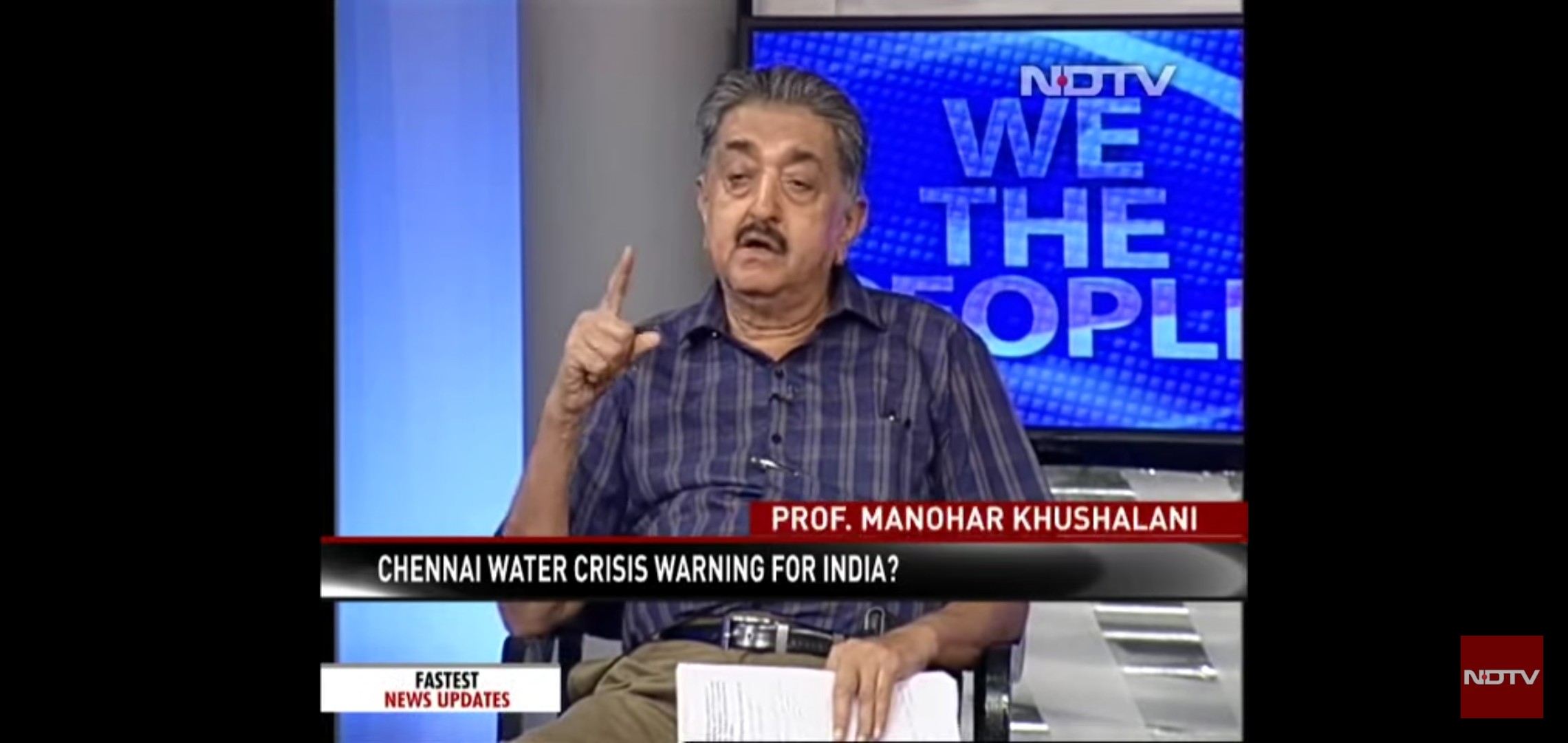
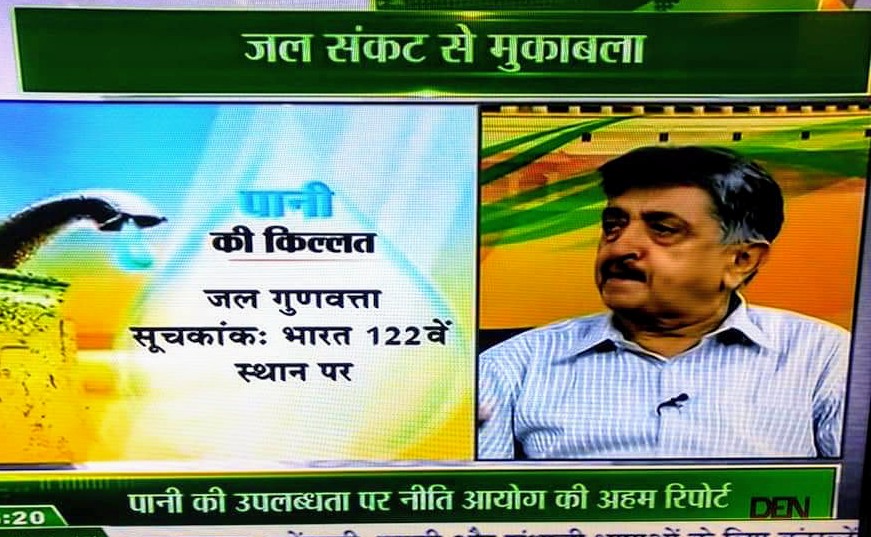
A TV panel discussion on the Water Crisis facing India with Manohar Khushalani, Raghav Chadha and Madhavan
Prof. Manohar Khushalani appeared live in a program anchored by the charming Gargi Rawat, on the NDTV series, WE THE PEOPLE. with Co-panelists Raghav Chadha and VK Madhavan. There were also Videocons with Medha Patkar an Other from Chennai.
On We The People we talked about an an issue that concerns everyone – India’s impending water emergency. The crisis is all around us. Chennai is facing the worst water crisis it has ever seen. With lakhs of people depending on private water tankers as taps go dry, establishments have had to be shut down, children are skipping school and lining up for water. And while Chennai is the largest city facing a water crisis right now, there’s a drought like situation in almost half the country. Parts of Maharashtra, Madhya Pradesh, Karnataka and Andhra Pradesh too are reeling under the crisis. On this show, panelists talked about steps we can take to prevent an impending water emergency.
If you are really worried about the Water Crisis in India don’t miss this program. Click on the link below. It was telecast at 6pm Saturday, 29th June, 2019
Yet Another Dead Whale Is Grave Reminder Of Our Massive Plastic Problem
A sperm whale was found washed ashore dead after swallowing 64 pounds of plastic debris. The male sperm whale was found on the Murcian coast in southern Spain in late February, reminding us how critical plastic waste in the oceans has become.
Two apartment complexes in Bellandur are setting an example in harvesting the rain – Bangalore Mirror
By Reya Mehrotra
With no Cauvery water connection and borewells running dry, Green Glen Layout in Bellandur has got its forces together to catch every drop of rain. Various apartment complexes in the layout have taken up rainwater harvesting and each is doing it their own way. With each heavy rain, apartments in Green Glen Layout save more than 3,000-4,000 litres of rainwater and have installing meters to curb water usage.
Mangroves, reefs reduce losses from disasters – Word Bank | The Manila Times Online
The Philippines was able to save more than $1 billion in losses because of its natural systems, according to a World Bank report.
In its Lifelines: The Resilient Infrastructure Opportunity report released last week, the World Bank and the Global Facility for Disaster Reduction and Recovery (GFDRR) noted that “combining infrastructure with nature-based solutions” reduces countries investment needs.
No Lessons Learnt from Chennai, 54K mangroves to be razed in Maharashtra for bullet train project – HT Report
Are we repeating the same mistakes again and again. Right now Chennai is facing the worst water crisis in history. It has 3 Rivers, 4 Reservoirs, 5 Wetlands, 6 Forests. One of the reasons for both the drought and earlier floods in Chennai, was because of real estate encroachment in Wetlands and around Reservoirs. Now read this Hindustan Times report, to find out what is happening in Maharashtra
Geothermal Energy Information and Facts | National Geographic
GEOTHERMAL ENERGY has been used for thousands of years in some countries for cooking and heating. It is simply power derived from the Earth’s internal heat.
This thermal energy is contained in the rock and fluids beneathEarth’s crust. It can be found from shallow ground to several miles below the surface, and even farther down to the extremely hot molten rock calledmagma.
Which Country Has the Most Fresh Water? – WorldAtlas.com
Fresh water contains a very little amount of dissolved salts and naturally occurs on the surface of the earth in lakes, rivers, caps, streams, ponds, icebergs, glaciers, and ponds. Underground water may also be fresh. Seawater, brackish water, and water in some lakes are excluded because they contain a very high concentration of salt and dissolved minerals. The source of fresh water isprecipitation from the atmosphere. Some countries have large fresh water resources. The benefits these countries enjoy due to their vast fresh water resources are numerous.