India Vaccination Ready Reckoner

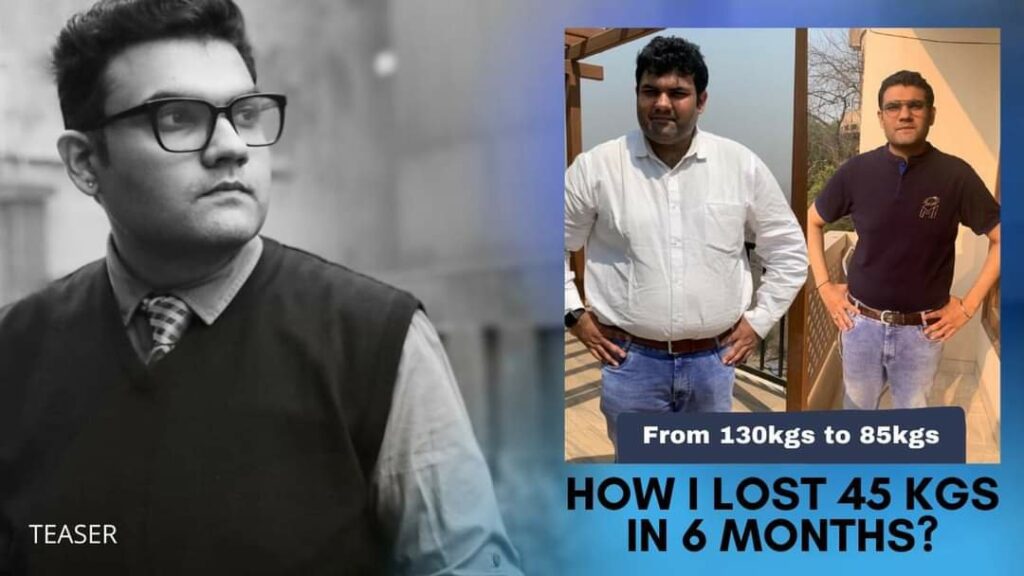
COVID-19 has changed our lives tremendously and in so many ways. On one hand, we can whine about how the pandemic made our world come to a standstill; but on the other hand, we cannot deny the fact that each of us has gained a lot from the year 2020. It felt like a break that we all needed but were too stuck up to avail it. Family time, clear blue skies, making time for hobbies, introspection – we all needed it; whether we accept it or not.
After being obese for almost all my life, 2020 gave me the courage to embark on a journey towards my healthier self. The two main factors that pushed me to take control of my health were the scare of coronavirus deaths and I was diagnosed to be a pre-diabetic. So, my main goal was to build strong immunity with a secondary goal of losing weight. This is why I chose only natural means to reach my health goals. Some simple lifestyle changes made all the difference. So, I am here to share it with you all.
Secondly, how to choose a fitness instructor?
Take control of your health. It’s never too late to start!
Please feel free to connect with me for any queries at tanaytulsaney@gmail.com. I have also published videos related to my weight loss journey on YouTube. If you would like to watch please follow this link – http://bit.ly/3vbMRYj.
This post is a response to a query someone sent. Since it requires some study I thought I would share my findings, which are as follows. Everything that I am citing from others is in purple and my writing remains in black.
Akathisia (Greek “not to sit”) is an extrapyramidal movement disorder consisting of difficulty in staying still and a subjective sense of restlessness. It is a recognised side effect of antipsychotic and antiemetic drugs but may also be caused by other widely prescribed drugs such as antidepressants (Akagi and Kumar, 2002). Citing further research Sharma, Guski et al (2016) note that ‘Akathisia is an extreme form of restlessness, which some patients describe as wanting to “jump out of their skin,” that may increase the risk of suicide and violence’ In plain language Akathisia is a kind of trembling which individuals on antidepressants may experience, which makes them very agitated, restless, and even suicidal (Healy, 2003, p.72), and homicidal.
Antidepressants are used to treat several conditions. They include, but are not limited to: depression, generalized anxiety disorder, agitation, obsessive compulsive disorders (OCD), manic-depressive disorders, childhood enuresis (bedwetting), major depressive disorder, diabetic peripheral neuropathic pain, neuropathic pain, social anxiety disorder, posttraumatic stress disorder (PTSD) etc says Ogbru. This of course is a diagnostic view of the matter and does not necessarily talk about whether antidepressants really help someone deal with their depression. So how do we figure this out? For those who have great faith in the efficacy of psychiatric medication some of the following points are noteworthy. It may be pointed out that these is coming from an implausible source- a psychiatrist! People seek out psychiatric treatments as ways out of their suffering hoping medication is going to rid them off their socially produced suffering. How does this come about- how can something which occurs as a response to their social living be dealt with by chemicals? Of course there is a complicated pathway via which people come to believe in the efficacy of drug treatments and is not the subject of this post. Instead I maintain my focus on antidepressants and their side-effects, in particular akathisia.
Another aside, about clinical trials. The average intelligent person is far removed from the world of drugs and pharmaceutical operations. Instead their focus is on accepting their situations as truthful medical diagnoses and attempts at maintaining drug compliance in the faith and hope that science is working in their favour and best interests. Clinical trials or randomized clinical trials (RCTs) are therefore taken as the gold standard for new drug and their development and few have the ability to read beyond the rhetoric of pharma companies. In this context psychiatrist Joanna Moncrieff writes this piece about drugs trials of antidepressants. Here is a brief excerpt- “Whatever the reason, STAR-D suggests that in real life situations (which the STAR-D mimicked better than other trials) people taking antidepressants do not do very well. In fact, given that for the vast majority of people depression is a naturally remitting condition, it is difficult to believe that people treated with antidepressants do any better than people who are offered no treatment at all.” To simplify this language: Moncrieff is saying that depression is not a permanent state and people get well even on their own, by other means. So it becomes difficult to believe that people who are not given any treatment are worse off than those who are treated. In other words taking medication for depression is not necessarily useful. You can also hear this podcast in her voice. which sheds further light on her work, ideas and findings.
As the title of this post suggests antidepressants, of which SSRIs are one major variant, often have side effects of diverse sorts, and akathisia is only one among them. Antidepressants may cause withdrawal symptoms if abruptly discontinued. Withdrawal symptoms include nausea, vomiting, dizziness, headache, irritability, sleep disturbance, nightmares, psychosis, and seizures, according to this site. Here I would also like to share another piece I wrote on my own blog sometime ago, which talks about SSRIs and brain damage, which includes a video interview with some doctor that I forget for now. And here again is another article that is not only a bit more technical but also talks about increased suicide risk due to SSRIs.
So the long and short of it is that taking antidepressants may be approached with caution for it is likely to increase the risk of other forms of debility, sexual dysfunction and other side-effects or outcomes which can be difficult to deal with in the long term. I am leaving you with further resources to read : by Robert Whitaker, and the absolutely brilliant blog by psychiatrist David Healy, which has scores of articles about suicide, side effects of different SSRIs, about sexual dysfunction disorder and so forth.

Registration will open on 1st March-2021
Please convey this message to your parents and senior citizen members and People above 45 with co-morbidities on How to register for COVID Vaccine
◐ Use Co-Win app, Aarogya Setu app or log on to cowin.gov.in (Version 2.0)
◐ Enter your mobile number
◐ Get an OTP to create your account
◐ Fill in your name, age, gender and upload an identity document
◐ If 45+, upload doctor’s certificate as comorbidity proof
◐ Choose centre, date
◐ Up to 4 appointments can be made by one mobile number
Other options are also available for senior citizens who are not tech-savvy.
They can go to common service centres and get themselves registered.
A call centre number 1075 can also be availed for the same.
PIB on Saturday, 27th February, flagged a fake website impersonating as the official Co-Win App ahead of the second phase of vaccination in which prospective beneficiaries will be allowed to register themselves for vaccination. Please see the PIB Fact Check tweet below:
Please remember that Fake Sites are created to extract crucial Personal Information from respondents which can lead to personal loss
Updated up to 28th February Noon. More details will be available on and after 1st March 2021

What is the recommended dose and schedule?
Do you need to take it even if you had Corona?
How many days after getting vaccine, would I develop protection?
How long will the vaccine provide immunity?
When is the Corona vaccine likely to be available in India?
These and many more questions answered.
For specific questions about India and much much more, go to the source below
https://wholisticwellnessspace.wordpress.com/2020/12/30/frequently-asked-questions-on-covid-vaccines/

Life “is a tale told by an idiot, full of sound and fury, signifying nothing.” So said Shakespeare in Macbeth, a tragedy of epic proportion where the eponymous hero fell because of only one tragic flaw: “Vaulting ambition, which overleaps itself.” Covid19 brought the “sound and fury, signifying nothing” part of Macbeth like a thunderbolt rolled onto an unsuspecting mankind. And Hamartia, or the tragic flaw, that Shakespeare’s tragic heroes had, has its echo in present times too. Covid19 lays bare our fault lines and exposes our flaws like never before. It has, in fact, come as a great teacher to mankind – perhaps because the ‘kind’ in “man” had shrunk to a miniscule level. It has given us a huge nudge to readjust our priorities that were slinking to abominable levels of putrid materialism. Hmm…..looked closely, it also has been a period of wish-fulfillment, the collective wishes of entire mankind, or rather man-unkind, witnessing fruition of shared desires in a way unparalleled.
To further explain my points, let me take the first premise of collective wish fulfillment. Was the entire human race not clamoring for clearer skies, cleaner air and sparkling water? Millions of dollars were being spent on hosting international meets that often ended up revealing more dissensions than agreements. Each country blamed the other for being a greater polluter, never wanting to clean its own Augean stables. Year after year, there were foreboding studies that announced imminent doom of the planet if countries did not clean up the environmental mess. Countries met, they bickered and blamed each other, and dispersed.
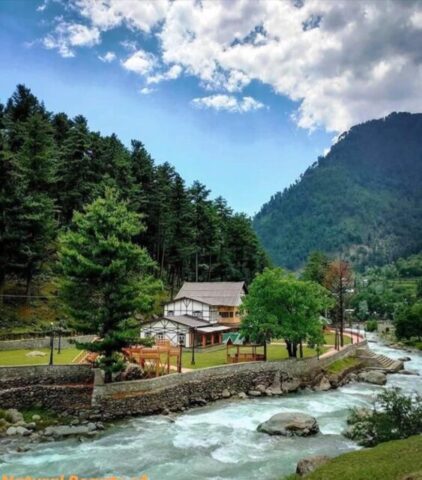
Then, in one fell swoop all pollution abated….. people could not believe the blue of sky could actually be so inky blue and clear, and the air going into human lungs could be wholesome without causing the rasping cough and blocked sinuses. My family ate green leafy vegetables without fear of them being laced with industrial waste – the water hitherto being let out in the fields outside Delhi from where our produce comes. How often have we wished for lesser congestion on roads. Traffic, everywhere had become a nightmare. Each time we were caught in serpentine traffic snarls, it was nostalgia time. “Oh, when I first came to Delhi more than 30 years ago this road was deserted, and it almost felt unsafe driving here late in the evening!” One lockdown, the beginning of a series of them, and you were transported back to the “good old days!” Maybe, the definition of “good” was no longer the same because now it was tinged with fear of the unknown, unseen, tiny virus that was keeping everyone indoors.
“Monday morning blues” was the litany of all working people. I remember beginning to feel the blues just when Sunday dawned. Why can’t weekends be longer, was the refrain echoed in all corners of the world – languages varied, refrain the same. “Let all days be Sunday,” said the mighty voice. And we all huddled home every day, day after day. Beautiful day-planners lying on the desk were an investment most futile!!
Don’t blame any virus or any government for the pandemic…..all wishes are coming true. Is it self-fulfilling prophesy, or mere Ignis Fatuus! Is it a passing phase, or the new world order is here to stay. Only time will tell.
One thing is for sure. The virus is not atemporal. It may either gradually die a natural death after peaking, or human intervention will see it rendered less menacing. Whatever it may be, but it surely will have taught us the much-needed and long-forgotten basic lessons before it exits.
First and foremost, Covid19 has added the fundamental “Pause” button to human race – race, both as noun and verb – the former defining the species, and the latter their feverish scurrying forth. I feel it has made us stop as the traffic light gradually turns red, so that we have time to reflect until it turns green and hence signal us to recalibrate our speed and direction. We were all racing from morning until night, 24X7, in pursuit of something that was always outside our grasp. Were we not all running away from life, looking for a meaning in a place it did not exist. And now, staying within the confines of our homes we are learning to live with ourselves. Most friends and family I have spoken to have expressed how little we actually need in life and yet we carry the heaviest baggage. Our priorities had gone misplaced and it is time to set them right.
What is of utmost importance is human life. This lesson, unfortunately, a deadly virus had to come and teach us. It has showed us that we need to value people and use things when we had been doing the reverse – Valuing things and using people. Time for some reverse-engineering. Time to smell the coffee!
People in lock-downs, living away from families learnt the value of a family, and those locked with their families are learning to share, care, and the biggest of all, to let-go. Sharing limited home space has strained many a family, for the virus leaves no option of quietly slipping away from home in case of any friction. And therein lies the lesson of developing tolerance. “Love me when I deserve the least because that is when I need the most,” my friend’s recalcitrant teenager told his mother. Mighty lesson that is! Equally relevant for the youngster and his mother.

A huge take-away of Covid19, and, undeniably the most important to my mind, is that of empathy towards all living beings. We feel caged and suffocated inside homes. Our freedom is gone. But we are safe. Juxtapose that with slaughter houses and abattoirs where animals and birds are crammed and squished together. They are caged, and they know they will soon be slaughtered. They live with the constant ordeal of impending death. Try to feel what trauma we are subjecting them to. If we want to break free and breathe freely, do we have any right to encage other living beings and then butcher them. All this merely to satisfy our taste buds. Yes, time to rethink our values.
“It would seem resourceful, perhaps wise, to use suffering as a vehicle of transformation that allows us to open ourselves with compassion to those who suffer as we do, or even more than we do”, said Matthieu Ricard in his book Happiness. Roman philosopher Seneca once said that “Suffering may hurt, but it is not an evil.” Schopenhauer, the German philosopher may have had similar belief when he said that suffering is the purifying process through which alone, in most cases, a person is consecrated. Sure enough, no one wants suffering and all human endeavor is towards forswearing it. However, it can be argued that while suffering by its very nature is abhorrent but when unable to avoid, we can use it to learn and to change.
While we wait with bated breath for this Covid19 to pass, we can only forget the lessons it continues to teach us – both, at the physical level and at a deeper existential, philosophical level, at our own peril. In the latter half of this century when it is well behind us, and human race has the wisdom of hindsight, Covid19 may seem to be the one game-changer humankind desperately needed for course correction.
I started writing this piece when we were, what is now known as the middle of Covid, or the first phas (It may be known differently sometime down the line) . As we are a cat’s whisker away from getting the vaccine, these disembodied times however seem here to stay for a while. I’m quite inclined to close with Hafiz : “I wish I could show you, when you are lonely or in darkness, the astonishing light of your own being!” So instead of taking a world trip, go inside yourself and find the true essence. Nice things, beautiful scenic places, gourmet food and all the pompous pursuits of men are a happy place to be in, but the joy they provide is never ever-lasting. It is transitory. The value of things is only the value we ascribe to them. As Vivekananda said: “Things are dead in themselves. We breathe life into them, and then we either run after them or run away from them.”
Covid-19 has provided a big insight into what really matters in the race we call Life. The Pause-button ought to make us reflect on where we were headed, and which direction we need to take. Almost a year into the pandemic, the self-importance of man dissolves in laughter. Life will never be easy. It will always be hard, but we can choose our hard wisely. Look to the light within, for the more light you allow within you, the brighter the world you live in will be.
Delhi: November 2011. Nepal with a geographical area of 1,47,480 sq km has been bestowed with an abundance of water resources in the form of glaciers, snow pack, ground water and river network which” contribute 200 Billion Cubic Meter (BCM) as surface runoff annually to the river basin system. The steep topography and high run-off offer opportunities of generating vast hydropower of the order of 83,000 MW, out of which 44,600 MW has been assessed as being technically feasible. At present, a total installed capacity of all the hydropower plants in Nepal is just over 600 MW that has been developed so far for internal consumption, due to limited financial resources of Nepal. On the other hand, India is short of around 70,000 MW of peaking power for which hydropower is the best option. Therefore, India can look forward to join hands with Nepal in harnessing the hydropower potential and after fulfilling all Nepal’s internal needs avail surplus hydropower from Nepal to meet its own power demand besides augmentation of river flows in non-monsoon period and considerable flood control benefits in monsoon season.
India has concluded several water and power sharing treaties with Nepal the treaties of Sarada (1920), Kosi (1954) and Gandak (1959) are the early examples. Other examples of water sharing is the ‘Mahakali Integrated Treaty (1996) for the integrated development of Mahakali River including the Sarada Barrage, Tanakpur Barrage and Pancheshwar Project. The DPR of the Pancheshwor project was agreed to be prepared within six months of the agreement made, but it has not yet been finalised. However one is told that major progress has been achieved, as the field investigations required for preparation of DPR are completed (except for some confirmatory tests). But mutually acceptable DPR could not be finalized due to differences on following contentious issues:
Apportionment of project (capital) cost
Stage based development
Water availability & existing consumptive uses downstream of the Pancheshwar Dam
Power benefits
Re-regulating structure
There is a realisation now in India that one of the reasons for the stalemate in finalization of the DPR of Pancheshwar Project for the last five years, is the rigid position taken by technical experts on location of the regulating structure, stage based development and sharing of the extra cost chargeable to Irrigation. However, in the process, valuable time and the peaking power (over 10,800 Gwh annually) is being lost by delaying the decision; apart from perpetual flood losses and damage faced by Eastern Uttar Pradesh and Bihar every year during monsoon.
Apart from the fact that there has been no progress at technical level, due to law and order problem and Maoist agitation in Nepal for the last three years, any resolution on the above contentious issues appears to be difficult as the present joint mechanism(s) in vogue are not fully empowered to take independent decisions. A decision in this regards is imperative at the government level appropriately from both sides. A new approach has to be evolved to resolve these issues.
Ministry of Water Resources, Government of Nepal, brought out “Hydro Power Development Policy- 2001”. Its emphasis is on Private Sector participation in the development of hydropower taking into account internal consumption and export possibility.
Since the present atmosphere has become extremely vitiated, our study will examine whether this could perhaps be a key to a fresh approach on the matter. The private sector could be brought in, which could perhaps make Nepal more comfortable. Another approach that could be examined would be a tripartite negotiation by involving Bangladesh. Though the one valid objection to this approach is that tripartite negotiations invariably take longer and are often inconclusive. But, maybe, that could make Nepal more comfortable and less apprehensive in dealing with a larger neighbour. The other approach could be to acceding to Nepal’s demands, but perhaps it is too late for that approach. (October 2011)
Update (2017) :
Matters changed with a new Government at the center.
A revised second detailed project report for the multi-purpose *Pancheshwar dam project had finally been sent to the development authority, which was forwarded to the Indian and Nepalese governments for clearance
The approval of the two stakeholder countries will pave the way for the works to start on the long-awaited project which is expected to fulfill power andirrigation requirements for both countries.
A fresh,updated version of the second DPR, prepared by WAPCOS, was sent last month to Pancheshwar development authority (PDA) which will now forward it to the Indian and Nepalese governments for approval, ” a WAPCOS official at Pancheshwar site said Tuesday.
India and Nepal are the two stakeholders in the ambitious project and WAPCOS is the Indian company entrusted with the task of preparing the DPR.
The fresh DPR is the revised version of the second report sent to the PDA in June, 2017, about which both countries had some reservations.
Independent India’s first treaty with Communist China was marked by the 1954 Panchsheel Trade Agreement. This was the first official document signed with Mao’s China by a third party recognising Tibet as a region of the People’s Republic of China after the People’s Liberation Army’s invasion of Tibet in 1949. With this, India set its diplomatic relations with China on a weak footing, squandering the high ground of knowledge on the historic status of Tibet inherited from the British Empire.
China is the only neighbour, with whom India has geographically shared water resources, but there is no water sharing treaty so far. There seemed to be a great degree of timidity in this matter in the past, but it is changing now. The present government is now asserting itself as it holds national interest above everything else. The first written agreement pertaining to water is an MOU which the water resource ministries of the two countries have signed about provision of Hydrological Information of the Sutlej / Langqen Zangbo River in Flood Season by China to India. The MOU envisages provision of hydrological information in respect of the Sutlej / Langqen Zangbo River in flood season for flood control and disaster mitigation in downstream areas. The arrangement entailed building of a hydrological station by the Chinese side on the Sutlej / Langqen Zangbo River before the flood season of year 2006 and provision of hydrological information to the Indian side beginning the flood season of year 2006. The Chinese side was to bear the cost for setting up of the hydrological station and the Indian side would bear the cost for provision of the hydrological information and the operation of the hydrological station. The detailed implementation plan was to be finalised between the two sides.
According to the MOU, the Chinese side will provide information on any abnormal rise/fall in the water level/discharge and other information, which may lead to sudden floods on the basis of existing monitoring and data collection facilities on real time basis. Both sides will continue to discuss the possibility of providing hydrological information during flood season by China to India in respect of two more rivers – Parlung Zangbo1 and Lohit /Zayu Qu.
One recalls some time back, a program on BBC wherein Chinese army was shown trying to drain out a dam created by an earthquake by directly using artillery fire. On the flip side it is rumoured that China appears to be perfecting a procedure of creating instant dams by setting up a series of explosion and triggering a man made landslide. This will help it to divert large quantities of river water at short notice. Apparently some officials from Nathpa Jhakri project were allowed, after much reluctance, to visit China, where they have physically seen a lake on Parechu River that the Chinese claim was created by natural landslides.
There is not much reliable information on the present or proposed water-related developments and projects in the Tibet region. In the last few years, some arrangements were agreed upon on receiving information on glacial lake outbursts in the upper regions of the rivers that flow into India from the Tibet region of China, but information on the manner of its implementation, its comprehensiveness and the effectiveness thereof are not available.
In 2002, the Government of India had entered into an MOU with China for sharing of hydrological information on Yaluzangbo2/ Brahmaputra river in flood season by China to India. In accordance with the provisions contained in the MOU, the Chinese side was providing hydrological information (Water level, discharge and rainfall) in respect of three stations, namely Nugesha, Yangcun and Nuxia located on river Yarlungzangbo/ Brahmaputra from 1st June to 15th October every year. The requisite data up to the year 2004 was received and the same was utilised in formulation of flood forecasts by Central Water Commission.
India and China have now signed the implementation agreement for operationalising the MoU on sharing flood-related hydrological data for Brahmaputra which was renewed during Pranab Mukherjee’s, the then External Affairs Minister, visit to China in 2008. Under the agreement, China will continue providing flood-related data of its side of Brahmaputra during June 1-October 15 period each year till 2012. After 2012, both countries will have to renew their MoU and finalise a fresh implementation agreement. During this time window every year, the Chinese side will provide these hydrological data from three identified hydrological stations twice a day to India to help better manage floods.
For decades it is known that a great possibility of harnessing significant extent of hydropower exists at the giant U bend between Tibet and Arunachal Pradesh, in the upper reaches of the Brahmaputra. How this matter is being pursued is not known. It is reported3 that Chinese engineers had informed the Chinese Academy of Sciences that the waters of the upper Brahmaputra could be diverted into the arid northwestern region and Gobi desert using nuclear explosives. Publically this has been denied by the Chinese Government, as well as experts. At the Kathmandu Workshop of Strategic Foresight Group in August 2009 on ‘Water Security in the Himalayan Region’, which was attended by leading hydrologists from the Basin countries, the Chinese scientists argued that it was not feasible for China to undertake such a diversion4. In a subsequent meeting of the scientists at Dhaka, 25 leading experts from the Basin countries issued a ‘Dhaka Declaration’ on Water Security5 calling for exchange of information in low flow period, and other means of collaboration.
It has also been mentioned by some that the possibility of diverting from Yarlungzangpo to the upper Arun Kosi or Gandaki have also been mooted. No detailed or reliable information on these developments are available. However, the idea of diverting water from the South to the north is not new in China. The Grand Canal is, basically, more than a thousand years old. At the World Water Congress held in New Delhi in November 2005 China’s Vice-minister of Water resources Dr. Jiao Yong highlighted their problem of uneven distribution of water resources. He reiterated that the government was planning and constructing the South to North Water Diversion project, which can ultimately relieve water shortage in north China and northwest areas. No specific details or the final scope were made available.
The Indian government has been relaying its concern to Beijing since 2006 on Chinese reports that China intended to dam rivers like Yarlung Tsangpo / Brahmaputra and divert its waters to its arid north-east. Although China officially denied such an intention, the evidence against such a denial continues to mount. Indian officials have said the reports continued to abound inside China, including a proposed construction time table which was to have begun in 2009. Recent reports indicate that Chinese engineers are reportedly lobbying Beijing to ignore Indian concerns and dam the upper Brahmaputra in Tibet6 with what they envisage as the world’s biggest hydroelectric project and several smaller dams and tunnels. Tibetan researcher Tashi Tsering at the University of British Columbia, posted online a map of potential sites reportedly sourced from Chinese government website. China is likely to build a 38,000 MW power station near Motua wrote Tsering. He told Hindustan Times over email that: “China is likely to hold back water when it’s most needed in India, during spring, and release more during the monsoon.” Zhang Boting, an official of the China Society for Hydropower Engineering, backing a 38,000 MW Motuo dam proposal to generate renewable energy equivalent to the oil and gas in the South China Sea. Zhang said the dam research has been carried out but plans are not yet finalised7.
Any major storage or run-of-the-river projects for hydropower or navigation purposes planned in the Brahmaputra within China need not create difficulties for India, so long as the re-regulated flows from the power houses are returned to the river. On the other hand, consumptive uses or long distance transfer of waters outside the Basin to, say, the arid north China will hurt the interests of India and also Bangladesh.
What is making India think twice about Tibet now are geopolitical issues — how India and its South Asian neighbours might be adversely affected by what Beijing plans in Tibet. China’s development schemes for the Tibetan Plateau include large-scale mining, clear-fell deforestation, infrastructure- and road-building and firming up a burgeoning tourism industry8.
Meanwhile, Indians living on the banks of the mighty Brahmaputra have been devastated by death and destruction as the river changes its course every season and is affected by floods due to heavy siltation caused by the ruthless deforestation of Tibet. Environmentalists fear even more devastation and drought if China implements its plans to divert a part of the Brahmaputra.
Obviously there is a need for Indian leadership to engage the Chinese. A simple denial from Chinese polity or Water Resources experts would not guarantee a safe future. Perhaps an iron tight international riparian treaty similar to the Indus Water treaty would go a long way in diffusing possibility of future conflict. Since India has been unsuccessful so far would a third party intervention from the UN help? A word of caution however, China was among the only three countries that voted in the UN General Assembly in 1997 against the Convention on the Law of the Non-Navigational Uses of International Water Courses9.
1 Parlung Zangbo River is a major tributary of the Yarlung Zangbo
2 Due to lack of standardization, the Chinese equivalent of the Brahmaputra River is spelt in different texts in various phonetically similar sounding names such as; Yaluzangbo,Yarlungzangbo, Yarlung Zangpo, Yarlung Tsangpo, all the spellings have been used deliberately to be in consonance with the current usages.
3 Scientific American, June 1996
4 http://asiasecurity.macfound.org/images/uploads/news_attachments/Kathmandu_Workshop_Report.pdf [accessed March 18, 2010]
5 The New Nation, 17th January 2010 [ available at http://nation.ittefaq.com/issues/2010/01/17/news0350.htm [accessed on March 20, 2010]]
6 Reshma Patil report from Beijing in Hindustan Times, 26th May 2010
7 The Guardian, 25th May 2010
8 Hindustan Times, November 14, 2006
9 The other two were Burundi and Turkey
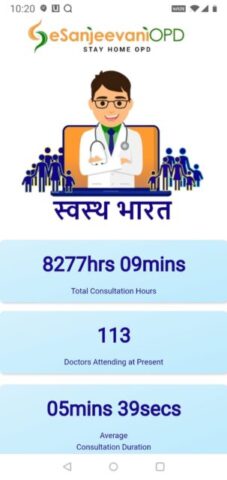
Central Government has launched a people friendly scheme especially for Sr.Citizens & also for all other citizens ~eSANJEEVANI.
Especially for aged people with blood pressure, diabetes, etc. who take regular medicine, they cannot be taken to hospital immediately for OPD.
Even, if they’re taken, risk is more. For small problems such as head ache, body pain, they might stay at home not willing to go to hospital.
Now, they have eSANJEEVANI website and app which is handy. You can reach this through Google Chrome and do the following.
Now, you will be connected to a doctor online.
Then, through video, you can consult the doctor for your any health problem.
Doctor will prescribe medicine online.
You can show that in medical pharmacy shop and get medicine.
This is totally free. Quacks will not be there. You can use this service every day from 10 am to 3 pm only. Including Sunday.
Tirupur in Tamil Nadu has got first place in this eConsultation.
Kindly forward this post to senior citizens and disabled people you know.
This Central Govt Website is https://www.eSanjeevaniopd.in
Also Available as an App on Playstore at this link:
https://play.google.com/store/apps/details?id=in.hied.esanjeevaniopd
Key features of this citizen friendly web-based National Teleconsultation Service (eSanjeevaniOPD) are:
Patient registration
Family member registration
Institutional registration (like correctional facilities, Sr. Citizen Homes, Orphanages etc.)
Queue Management
Video Consultation with a Doctor
Instant messaging (text-based)
ePrescription
SMS Notifications
Serviced by Doctors employed
Free Service (managed jointly by State

Yes you read it right. Everyone is waiting for a vaccine, but a truely time tested vaccine takes at least two to three years. Meanwhile there are many personal experiences being shared by people who have used holistic methods and recovered fully. These are brushed aside by people and agencies who believe in or have a vested interest in promoting only western medicines and drugs. Readers are also invited to watch demo videos prepared by Denanath Mangeshkar Hospital & Research Center, Pune, who protected their Covid Warriors from infection using these techniques
According to the report* published in msn.com:
As it stands, we’re several months into the pandemic, and a vaccine or cure could still be a long way off. This daunting fact has led researchers to explore other strategies for combating coronavirus, and mitigating its symptoms. Among those strategies is nasal irrigation, the practice of clearing the nasal passages, using a spray bottle or neti pot to introduce a therapeutic solution.One team of researchers recently studied the effects of nasal irrigation on COVID-19 and determined that this simple, at-home practice could very well help lessen a person’s viral load. “Nasal irrigations should be encouraged for patients and health care workers especially,” the study concludes.
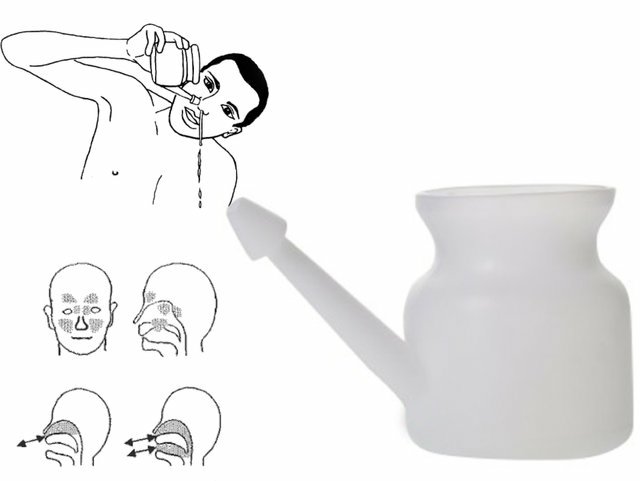
Indian readers are quite aware of the procedure. The image above summarises it for readers who aren’t. Please read on. Also follow all the links if you want to know more.

While hardly a silver bullet solution for the disease, the study argues that nasal irrigation can help to “reduce viral severity and further transmission” of coronavirus early on after a patient becomes infected. The researchers explain that this is because, “similar to other viral upper respiratory infections, [coronavirus] infection occurs primarily in the nasal and nasopharyngeal mucosa with high viral loads early in disease.” This presents an opportunity to “wash COVID-19 away,” the study suggests.
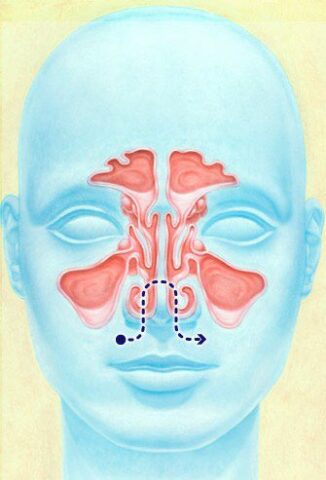
An Important advice To make Neti practice safe use filtered or distilled lukewarm salted water as suggested by Yoga ancient texts of India. The temperature of the water should be around the temperature of the blood and after doing neti one should practice kapalbhati (i.e blowing air gently from the nose to expel residual water). And to be on a safer side if you are practicing neti for the first time, do it under the guidance of a practitioner.
The researchers noted that the general “benefit of topical nasal saline has been well established,” explaining that the nasal lining serves an important role in the immune system, acting as the primary defense against inhaled viruses and bacteria. Nasal rinses help remove this particulate matter, while also increasing hydration and reducing inflammation—all of which can lessen the effects of a respiratory infection.

So what exactly do you need in order to try it out? The study suggested choosing an over-the-counter hypertonic saline spray, which can be found in most pharmacies. Betadine and other iodine-derivative sprays also appear to support “substantial coronavirus reduction,” the researchers noted.
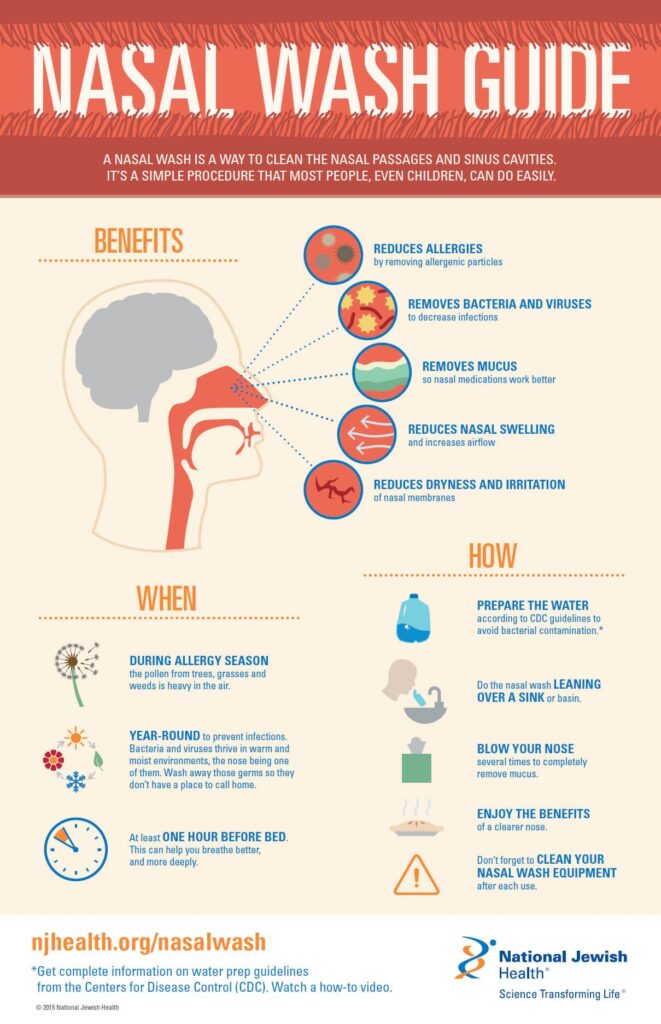
While there is no cure for coronavirus, this at-home treatment may help to limit the severity of your illness, and reduce your time spent sick—and that’s certainly a step in the right direction. And for more on this simple practice, check out
Nasal Irrigation Is the Key to Reducing COVID-19 Progression, Doctor Says.