Smart Way to Buy or Invest in Gold

Gold is a unique asset: highly liquid, yet scarce; it’s a luxury good as much as an investments Gold is no one’s liability and carries no counterparty risk. As such, it can play a fundamental role in an investment portfolio. 

Gold acts as a diversifier and a vehicle to mitigate losses in times of market stress. It can serve as a hedge against inflation and currency risk.

The combination of these factors means that adding gold to a portfolio can enhance risk-adjusted returns. 

But how much gold should investors add to achieve the maximum benefit? Portfolio allocation analysis indicates that investors who hold between 2% to 10% of their portfolio in gold can significantly improve performance.

Indians’ love for Gold jewellery is inevitable. But most investment managers argue that buying gold in form of jewellery should not be mistaken as investment. They say the costs such as the making charges which can go upto as high as 25% of the price and GST, are irrecoverable on resale.

Gold Exchange Traded Funds (ETFs) and Sovereign Gold Bond (SGB) , issued by the Government of India are the smart ways to invest in gold.

Gold Exchange Traded Funds

Gold ETFs are listed on the exchanges and invest in physical gold. Each unit of a Gold ETF represents 1/2 gram of 24 karat physical gold. Gold ETFs provide ample liquidity as these can be sold on exchanges anytime.

“Investors in Gold ETFs do not bear any making charges or premium. Also, they don’t have to worry about purity, storage and insurance of gold. Moreover, Gold ETFs are traded on the exchange at the prevailing market price of physical gold, thus investors can buy or sell holdings at close to the market price, without paying a premium on purchase or selling at a discount.

Sovereign Gold Bond

SGBs are government securities denominated in grams of gold. The Bond is issued by Reserve Bank on behalf of the GOI.. The Bonds are issued in denominations of one gram of gold. An individual can invest maximum for up to 4 kg of gold through SGBs, in a fiscal year. The Bonds bear fixed interest at the rate of 2.50 % per annum , payable semi-annually. SGBs assure market price of gold at the time of selling.

SGBs come with a tenor of 8 years. It allows early redemption only after the fifth year from the date of issue. The bond is tradable on exchanges, if held in Demat form. But low trade volumes can be a hindrance. It can also be transferred to any other eligible investor.

How are Gold ETFs and SGBs taxed?

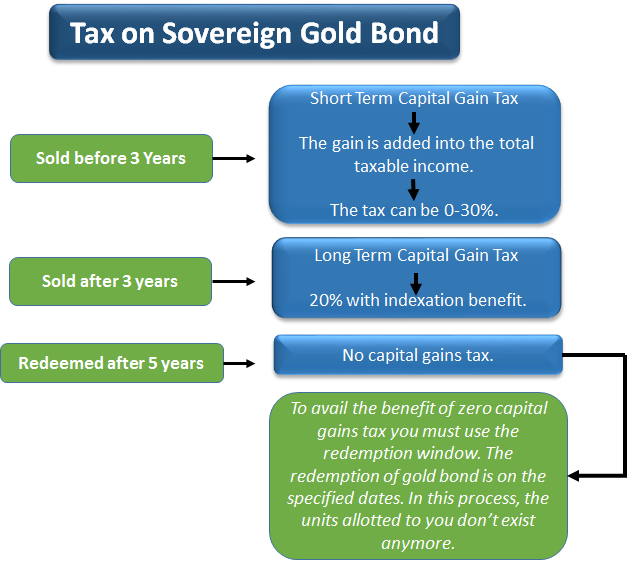
Capital gains on goold ETFs are taxed at 20% after indexation if held for over three years.

Interest on the SGBs will be taxable. The capital gains tax arising on redemption of SGB to an individual has been exempted. The indexation benefits will be provided to long terms capital gains arising to any person on transfer of bond.


Let’s talk about ‘recovery’ in mental health

Of all the things one gets to hear about mental health, we often do not hear the word ‘recovery’. This implies that though society encourages people to examine distress-causing issues through the lens of suffering or accessing mental health treatments, the acceptance of people once they enter treatment regimens is markedly changed. Do treatments have to continue for life and if yes, then what is the goal of such treatments? Do we need to talk about recovery at all, for is not the start of treatment the start of recovery itself? The answer to this question is both yes and NO, for it depends upon whose perspective is considered. In other words, depending upon stakeholders the perspective changes!

‘Recovery’ is an individualistic, cumulative outcome of diverse resources which add up to make someone healed, and whole

Introducing the series

This weekly series, much like the writer behind it, is dedicated to the idea of ‘recovery’ . It brings together an experience of engagement with the field for nearly three decades, of which the last decade (2010-2020) is spent exclusively on the idea of researching about ‘recovery’ or whether it is viable for a vast majority of people. This recovery series will principally be a response to the queries the writer, in her role as therapist, receives from diverse platforms, including emails which reflect people’s struggles to reclaim their mental wellness and lives, instead of necessarily looking at them through diagnostic categories.

Why should recovery matter?

When someone accepts the medical diagnosis of a mental health issue, they enter into the stage of becoming a patient. In that role they keep on getting treatment for years and years, and there seems to be no exit; especially when the diagnosis is schizophrenia and bipolar disorder. Not only psychoses, increasingly people are coming under the remit of mental health diagnoses and unable to exit the ‘system’ for a lack of alternatives to reclaim their mental health and a reinforcement received from different ‘professionals’, the social milieu saturated with claims of rising incidence of mental health issues and efforts which are purportedly directed at stigma reduction. In such an environment anyone who gets a diagnosis, and their families, are so overwhelmed by the one sided representation of mental health as an illness claim that to think about recovery is certainly not on anyone’s mind; but only to get themselves/loved one treated and manage the ‘illness’.

A vast majority of people are unaware that mental health issues are not measurable ‘illnesses’ which can be established by any scientific evidence, pathological tests or measurements via any scales etc. What can be called ‘illness’ is dependent largely on the capacity of the person who is observing the disturbed person to pronounce a behaviour as ‘illness’ or an ab-normalcy; which in research is called epistemic privilege (someone’s knowledge given more credibility than another’s). This is NOT to say that a person who is experiencing suffering is faking their suffering or masquerading. This is to acknowledge their suffering as a reality which needs a different handling than a simple classification into a predetermined diagnostic category. This is simply to say that mental health issues are not biological illnesses which are treatable via biochemical means, the way they are made out to be- they are deep emotional disturbances which can also be resolved by talking, discussion and other ways, which we will examine in future articles here.

Recovery matters because the alternative, of lifelong patient-hood, is a painful, debilitating, disabling option for people/families and thereafter for society. It not only makes people dependent and insecure it leads scores of families into a downward spiral of infirmity and poverty. The usual option someone has is to either remain a patient, or having become a patient for a short while, when overwhelmed by suffering, take the path to recovery by slowly building their capacities to deal with life and its vicissitudes- a journey familiar to this writer. From thereon springs this urge to share these ideas/research and findings with fellow human beings and let others comprehend that if one person can recover, so can another- for this is how one lamp kindles another’s wick.

In the forthcoming posts you will read (when the posts are not direct responses to queries)

  • Why the idea of recovery is tied to human rights,
  • What are the three ways in which people can understand recovery
  • Why a majority of people do not believe they can recover
  • Stigma in mental health
  • Psychosis and recovery


All About Asset Allocation

Don’t put all your eggs in one basket. We are sure you would have heard this saying multiple times. This is also one of the basic philosophies of personal finance. What it means is that when investing, you shouldn’t invest all your money in one asset class. But why is that and how should you decide where to allocate your money and how much? In this discussion we will talk about the principles of asset allocation, why it’s important, how you should decide what asset allocation works for you and why rebalancing is an extremely important component.

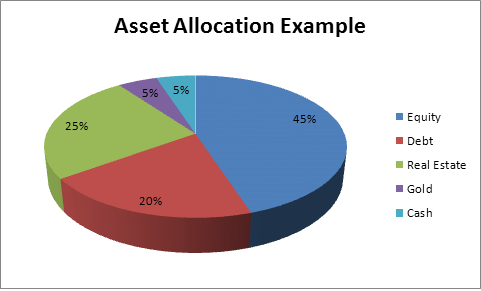
When you invest in one investment option or asset class, the risk you are taking is extremely high. So, to reduce the risk you need to diversify your investments by investing your money in different investment options and asset classes like real estate, gold, mutual funds, equities, and fixed deposits. This is what asset allocation is all about. Asset allocation helps investors reduce risk through diversification. Historically, the returns of stocks, bonds, and cash haven’t moved in unison. In other words, asset allocation matters a lot more than stock picking when it comes to reaching your financial goals.

Example:

To understand the importance of spreading out your investments across asset classes, let’s take the example of one asset class, real estate.

The real estate sector noticed a boom between the years 2010 and 2013, and people were being lured with expectations of 10-20% returns in a short period. But had you invested during that period, your returns today would have been in the range of -20%. That’s because the home rates have fallen by that much percentage in the last 6-7 years. In some cases, people even lost their entire money because some developers went bankrupt. 

This example implies that no one in this world can predict which asset class or investment option will do well in the future and which won’t. Hence to mitigate the risk, you must diversify your portfolio and invest your funds in different asset classes. 

How to decide your asset allocation:

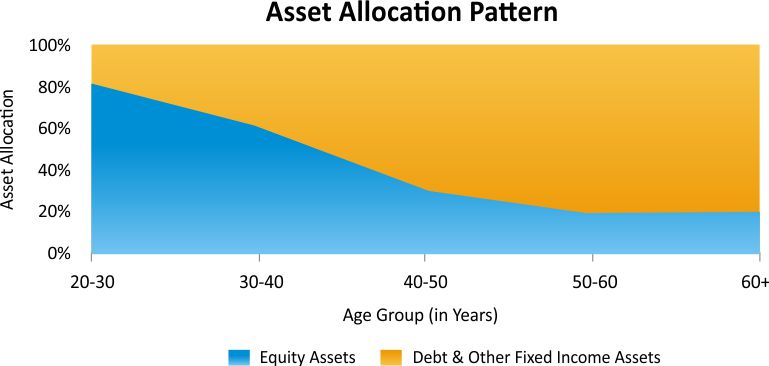
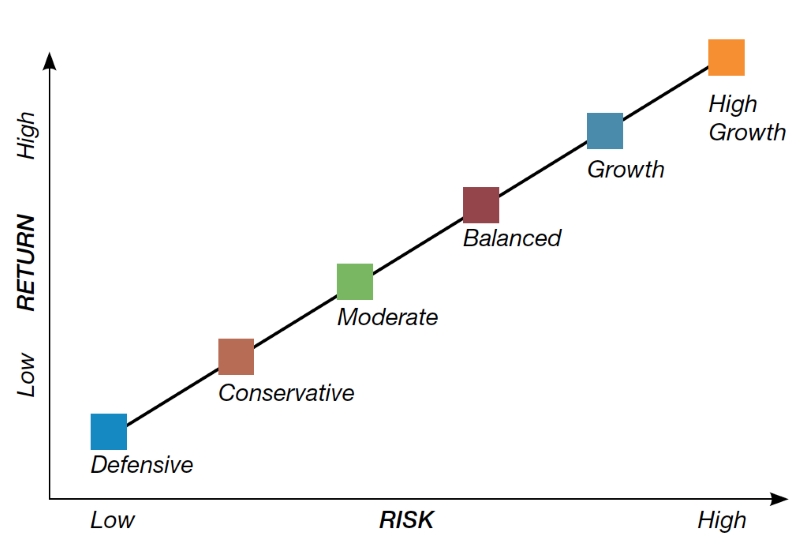
So how should you decide your asset allocation? Well, one of the most important factors is your risk profile. Every individual’s risk profile is different and owing to this, the standard rule of asset allocation shouldn’t be used. 

Understanding your risk profile :

To understand your risk profile you need to understand three components that constitute your risk profile –  risk appetite, risk capacity, and risk tolerance. You might think of these terms as the same, but you must note that there is a difference between each of these. 

1.Risk appetite is how much risk you are willing to take 2.Risk Capacity is how much risk you can take. Although you might be willing to take the risk on your entire capital your current financial situation including liabilities, dependents, age, and salary might not allow you to do that. So you need to consider these before defining your risk capacity 3.Risk Tolerance is how much risk you can tolerate, psychologically, and mentally. For example, if you invest in stock markets, where there are  a lot of fluctuations, you must be mentally prepared to tolerate the risk.

Of these three components, risk tolerance is the most critical while determining your asset allocations. That’s because you might have a high-risk appetite and risk capacity but your risk tolerance will determine which asset class and investment options you will pick.  Let’s take an example. Suppose you are very hungry and feel you should eat a lot or you can eat a lot. But if you eat more than your capacity, your body won’t be able to tolerate it. So you need to have a balance. As you allocate assets on the basis of risk tolerance, you must consider personal factors like your monthly income, expenses, age, financial liabilities, your dependents in the family, etc. 

However, along with this, certain macroeconomic factors also play a vital role in how your funds may perform and may change your risk profile. Additionally, asset allocation must also depend on your short-term and long-term financial goals. As the macroeconomic factors fluctuate, you may change the proportion of allocation of your funds to various asset classes. For example, if you invest in fixed deposits currently, and you receive an interest rate of 5%-6%. Now, you should figure out that with lesser interest on your investments in FDs, your risk profile would change and hence, you should change your asset allocation by shifting your funds from one asset class to the other such that you can meet your financial goals in time.

I am happy I have equity in my portfolio- it’s up.

I am not so happy with bonds – Rates up

I am not happy with gold – price down due to custom tax cut.

I am happy overall – Asset Allocation.


Budget 2021- Impact on personal Finance

Budget
Indian Budget 2021

Lack of knowledge about how to manage financial assets leads people to ask, “Why is personal finance important?” Personal financial skills are very important because without them, people usually spend their entire lives savings without knowing the future need and always in debt, never able to catch up and get ahead. If you don’t plan for your income, you will end up overspending or spending on unnecessary items. With a proper financial plan, you will be able to manage your income effectively. This way, you will spend on what is necessary and save or invest the rest. Being able to manage your income will help you to know which expenses to handle first and which ones come later. Also, you can effectively know how much is necessary for tax payments, savings, or clear your monthly bills.

Union Finance Minister Nirmala Sitharaman presented Union Budget 2021-22 in on 1st Feb. While she made no changes to the income tax slabs, other announcements were done that can impact one’s personal finances.

Relaxation to NRI for Income of Retirement benefit account

In order to remove the genuine hardship faced by the NRIs in respect of their income accrued on foreign retirement benefit account due to a mismatch in taxation, Budget 2021 proposed to notify rules for aligning the taxation of income arising on foreign retirement benefit account.

 Taxation of Unit Linked Insurance Plan (ULIP)

If you were investing in ULIPs for investment purpose rather than protection goals, then the Budget 2021 has ensured your earnings from ULIPs will be subject to Capital Gains Tax from April 1, in case premium exceeds INR. 250,000 annually

Relaxation to Sr. Citizen above 75

In order to ease the compliance burden on senior citizen pensioners those are of 75 years of age or above, Budget 2021 proposed to exempt them from the requirement of filing an income tax return (ITR) if the full amount of tax payable has been deducted by the paying bank. This exemption is proposed to be made available to such senior citizens who have only interest income apart from the pension income.

Interest earned on annual Provident Fund contribution over INR 2.5 lakh to be taxable

The Union Budget 2021 has some bad news for high earners. the Budget proposes to tax interest earned on provident fund contribution above INR 2.5 lakh per year

Tax incentives for Affordable Housing

“This government sees housing for all and affordable housing as priority areas. In July 2019 they provided and additional deduction of interest amounting to INR 1.5 Lakh for loan taken to buy an affordable house. Finance Minister Nirmala Sitharaman propose to extend the eligibility of this condition by one more year to 31st March 2022The additional deduction of 1.5 lakh shall therefore be available for loans taken up to 31st March 2022, for the purchase of the affordable housing


Forget about Interest, pay money to keep your money in Bank of England

BOE Steps Up Negative Rates Work as Economic Threats Mount

Give a cut from your own money?

OMG! Is this really true? Does what we have heard from the grapevine mean that, if you are in England, forget about getting Interest on your deposit, you might have to pay money to deposit money.

According to Bloomberg, the Bank of England gave the clearest signal yet, that it may consider cutting interest rates below zero for the first time in its history as the economy faces a surge in coronavirus infections and the risk of a no-deal Brexit.

With multiple threats to the outlook looming, the BOE will begin “structured engagement” with U.K. bank regulators on how it might implement negative rates. Governor Andrew Bailey said last month the policy has become part of the central bank’s toolkit.

The comments in the minutes of Thursday’s policy decision prompted money market traders to bet that the next 10 basis points of easing will come in February, with another cut of the same magnitude to follow after the summer. The pound weakened, and was trading down 0.7% at $1.2876 at 1:36 p.m. on 17th September in London

Financial Express adds: The prospect of negative rates has typically met a cool response among policymakers who are mindful of the negative side-effects of the move in other parts of the world. But the latest statement offered a reminder that more quantitative easing, or bond buying, is not the only move left open to the BoE.

Investors are xpecting heightened volatility in the pound until November, when time runs out for Brussels and London to reach an agreement on trade before the UK drops out of the EU’s single market and customs union at the end of the year. If Britain leaves the trade bloc without an agreement, analysts said the central bank will probably cut its key rate to combat a potential economic shock.

https://www.ft.com/content/1124fbd1-0142-4309-ada8-e1563e64c50d

https://www.bloombergquint.com/global-economics/boe-steps-up-talks-on-negative-rates-amid-uncertain-outlook


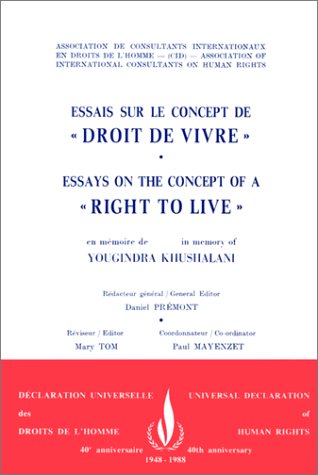
Essays on the Concept: “RIGHT TO LIVE” / Homage to Yougindra Khushalani

This ESSAYS on the Concept of a “RIGHT TO LIVE” by Marion Harroff–Tavel

In memory of Yougindra Khushalani

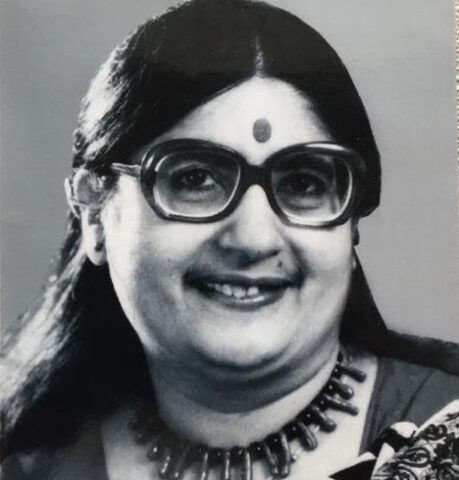
Dr. (Miss) Yougindra Khushalani

Just as peace is not simply the absence of war, but rather a dynamic process of co-operation among peoples, life is not simply the antithesis of death, but rather a period of time during which every human being should be able to develop fully in dignity and in enjoyment of the respect of others. This was the profound conviction, imbued with humanity and solidarity with the most vulnerable among us, that inspired Yougindra Khushalani, an eminent Indian lawyer and Vice President of the Association of International Consultants on Human Rights (CID), to conceive the idea of a “right to live“. It is to this intelligent, highly motivated and courageous woman, whose own life ended so tragically early, that the authors of this collection of essays​*​ pay tribute by developing the ideas that were so dear to her, each in his own special sphere of interest. All the contributors are eminent figures in the world of human rights and international humanitarian law, which she studied in depth during a period spent at the International Committee of the Red Cross.

How does the “right to live” differ from the more familiar “right to life“?

The right to life, guaranteed by numerous provisions of human rights instruments and international humanitarian law, is specifically asserted in the International Covenant on Civil and Political Rights, which permits no derogation from this right, even when an exceptional public emergency is threatening the life of a nation. As stated in Article 6 of the Covenant, it is an “inherent right” of every human being. The article goes on to say: “That right shall be protected by law. No one shall be arbitrarily deprived of his life”. Several paragraphs of the same article deal with the death penalty, which is also the subject of an essay in the book, based on the preparatory work in drafting the Covenant.

The “right to live” is an extension of the “right to life“. To live is more than simple existence; it implies the enjoyment of living conditions conducive to the full development of the human person. To have enough food, a home, adequate education and medical care, to be able to work under proper conditions, to move about and express oneself freely, to grow up in a healthy and peaceful environment where all traditions and cultures are respected; these are some aspects of the “right to live”. Furthermore, during the time given him, from birth to death, every individual should be free from fear, fear of insecurity, fear of ill-treatment, torture, “disappearance”, summary execution or the menace represented by the arms race. Even in wartime, indeed, particularly in such circumstances, a “margin of humanity” must be preserved thanks to international humanitarian law. It is difficult to sum up in a few lines the rich content of this work, which covers a score of subjects such as the right to a decent environment, to development and to communications, and the issues of peace, disarmament and scientific and technological progress. Several of the problems involved in giving effect to the “right to live” are also taken up: the role that could be played by the many existing voluntary organizations in improving the quality of life, the protection of migrant workers, the impact of the “brain drain” on developing countries, the “right to live” in the African context, the right of children to be protected from death, disease and exploitation. Finally, the right to be different—from the point of view of a woman from the Third World, Yougindra Khushalani, who attached the greatest importance to the need to respect the cultural identity of peoples. The book concludes with several essays on State responsibility for the protection of the “right to live”.

This publication is far from being a heterogeneous collection of mismatched opinions; it is a harmonious work which illuminates the central theme of the right to live from various angles. In this respect the task undertaken by the general editor, Daniel Premont, has proved a success.

Is now the right time to put forward a new human right on the basis of the concept of a “right to live“? Isn’t this idea in effect a synthesis of all human rights? These questions remain open, and it is up to each reader to form his own opinion. The value of this “comprehensive and evolutive” concept of human rights, to borrow the title of one section of the book, seems to us to be essentially an educational matter. As one of the authors says, work to raise young people’s awareness of human rights issues must not be limited to providing them with information, but must help prepare them to live together in harmony in tomorrow’s society, a society which the adults of today find it difficult to imagine. This is a major and difficult educational undertaking. An approach to the problems of the human community based on the concept of the “right to live” would help stir the awareness of children to values such as respect for life and tolerance, would open their eyes to the realities and diversity of the world and, most important, would give them a sense of their own responsibility by making them realize that solidarity among human beings is the source of collective and individual fulfilment.

Marion Harroff–Tavel


  1. ​*​
    Essays on the concept of a “Right to Live”, in memory of Yougindra Khushalani, Bruylant, Brussels, 1988,324 pp., bilingual, English and French. Daniel Pr6mont, general editor, Mary Tom, editor, Paul Mayenzet, co-ordinator, Association of International Consultants on Human Rights (CID).

Other Links to Dr. Yougindra Khushalani
https://onevorld.org/2020/02/23/dr-miss-yougindra-khushalani-endowmentlecture-in-mumbai-university/

https://onevorld.org/2011/03/09/the-dignity-and-honour-of-women-as-basic-and-fundamental-human-rights-dr-miss-yougindra-khushalani/


Women taking charge of a very messy world | Swasti Rao Chandela

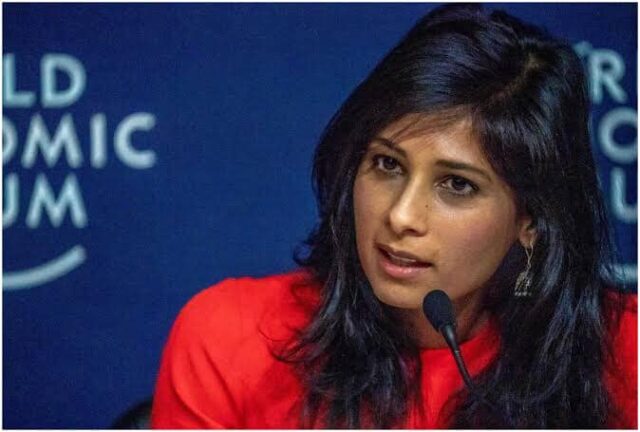
On the left : Prof Carmen Reinhart, on the right : Prof Gita Gopinath

Two of the most fundamental institutions of neo liberal economics – the IMF ( International Monetary Fund) and the World Bank have women as their chief economists now . Our own Prof Gita Gopinath (department of economics , Harvard) is at the IMF and just about some hours ago, Prof Carmen Reinhart from Harvard Kennedy School is appointed the chief economist at the World Bank. I have referred to Prof Reinhardt’s work on global financial crises for my own lectures . Her key focus being the problematic relationship between banking, currency, lending bubble and finally the crisis . A relationship that works uniformly through all neoliberal economic logic . Also , recently I had googled her latest work while preparing for the China lecture series and had come across her forecast for the Chinese bubble bursting with a strong insight into the fragility of the Chinese economic model .

Clearly, with the way the world is sinking into the biggest financial crisis as the post corona world order sets in , it is scholars like her whose work will rule the roost . I am not an economist by profession but whatever I have studied and understood I find the very logic of neoliberal economics faulty . We need a combination economic model. However , this news made my heart swell with pride again. More power to such women of substance .


My Favourite Food | Vanisha Uppal

I hate vegetables
I Hate Vegetables!

Banni comes back from the school, and without removing the school bag from her shoulder, she goes straight to the kitchen and asks “Mom! what have you made for lunch today?”
Mom – Vegetables, salad, curd and roti
Banni – Which vegetables?
Mom – Beans, carrot and potatoes
Banni – Why do you make vegetables I hate them! I want to eat noodles instead.
Mom – Vegetables are full of vitamins that make you healthy.
Banni– I don’t want to be healthy now, can I please have noodles?
Mom – Vitamins is the need of the body. They are the good soldiers to fight against the bad soldiers in our body.
Banni – Bad soldiers? What do they do?
Mom- They make us fall ill. We get headaches, stomach pain and feel lazy.
Banni – Then why don’t the good soldier fight back and win the battle.
Mom – It all depends on the number of soldiers. If the good soldiers are more in number, they win. And we feel strong, active and creative. Also, we are less likely to fall sick. But if the bad soldiers are more in numbers, they win, and we get many diseases.
Banni – But I never told my body to have bad soldiers in me.
Mom smiled and said – You feed the bad soldiers by eating more junk food.
Banni – I eat your cooked food too, not so keen on vegetables today.
Mom- if you eat little good food along with chocolate, chips, burger in a day. Who do you think will win?
Banni – oh mom, by mistake, I served more food to the bad soldiers.
Mom- Now, if you eat home food half-heartedly and outside food with joy, it is like that you feed bad soldiers and become extra friendly to them. On the other hand, you don’t enjoy the company of good soldiers. Never appreciate and encourage them.
Banni does not want to hear any bad words about her favourite foods but what to say? She started looking outside the window.
Mom knows what is going on in Banni’s mind.
Mom – How do you feel when your teachers do not acknowledge your good work?
Banni- I feel very bad. Which are the good food and bad food, mom?
Mom – All the packed food, including snacks that come in beautiful wrappers, have preservatives to make them stay for long. They are lying on your grocery shop for one week or sometimes more than that. They are not fresh and healthy. They are bad soldiers. Food made by mom and all fruits and vegetables are the good soldiers. Fired food made at home is ok too because mom uses the fresh oil.
Banni – but I love to eat chocolate, biscuits, noodles, pizza, burger and whatever is there at the food joints. If they are so bad, then why are they sold in the market?
Mom –They are sold in the market to make more money. I am happy that you are so truthful also I understand your temptation. How about one point to the bad shoulders and two points to the good soldiers? And always remember water is the best friend of the good soldiers.
Banni – I know what I will do now.
Mom – What?
Banni- I give four points to the good soldier by eating vegetables, salad, curd and roti with you. And in the evening I will eat noodles that give 1 point to bad soldiers. How about that, mom?
Mom hugged Banni – God has sent me a very intelligent child. I love you Banni, and you are much smarter than me.


Mahavir Jayanti in the Times of Corona-ed World / Neelam Jain

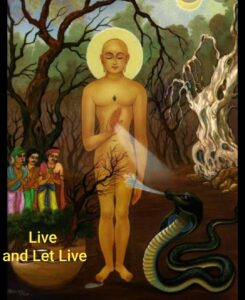
Lord Mahavir - Live and Let Live
Lord Mahavir – Live and Let Live

It is Mahavir Jayanti today, one of the most important days in the Jain religious calendar. As the Jain community celebrates the birth anniversary of Bhagwan Mahavir by exchanging greetings on email or whatsApp messages, it seems Nature has taken upon itself to celebrate this auspicious day on a grand scale, Universal in nature. The Universe knows no geographical boundaries, hence the divine celebrations are playing out on the entire planet.

The Corona virus has mandated we rethink how we live, consume, and treat others. I will briefly mention only two principles that Lord Mahavir gave to the world that seem like a balm on the Corona-ed human soul.

The current state of the world is very appropriately reflected by the opening lines of Charles Dickens famous novel A Tale of Two Cities: “It was the best of times, it was the worst of times, it was the age of wisdom, it was the age of foolishness, it was the epoch of belief, it was the epoch of incredulity, …” It tells about a time of chaos, conflicts, and despair, as well as happiness. It, in fact, tells us about the time of extreme opposites without any in-betweens.

Something similar is unfolding on planet earth today.

As I sit pondering over the birth celebrations of Lord Mahavir since when I was a child, the images of community events where school-children performed plays and songs depicting the life of the Teerthankara, the liberated One, flash before my eyes. It was a time of community gathering, celebrations, much fun and socializing, followed by lots of sumptuous food eaten together. I recall with much nostalgia the annual speech I was asked to deliver, in English (at age 7 onwards, because I studied in a convent school!), on his life and principles. I knew by rote the main tenets of Jainism and Lord Mahavir’s three-fold path of Right Faith, Right Knowledge and Right Conduct. For many years it continued thus, and I could have rattled off the entire Four-fold or Eight-fold Path (they are different for ascetics and householders) without pausing for a breath. Yet there was no deeper thought, no time for reflection on the teachings of this noble, liberated soul. Posters and banners proclaiming the lofty tenets of the world’s most non-violent religion were put up all over town, but how much was followed by people is anyone’s guess. As indeed it often happens in most religions.

However, today, as I sit locked up in my house – Coronavirus indeed has locked up indoors practically all humanity, I am having some Eureka moments! Yes, the wisdom of all my Mahavir-Jayanti speeches, scripted by people more learned than a 7-year-old, is gradually dawning on me. I feel the lessons humans have failed to learn by volition are being taught by Nature, à la science experiments demonstrated in a lab. Humans are perforce made to sit back while Nature takes over and teaches. The coping stone of Mahavir’s teaching has been “Live and Let Live,” kindness to all beings and cruelty towards none. He even went to tell humanity that plants too have a life, and therefore deserving mindfulness from humans.

The fact that the deadly Corona virus most probably originated from wet animal markets in China has forced mankind to rethink cruelty towards animals. In India most slaughter houses are shut, people are shunning animal flesh, eating healthy and vowing to continue with their kindness towards other living creatures. Humans are not the only inheritors of this beautiful planet. We have encroached in most downright manner, the habitat of birds and animals, cocking a snook at the principle of “Live and Let Live”. Now when the world, locked up behind closed doors, sees animals hitherto unseen on the roads roam freely, does it realize that in our race “to live” we forgot to “let others live”. We need to let the animals and birds, the air and water, sky and earth breathe and own their space in the universe. Our rapacious ways and the choices we make will not only kill them, but spell our own doom. In fact, we can live only if we let others live. The choice we had in “Live and Let Live” is long gone.

Another important tenet that Mahavir gave to humanity, and my most favorite one, is the beautiful precept of Aparigraha, or, in simplistic terms non-attachment to material things. Aparigraha is one of the virtues in Jainism, and one that was uncannily prescient when Mahavir expounded it more than 2,500 years ago. It is also one of the five vows that both householders and ascetics must observe. Non-Violence, Non-Stealing, and Truthfulness we all believe are necessary virtues, but when it comes to Aparigraha we are neither aware nor believe the same is very important virtue in higher pursuit of life.

Aparigraha is the virtue of non-possessiveness, non-grasping or non-greediness. Aparigraha is the opposite of parigrah, and refers to keeping the desire for possessions to what is necessary or important, depending on one’s life-stage and context.

In my current ruminative mood, I was wondering that the end of winter is usually the time for big-ticket sales in all shopping malls as well as online commerce sites. At this time of the year, one would have seen teeming crowds stocking up on “discounted goods,” unmindful of their need. But forced lock-downs the world over have seen people managing with what they have and no one is any the worse for it. When man‘s avarice could not be checked by any wise person’s advice, Nature had to step in and teach mankind a lesson it is not likely to forget any time soon. Instead of hoarding unwanted stuff, most people are decluttering their homes and spring-cleaning wardrobes. The world is seeing the benefit of minimalist life. This minimalist lifestyle, or Aparigraha was preached by Lord Mahavir at a time when the world probably was still unspoilt by abundance of material possessions. While excess consumption leads to bigger houses, faster cars, fancier technology, and cluttered homes, it never brings happiness. This, the world is being forced to see in the times of Corona virus. “A tomb now suffices him for whom the whole world was not sufficient,” said Alexander, the great Greek conqueror about himself just before he died.

We don’t need a full house, we need a full life. This is going to be a life-changing resolution. Lord Mahavir’s other teachings of Forgiveness, Compassion and Sacrifice are as pertinent in the new world order when there seems to be a tectonic shift in human consciousness. Of that later!


UN Resolutions on Kashmir are Null & Void / Krishan Tyagi

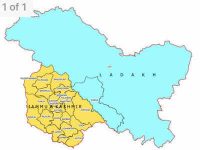
Jammu & Kashmir - Ladakh UTs

Jammu & Kashmir – Ladakh Union Territories

Before discussing the UN Resolutions relating to Jammu & Kashmir and diagnosing the quagmire Pakistan is in, let’s have a quick look at Articles 370 and 35A of the Indian Constitution over the abrogation of which Pakistani PM Imran Khan and the Pakistani establishment are so “anxious and distressed”.

Article 370 in the Constitution of India which came into effect in 1949 gave a special status to the state of Jammu & Kashmir (J&K) under which the state had a separate constitution (written and adopted by a duly elected Constituent Assembly of Jammu & Kashmir in November 1956) and a separate flag. It allowed the state jurisdiction to make its own laws in all matters except finance, defence, foreign affairs and communications. That meant the residents of the state lived under different laws from the rest of the country in matters such as property ownership, employment and residency. The Article denied property rights in the region to the Indian citizens from outside J&K.

At the same time, the Constitution of Jammu & Kashmir 1956, that ran parallel to the Constitution of India in terms of their secular character and democratic system, in its Preamble recognised the accession of the state to India on 26th October, 1947 through the Instrument of Accession signed by former ruler of Jammu & Kashmir Maharaja Hari Singh, committed to the concept of single Indian citizenship, and defined the state as an integral part of the Union of India.

The Article was drafted in Part XXI of the Indian Constitution: Temporary, Transitional and Special Provisions. Some aspects of Article 370 got diluted over the decades in the fields of judicial system and public administration.

Under the Article 370 of the Indian constitution, in 1954 another amendment in the Constitution was made, called Article 35A, through an Executive Order (called Presidential order), meaning without the approval of Indian Parliament. Article 35A permitted the legislative assembly of Jammu & Kashmir to define permanent residents of the region. The Article forbid non-J&K citizens of India from permanently settling, buying immoveable property, holding local government jobs, or winning educational scholarships in the state.

Article 35A, referred to as the Permanent Residents Law, also barred female residents of Jammu & Kashmir from property rights in the event that they married a person from outside the state. The provision also extended to such women’s children.

Evidently, the Article clearly discriminated against women. To quote an example, former chief minister of J&K Farooq Abdullah marrying a lady of British origin loses no property rights, but his daughter and Omar Abdullah’s sister Sara lost all her property rights in J&K because of marrying Sachin Pilot who is not from J&K.

Apart from the Article 35A discriminating against women, these Articles also created anomalies in the Indian democracy. While Indian citizens who were “Permanent Residents” of J&K could buy property, have government jobs and settle permanently in any other state of India, non-J&K citizens of India were not allowed to do the same in Jammu & Kashmir. Another problem emanating from Article 370, known in Britain as ‘the West Lothian Question’, was that the MPs and Union ministers coming from J&K could vote on legislation for the rest of India on subjects in the Union and Concurrent lists of the Constitution of India, the Indian parliament, ie, MPs from other states, had no right to legislate on those subjects for J&K.

As mentioned, Article 35A did not have any parliamentary sanction and was supposed to be temporary too.

The Government of India revoked Article 35A through a Presidential Order and abrogated Article 370 by passing an Act through the Indian Parliament in August 2019. In addition, the Indian government, using its Constitutional powers, reorganised the region into two Union Territories of Jammu & Kashmir and Ladhakh. It was in accordance with the long-standing demand for a separate UT status for Ladhakh, which has now become the only Buddhist majority unit in the federation of India.

Pakistan never recognised that Jammu & Kashmir enjoyed a special status in the Union of India through Articles 370 and 35A in the Constitution of India. Pak government, establishment and media call the Indian region of Jammu and Kashmir “Maqbooza Kashmir” (Occupied Kashmir), the formal phrase being “Indian Occupied Kashmir (IOK)”. But the moment the Modi government decided to abandon those provisions in the Indian Constitution, Pakistan decided it is a violation of some agreement with Pakistan! Pakistani establishment claimed the Article 370 could not be removed unilaterally by India. Why not? Was the Article introduced in the Indian Constitution under some mutual agreement between the two countries? Pakistani establishment cannot answer the question in the affirmative.

Yet Pakistan’s reaction was very shrill. Pakistan’s National Assembly in a joint session condemned India for unilaterally changing the status of Jammu & Kashmir. Pakistan downgraded the diplomatic relations with India by sending the Indian envoy back home; the trade with India has been stopped; the train and bus services between the two countries have been stopped; Pakistani airspace has again been restricted for Indian planes; and most importantly, Pakistan is taking the matter to the United Nations Security Council (UNSC) and International Court of Justice (ICJ), if possible. Prime Minister Imran Khan has phoned world leaders and Foreign Minister Shah Mahmood Qureshi has visited Beijing seeking China’s support at the UNSC to pressurise India to withdraw its measures in relation to Jammu and Kashmir.

However, there has been no response from the world leaders to Prime Minister Imran Khan’s SOS calls. Saudi Arabia, Malaysia, Britain, France, Canada and other countries either ignored Pakistan’s requests for intervention or told Pak leaders that they were “watching the situation”! The European Union in response actually slammed Pakistan for exporting terror to India and Europe. Thinking that Pakistan might be useful to Americans in Afghanistan, US President Donald Trump flip-flopped between ‘being happy to mediate between India and Pakistan’ and ‘leaving it up to PM Modi to handle the situation’, that excited Pak leadership one minute and depressed the next.

China was the only country that extended somewhat visible but inconsequential support to Pakistan. It forwarded Pakistan’s letter for the UNSC meeting to discuss Indian government’s move to end the special status of Jammu and Kashmir, advanced Pakistani narrative at the closed-door meeting of the UNSC held on 16 August 2019, and after the 73-minute closed-door meeting the Chinese envoy used his newly acquired English language skills to not only criticise India, but to portray his own views as the views of the entire UNSC, even violating the principle of confidentiality of a closed-door meeting. But, the farcical utterances of the Chinese envoy impressed no one in the international community. People around the world were flabbergasted that a country that has trampled over human rights from Tibet to Tiananmen Square, has imprisoned more than one million Uighur Muslims and is facing a mass revolt to its rule in Hong Kong – if there is a plebiscite in Hong Kong tomorrow, it would vote unanimously to leave China – has got the nerve to talk about “human rights violations” in a democratic country like India!

Apart from that small achievement, whereafter Pak foreign minister bragged that “Kashmir issue has been internationalised”, Pakistan drew blank in the international diplomacy. Even the members of the Organisation of Islamic Countries (OIC) and other Muslim countries did not support Pakistan on the issue. Actually as a slap in the face for Imran Khan, the UAE made its stand loud and clear that the removal of Article 370 from its Constitution was India’s internal matter.

Despite getting cold-shouldered by the international community, one thing that Pak leaders keep on harping about is the UNSC Resolutions relating to Jammu & Kashmir, at least to their domestic audience. Quite disingenuously they give the impression to the people of Pakistan that the UNSC passed resolutions directing India to conduct a plebiscite in J&K whether the people there want to be with India or Pakistan. Also, generally people in Pakistan think the plebiscite was supposed to take place in the Indian region of Jammu & Kashmir only. But “defying UNSC, India did not carry out the plebiscite”, the people of Pakistan are told. And, that’s why quite “justifiably”, as mentioned, Indian region of Jammu & Kashmir is called “Indian Occupied Kashmir” in Pakistan.

Let us look at the UNSC Resolutions in detail and their brief background –

The hostilities in J&K started on 22 October 1947 when Pakistan’s Pashtun tribal militias crossed the border of the then independent state of Jammu and Kashmir. On Maharaja Hari Singh signing the Instrument of Accession on 26 October 1947 and its acceptance by Indian Governor General Lord Mountbatten on 27 October 1947, Indian forces arrived in Kashmir to push back the invaders, and the war between the two sides ensued. On 31 December 1947 India referred the Jammu and Kashmir dispute to the UN Security Council.

At the UN Security Council, in relation to the Jammu and Kashmir dispute, Resolutions 38, 39, 47, and 51 were passed in 1948, Resolution 80 was passed in 1950, Resolution 91 was passed in 1951 and Resolution 122 in 1957.

Among them, the main resolution was the UNSC Resolution 47, adopted on 21 April 1948, wherein the proposal to hold a plebiscite in Jammu and Kashmir was made, that we will be looking in more details in the coming paragraphs.

Before that the Resolution 38 of 17 January 1948 called upon both India and Pakistan to take immediate measures (including public appeals) to improve the situation on the ground, and to refrain from doing anything which might aggravate the situation. Under the Resolution 39 of 20 January 1948, the UNSC constituted a Commission, called UN Commission for India and Pakistan, to resolve the dispute between them over the state of Jammu and Kashmir.

The Resolution 51 of 03 June 1948 was just a follow up of Resolution 47 directing the UN Commission to visit the areas of dispute. However, as detailed below, for years no progress took place on Resolution 47 and the story of further Resolutions is that of disagreements over the withdrawal of troops.

As said, the main Resolution in this regard was the UNSC Resolution 47, adopted on 21 April 1948, wherein the proposal to hold a plebiscite in Jammu and Kashmir was made. The Resolution had recommended a three-step process for the resolution of the dispute between India and Pakistan. In the first step, Pakistan was asked to withdraw all its nationals from Kashmir, ie the parts of the state that it occupied through, as seen by the UNSC, an unlawful invasion. To quote the original text, the Resolution said: “The Government of Pakistan should undertake to use its best endeavours to secure the withdrawal from the state of Jammu and Kashmir of tribesmen and Pakistani nationals not normally resident therein who have entered the state for the purpose of fighting, and to prevent any intrusion into the State of such elements and any furnishing of material aid to those fighting in the State.”

In the second step, India was asked to progressively reduce its forces to the minimum level required for law and order. The Resolution said, “when it is established to the satisfaction of the Commission (UN Commission for India and Pakistan) set up in accordance with the Council’s resolution 39 (1948) that the tribesmen are withdrawing and that arrangements for the cessation of the fighting have become effective, the Government of India should put into operation in consultation with the Commission a plan for withdrawing their own forces from Jammu and Kashmir and reducing them progressively to the minimum strength required for the support of the civil power in the maintenance of law and order.”

In the third step, India was asked to appoint a Plebiscite Administrator nominated by the United Nations who would conduct a free and impartial plebiscite. “When the Indian forces have been reduced to the minimum strength”, outlining the conditions such as equitable representation of both India and Pakistan in the administrative bodies for a fair plebiscite the Resolution laid out the third step, “The Government of India should undertake that there will be established in Jammu and Kashmir a Plebiscite Administration to hold plebiscite as soon as possible on the question of the accession of the State to India or Pakistan.”

As can be seen from the original text of the Resolution, the proposed three steps to resolve the Kashmir dispute were to be taken in sequence, meaning the second step was to be taken up on the completion of the first one, and the third step was to be taken up on the completion of the second one.

But Pakistan never withdrew its nationals from Kashmir, the territory internationally called ‘Pak Occupied Kashmir’. And, because Pakistan did not take the first step that it was asked to, and thus even the first condition for conducting the plebiscite did not get fulfilled, things did not move further.

So, the reality of the UNSC Resolutions on Kashmir is that it was Pakistan that defied the UNSC directions and did not leave the parts of Kashmir that it occupied through an unlawful invasion, rendering the UNSC Resolution ineffective.

In fact, the founder and first Governor General of Pakistan Muhammad Ali Jinnah did not believe in a plebiscite. On 1 November 1947 Jinnah rejected Indian Governor General Lord Mountbatten’s proposal to decide the accession of Junagarh, Hyderabad and Kashmir by an ‘impartial reference to the will of the people’. His reply to Lord Mountbatten was that a plebiscite was unnecessary and states should accede according to their majority population. Jinnah was willing to urge Junagarh to accede to India in return for Kashmir. When Mountbatten suggested that the plebiscite could be conducted by the United Nations, Jinnah again rejected the proposal, hoping that the invasion would succeed and Pakistan might lose a plebiscite. According to constitutional expert AG Noorani, Jinnah ended up squandering his leverage.

Later for the plebiscite, Jinnah demanded simultaneous troop withdrawal, but it was not accepted as the UNSC accepted the legitimacy of Indian forces in Jammu and Kashmir because of the Instrument of Accession, while Pakistani forces invading the state was seen as an hostile and unlawful act. And thus Pakistan did not withdraw its nationals as directed by the UNSC. In fact, in a complete violation of the UNSC Resolution, in May 1948 the Pakistani army officially entered the conflict.

Now the Pak leaders cry foul that the UNSC Resolutions have not been acted upon. They say it is a failure of the United Nations that the Security Council resolutions have not been implemented. But the Resolutions could not be implemented because Pakistan did not cooperate with the Security Council. Despite the fact that India took the matter to the UN (and therefore was bound to accept the judgement of the UNSC) and itself being the invading party, Pakistan would not accept the minimal presence of Indian forces proposed under the UNSC Resolution. It was Pakistan that failed the United Nations. As many observers have concluded, the responsibility for the non-implementation of the UN Resolutions lies squarely with Pakistan. Pak leaders’ talk of UNSC Resolutions now is nothing more than hot air.

Even more importantly, legally speaking the fact is that the present state of Pakistan is not the state of Pakistan that was a party against the state of India in the UN Resolutions relating to Kashmir in 1948. THAT STATE OF PAKISTAN NO LONGER EXISTS. More than half of the population of that State of Pakistan transformed itself into another State called Bangladesh in 1971, a fully-fledged Member State of the United Nations in its own right since. So, a smaller part of the erstwhile State of Pakistan cannot claim itself to be the inheritor of that State of Pakistan which was the party to the dispute with India, even if it calls itself Pakistan, as the present day India cannot make claims on behalf of the India of Ashoka’s or even British times. In the concerned UNSC Resolution, present day Bangladesh, the then East Pakistan, was a joint claimant as a part of Pakistan. The present day Pakistan can only pursue that claim if Bangladesh joins it in pursuing that claim.

So, all the UN Resolutions relating to Jammu and Kashmir, where the State of India and the then State of Pakistan were the parties to the dispute, are null & void after the transformation of East Pakistan into Bangladesh.

And, even if we suppose the UNSC Resolutions are still valid and let’s imagine Pakistan’s request to implement the Resolutions is accepted by the UN, is Pakistan prepared and ready to follow the procedure laid out in the Resolutions? Pakistani withdrawal from Kashmir was the first condition of the Resolution passed by the UNSC in relation to Jammu & Kashmir, and it would always remain the first condition. Whether it was 1950 or it is 2050, if Pak leaders want the UNSC Resolution of 1948 to be executed, Pakistan has to withdraw from Kashmir.

Also, when Pak leaders talk of the UNSC Resolutions, they need to answer the question whether they are prepared to put the area of J&K under their control in the shape it was in 1947, as required by the concerned Resolution? Are they prepared to revoke the annexation of the former Northern Areas carried out in 2009 through the so-called Gilgit Baltistan Empowerment and Self-Governance Order 2009, despite the opposition from the people of the region? And, are the Pak leaders prepared to tell the Chinese to abandon CPEC and get out the area? Since their control over that part of J&K was self-admittedly disputed, Pak establishment had no right to authorise the Chinese constructing roads there. “Engineers” from the PLA cannot be stationed in Kashmir for a free & fair plebiscite to take place there. Pakistan’s “friends” would also have to return Aksai Chin to be included in Jammu & Kashmir.

This is the quagmire Pakistan faces that it fails to accept, in addition to be globally known for being a factory of terrorism and its collapsing financial system. No matter what way one looks at it, the UNSC Resolutions relating to Jammu & Kashmir are dead in the water. The earlier Pakistan learns it, the better.

Copyright © 2019 Krishan Tyagi. All Rights Reserved.

An earlier version of this article was published in India Link International, Oct – Nov 2019