But then I realize it isn’t the outside world that is a whirlwind; it’s only my mind.
The world has never complained about how busy it is! There is a famous Buddhist saying that everyone appears as Buddhas in the eyes of a Buddha, and everyone appears as a pig in the eyes of a pig.
It is suggested that the world is experienced according to the state of one’s mind. When your mind is joyful and compassionate, the world is, too.
When your mind is full of negative thoughts, the world is, too. When your mind rests, the world also rests.
–Haemin Sunim: The Things You Can See Only When You Slow Down.
So often, Zen Buddhism is stereotyped as an abrasive, rude form of wake-up therapy.
Certainly if one confines Zen to the more shocking, paradoxical koans, that stereotype has some truth to it.
LIke the Vietnamese Thich Nhat Han, the contemporary Korean Zen monk Haemin Sunim soothes us into deep restfulness through his words and the breath-pauses between the words.
I find myself turning the pages of the book when I am feeling stressed-out, anxious, angry or plain tired.
Sunim has a gently nurturing mentor presence that can slow you down, to where you then accomplish all that you need with effortless ease.
–Raj Ayyar
Watch “SANSKRIT LOVE SONG TO INDIA” with text and translation
Yogananda: Do not become discouraged ever
You must try to rise above these changing scenes. Do not become discouraged when people strike you. You must remember to control yourself. Don’t talk too much. Those who talk too much are liable to talk useless things and waste their time. Avoid useless talk, and don’t be inquisitive about others. Be curious about God. about Gita, and about your lessons. Seek quiet places where you can be alone. Meditate and find your spiritual balance.
– Paramhansa Yogananda
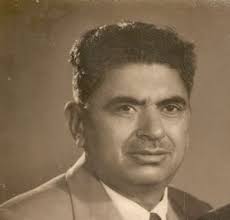
Utility Of Honesty in Trade by K.B. Khushalani
Kimatrai Baharmal Khushalani
A HOMAGE TO KIMATRAI BAHARMAL KHUSHALANI
Bringing to you the Late Shri Kimatrai Baharmal Khushalani’s essay UTILITY OF HONESTY IN TRADE. Priced two annas, published in 1936, this essay was awarded a Gold Medal based on an All India competition held in 1934. Readers will find that the essay is as relevant today as it was then. We begin with a foreword which was published along with the essay – Editor
A Foreword by S. G. Sastry Esq., B. A.t M. Sc. (Lond), F. C. S., Director of Industries and Commerce in Mysore. THE DHARMA SAMAJA BANGALORE CITY., 1936. Price: Annas 2 [All Rights Reserved.]
FOREWORD
I welcome the opportunity afforded to me by. the Secretary of the Dharma Samaja, Chickpet, Bangalore City, to write a foreword to the Prize Essay on the subject of “Utility of Honesty in Trade” by Mr. K. B. Khushalani. BE
The Dharma Samaja is being conducted by an enthusiastic group of young men who feel that there is an ever growing need for conducting trade and commerce of the country in the true and ancient spirit of the “Vanik Dharma.” This harkening back to the old traditions and ideals is a good sign amongst the youth of the country and should be welcomed and encouraged in all ways
Owing to changes in the political and economic conditions of the people, traditional and time-honoured ways of carrying on trade and commerce of the country have undergone many changes, alas, for the worse.
Now-a-days the spirit of fair-play in commercial transactions is lacking. The mutual trust that ought to exist between the buyer and seller is absent. As of old, the buyer and seller make offers and counter-offers but in many instances bargaining degenerates into cheating. Either the buyer or the seller always tries to take a mean advantage over the other. Once upon a time, the motto of commercial transactions used to be ‘ Good value for money – This is no longer the rule.
One often finds in transactions between two countries especially if one of them is more advanced than the other the former country exploits the ignorance and helplessness of the latter country to the utmost and charges unconscionably high rates for goods supplied. Importers of machinery and other equipment in India know this too well.
One of the most regrettable forms that this cheating has assumed is the adulteration of goods offered for sale. I do not state that this is peculiar to India only but so long as it does exist in this country, it must be taken note of and attempts made to eradicate the evil. Once upon a time this evil was rampant in all our staple exports to foreign countries but it is gradually on the decline owing to legislation in some cases, owing to the realisation on the part of the exporters that it does not pay to adulterate commodities, and also owing to inferior position allotted to such commodities in International markets along side with similar commodities from other countries. There is also an increasing moral pressure being exercised by those who believe in a fair deal.
But nearer home, in all our markets – small or great – the evil of adulteration of foodstuffs is on the increase. This is nothing short of a criminal practice and ought to be put down ruthlessly by legal and other methods. Whereas the mixing of cotton with woollen goods or cotton with silk goods or mixing silk and Rayon and pass off the articles as real 100 per cent woollen, real 100 per cent silk, etc. may not have such consequences, the adulteration of foodstuffs strikes at
the health of the community itself. Whatever may have been the genesis of this situation, so long as it exists it is high time that the Government took early steps to put down the evil- It is unnecessary to enumerate cases of such adulteration as every householder will be able to prepare a long list.
One special field in which adulteration becomes a positive sin should be mentioned. This relates to drugs and medicines. Anybody who is inclined to go through the Drug Enquiry Committee Report will find ample recorded evidence of so called medicines sold in the markets not being medicines at all. It is regrettable that scientists have abused their knowledge in some instances and are committing the unforgivable sin of tampering with and adulterating medicines which are meant to alleviate human distress and save human lives. Such deceit could be, to some extent, controlled by drastic legislation but that cannot be expected to prevent fraud in trade for ever as man-made laws cannot be fool proof. But even here, unfortunately, India is lagging behind the other countries which have enacted stringent legislative measures to punish such people by award of deterrent sentences. Unscrupulous foreign merchants knowing full well that their crime goes undetected in India for lack of laboratories and further goes unpunished for lack of legislation in the matter have been running “amock” as it were, in Indian markets and label all sorts of fraudulent preparations as potent medicines which not only do not cure the disease but impoverish the poor and ignorant public.
The best security against such practices is a high sense of morality among the manufacturers and traders themselves. If “Honesty as a faith” does not appeal to one and all, at least “Honesty as a policy” ought to be the guiding factor in all our economic transactions. The Trade Guilds of our country and the Graff and Merchant Guilds of mediaeval Europe exercised a powerful influence on their members dealings and one would wish for the revival of this “Guild’ Spirit” through the modern trade organisations. Enlightened public opinion based on a high sense of morality is the best guarantee for the protection of the public against commercial frauds. The members of the Dharma Samaja have in this direction a rich field for effective and enduring social service.
I do not want the foreword to be longer than the text itself and I should draw a line at this point. I wish the Dharma Samaja and all the enthusiastic workers connected with it every luck and success in their endeavours. Their work is not easy but they must carry on with a missionary spirit and try their level best to see that the trade and commerce of the country are carried on in the true spirit of ancient “Vanik Dharma“.
S. G. SASTRY, Director Of Industries And Commerce In Mysore. Bangalore, (21st September 1956)
UTILITY OF HONESTY IN TRADE HONESTY THE BEDROCK OF SUCCESS An award winning essay by K.B. Khushalani
Kimatrai Baharmal Khushalani
Honesty, more natural than dishonesty
The fundamental principles of Human Existence are Truth and Honesty, for, everybody is more honest than dishonest; the greatest liar utters more truths than lies. This is part of the general fact that there is more goodness in the World than badness or Evil, though occasionally we find appalling crimes, which are rather aberrations or freaks and do not proceed from the intrinsic nature of the World. In fact, a perfect liar is really a ‘ truthful man”, for, we can then always. say that truth must be other than what he speaks. By a liar we mean an occasional liar, and he is really a dangerous man. So is it in the case of Honesty- By a dishonest man we always understand one who is occasionally dishonest. Thus honesty is more natural than dishonesty, and that is why it betrays its nature from beneath the darkest cloaks, and we can’t once suspect that the man is dishonest. It is exactly because of the same reason that crimes are detected, for, every happening leaves its traces, and, try as we may, we will not be able to hide them. Again that which is natural is beneficial, for it works in a graceful manner; and honesty, when allowed its free play, works wonders, specially in the long run. In trade; one has to depend on the good-will of many, and honesty is the best means to the end. Honesty should be practised in all walks of life; it is a strength and a support in all matters of routine; it has all advantages and only one apparent disadvantage, that sometimes one feels that there is loss, but really that is temporary and in many cases only apparent.
There are often trials and, when one successfully stands them, he comes out nobler and brighter. Every trouble means a further rise, and the greater the opposition it offers in surmounting, the better are its results. The fruit is simply delayed, but never denied, and if and when withheld longer, it is paid with interest. One has only to be patient and watching; he should muster up courage and should never be disheartened. All obstacles are meant for training; they are cleverly designed and intentionally set, each for its purpose, and each variant in design, and different in colour to suit the particular case. All this is for Honesty generally; in trade, its results are direct, cheap and comparatively earlier than elsewhere.
Trade differentiated from other occupations as regards honesty.
Trade is different from other occupations, in that its, adherent is independent. It is his merit alone that counts; he is the master of the situation, controlled only by market rates. It is a profession peculiar in itself. In spite of the trader’s dealings with many people of different temperaments, for whose pleasure and custom he has to strive constantly which he can do better by honesty rather than by dishonesty, he can remain independent and can maintain his self-respect fully well. Of course, there are some people always and everywhere, who can never be pleased by any means, honest or dishonest. As they are few and far between, they should never be bothered about, and it is always preferable to ignore their custom rather than hanker after them.
Businessman should fulfill his part of duty
The relationship of the customer and the merchant is one in which are involved the interests of both. The former wants supply of good articles at a reasonable price, while the latter is after the custom of the former; and the maintenance of the tie depends upon both the reasonableness of the one and the honesty of the other. The businessman, who wants to establish himself well, should fulfil his duty and the customer will automatically do his. Granting that men are unreasonable, yet it in no way pays the dealer to be dishonest with them, though we should consider the average buyer who is seldom unreasonable inhis demands. In case a purchaser expects too much concession, it should be explained to him for an amicable deal, as few would grudge the fair profits of a dealer. It is only when a dealer sets his prices unreasonably high that he does not like to explain his position. Explaining the position is not disposing trade secrets, which are as dear to any one else, and principles of honesty do not their revelition. The position of the buyer is slightly superiot to that of the seller in the respect that the choice of choosing his suppliers is in his hands; and this is a further reason for the seller to adapt his behaviour in accordance with the likes and dislikes of the buyer. None will or can say that any purchaser ever wants his supplier to be dishonest to him. From the time he enters the shop or negotiates by correspondence, his pleasure is to be considered supreme, and it is the duty of the dealer to see that he gives no cause for any suspicion. But, as the face is the index to the mind, he cannot successfully do it unless he practises honesty. Customers are free birds, they cannot be tied down to one shop unless-there is something to attract them, and the best that the-owner of the shop can offer is his sincerity.
Dishonest tricks practised by the Seller and their detrimental effects.
The kind of honesty expected from the trader is :—
(i) Honesty in talk
(a) While recommending his articles to his customer he should neither exaggerate their qualities, nor assign to them anymore qualities than they possess, and
(b) He should not at the same time, speak low of others’ articles, but should restrict himself only to praising his own.
(ii) Honesty in rate
He should keep his rates fixed once and for all. The tendency to snatch as much from the other party as possible is counterproductive and creates suspicion in the mind of the customer
A prudent businessman should avoid flexible rates, he should see that the rates are in fair level with the market price. Of course no two traders can keep the rates of all articles the same; it is just like saying, that no two watches tally exactly, and if they do at all, they cannot continue to do so for long; yet as much of standardization as can possibly be attained should be aimed at.
(iii) Honesty in samples.
Dishonesty- in this can be of two kinds. Some dealers show samples from the best lot, they want to sell but quote prices for the inferior articles; others choose as their sample the best of the lot they want to sell,
butthe sample does not represent the average of the stock. Both practices are decidedly not good and should be discouraged; it is only a question of degree as between them, the former being worse, and the latter bad.
(iv) Honesty in Supply
(a) It is a practice with many dealers to show one article as a sample and supply another an inferior one. Some of them maintain great differences in the qualities and some keep less. The former are ruled out at the first stroke by the purchaser in his choice and they seldom continue as traders for long, whereas the latter carry on, but cut no good figure. Thus, the latter class of people exist for exigencies only.
{ b ) Some of the dealers again put in a few bad things in the lot; they either take undue advantage of the purchaser’s weakness, or think that he would not take the trouble of returning the articles. If at all he does try to return, they reserve to themselves the choice of accepting them, and, in almost all cases, refuse to take back. This audacious abuse of confidence is very bad and detrimental to the interests of the dealer.
The kind of honesty expected from the trader is :—
Honesty in maintaining books
It is a habit with many merchants to maintain duplicate books, vouchers, bills etc. Duplicate books vouchers are maintained to cheat either the Income Tax Authorities or debtors and creditors, the debtors when they are illiterate and the creditors at the time of insolvency; whereas duplicate bills are shown to customers as a proof of quoted cost prices. These’ bills are prepared either by the merchant or his supplier who-is requested to show higher prices than actual. Another trick is sometimes played, the supplier being asked to show true prices but not the commission on the bill. This is justified by some people on the ground that commission is meant solely and entirely for the trader, and the purchaser has no-business with it. But in the true sense of the word it can be justified only when the trader plainly tells his customer that he receives a certain commission, the extent of which he cannot disclose. -The act of cheating the Income Tax Department puts Government to heavy loss, which is usually counteracted by revision of rates by Government, and the burden is. borne ultimately by these who do not, or by both. Besides, if once caught, they are heavily penalised.
The fact of anybody declaring himself insolvent, after setting aside certain properties for himself and having prepared false books for submission to Court, never remains a secret. and is often proved in the Courts of Law. In those cases, however, where sufficient evidence is not available to pin the dishonesty, there is a definite judgment against him in the business world, where each individual weighs his action the balance and finds himself wanting. Such a man loses the confidence of the mercantile class, and everybody tries to keep him at a distance and hesitates to deal with him.
Honesty in general not covered by the above five cases
All these practices are bad; they are enumerated in the order of increasing importance and should be avoided by every businessman who .wants to expand his business. The traders who practise them are shortsighted, for they look to the immediate and not to the
permanent gain. They do not understand that it is not a day’s business. If the public are prejudiced against any dealer, the prejudice lasts for years, and may stand as a permanent and indelible stain against his firm even though he be dead, and his posterity have to drudge heavily to wipe it off.
Remember: Dishonesty is detected always
All malpractices, deceitful tricks and other acts of dishonesty are bound to come to light some time; some are known on the very day and others later on. If one has praised his article too much and given it fictitious qualities, the truth will be known after use, when it will not stand the test. Dishonesty in the quality of materials, in samples, and in quantity is known the very moment the goods are received by the purchaser. One can
Befool one at all times
Or all at one time
But not all at all times.
Now-a-days the World has advanced considerably. Scientists are after speed; and are providing all kinds of facilities with the result that the entire world is connected by Telegraph, Telephone and Wireless systems. Telepathy, and Television are abstract subjects no more. Every merchant worth the name keeps a Telephone instrument in his office, and market prices are being communicated to him every moment; therefore the chances of a big dealer’s cheating and being cheated in rates are remote. Besides, the present age is the age of specialization, and everybody knows the ins and outs of his field. He keeps up a thorough acquaintance with the rates and other information connected with the commodities he deals in, and seldom allows himself to be cheated, if at all, and much less by the same man twice. People do not hesitate to form opinions from a single instance, and that is what is being done. They do not want even to wait and defer judgment until a repetition occurs. If even from a distance they smell dishonesty, they would cut off their connection at once.
Efficacy of Low Profits
Every dealer should believe in low charges, ie. less profit and more custom (small profits and quick returns) and never in high profit which is bound to result in the long run in less custom – But whatever be his rates, they should be uniform, and then only can he be said to be honest.
Dealer should not play in quality
No dealer should play with quality; neither in toto nor in part, as the opposite party, failing to understand the dishonest intentions of the sender, forms an opinion, wrong though, that the general quality of his entire stock is bad. This is detrimental to the reputation also of the manufacturer, who should see that no bad stuff leaves his factory. All the inferior output- should be forthwith sorted out and sold definitely at a low rate, not to the big merchants, but to the retail sellers. Better still would it be if each factory should create one or more shops, according to need, for the purpose of selling such stuff under its direct guidance, so as to reduce the chances of marring-its reputation-
8. In regard to the purchaser, the following are the acts of dishonesty performed by him.
(i) If he sends for goods from two people dealing in the same commodity, and perchance gets bad stuff from one who refuses to take it back, he tries to dump it on the other. This is a mean practice and is simply taking advantage of somebody’s goodness and reliance. In case the fact becomes known to him through the concerned supplier, as it generally happens, he is pained at the trick of his customer, which naturally deters him from affording such facilities thereafter.
(ii) In the process of bargaining with a dealer he may falsely state that he is getting the same stuff cheaper, or better stuff at the same price from some other dealer, in order to compel him to reduce his rates. It is evident that the same trick cannot be repeated, and that it breaks the faith of his supplier.
(iii) When the sample shown to him is really good, he generally disapproves of it or approves of it after higgle haggle, this is unfair. If he does not want to praise the article lest he should hear a high bid from him, he should keep silent. Such lies, like many other ones, can be avoided without any disadvantage, and, when one does not do so, he simply burdens his conscience for no gain.
Do as you wish to be done by.
Every trader is a purchaser and a seller at the same time, and should observe honesty in both the capacities. Unless he is an honest seller, he cannot be an honest buyer and vice versa. He should always keep in mind the maxim ‘Do as you wish to be done by ‘. This will guide him in both the lines, and when he feels that he has satisfied himself according to this test in both the ways, then only can he be called a successfully honest trader.
Quick rectification of bonafide mistakes increase confidence.
The trader should be honest in his accounts; if he has perchance committed a mistake in dispatching goods or preparing a bill,he should ,immediately he comes to know of it, correct it without waiting for its being pointed out by the other party. Similarly, if he receives any article extra or discovers a mistake in account to his advantage, he should forthwith point it out to his supplier. Again, if perchance and through mistake, i.e.he has unintentionally charged some one higher rates, he should communicate the fact to that customer and credit the balance to his account or be prepared to remit in cash. All these acts, and specially the last, increase the confidence of his supplier and purchaser, who-repay his goodness by advertising him among others. This-evidently brings him greater profit than he would otherwise have realized, for, in many cases, if he does not himself point it out , the other party does it, and claims the balance as a right..
The manufacturer and the consumer
There are two more classes of people who have dealings in trade, but are not traders. A trader necessarily is one who purchases certain goods and sells them at a profit. He is the middle man between the manufacturer and the consumer, the two classes of people under consideration. Both these have one sided dealings, the one sells and the other only purchases, and, because of their restricted dealings, they are not so tactful as the trader
The manufacturing class includes the artisan who prepares articles with his own hands on a small scale. He is generally poor, and his business, like that of the manufacturer, depends upon the quality of the manufactured articles. He can retain his customers only if he continues using good raw materials and producing good stuff.
Psychology of the consumer
The consumer is a purchaser on a very small scale, but because of his existence in large numbers, he is the most important member of the trading circle, and, because every article has ultimately to go to him, his pleasure, and, choice is considered supreme. Both the manufacturer and the trader try to adopt their policy according to his taste. He purchases articles for his or his friends’ and relatives’ use. He wants good stuff and at a reasonable price; he frequents only those places where both these conditions are satisfied; and thus he always prefers an honest shopkeeper. He is reliant and will continue attending the same as long as nothing happens to break his faith which, if once broken, requires a very great effort to restore. To make new customers, they say, is difficult, but to retain them is still more difficult.
Thus perpetual honesty is required to attract new customers and to retain old ones. Carelessness in this matter never pays the dealer, but will rather harm him. One may give away anything of one’s own accord or on demand, but never when he knows he is being cheated; he then feels much pain and many are actuated to revenge, when they know that they have been cheated. Further the consumer likes to make purchases from such shops as maintain fixed rates, for he is not a trader and naturally not so well versed in the line. Therefore be may not know the current prices of articles, especially of those that he occasionally requires. In a fixed-rate-shop he may have to pay a slightly higher price, but he feels sure that lie will not be cheated for a big sum, which is generally the case in shops where no uniform rates are charged, and where the shop-keeper tries to snatch as much as he can from the customer, the more so when he gets the clue that he has no definite knowledge of prices of the article.
The shopkeepers are usually clever enough to understand this at once from the manner of his enquiring. From what has been said above, it is absolutely clear that the shopkeeper can cheat the same man only once. A dishonest dealer can make successful business, when he gets every day new faces to deceive, and has to deal daily with different men not known to one another and not expected to meet one Another; or, if at all they meet’ they should not speak about the purchases made by them on that day or any of the previous days, so that everybody else remains in the dark and never knows about the dishonesty of the man unless he gets a chance to be cheated himself. This however, is an utterly impossible condition to realize. Or dishonesty may pay, where people are suppressed due to pressure of one’s superiority or where heads are corrupt; but such conditions do not exist in the business world, and where they exist, they never last long.
Honesty the best of all Qualities of a trader
As in other fields it is hard work and intelligence that establish a recruit, so in trade it is Honesty that can establish him. Cheerful temperament, a tendency to accommodate the customer in his choice and demand, agreeable manners, respect for the customer, self-respect and, last but not least. honesty in dealing are some of the qualities required for successful business, and, among them all, honesty stands Supreme, and makes up for all the deficiencies and defects of the trader. One needs to realize how difficult it would be if all people were dishonest; one could not then move an inch. One cannot then trust anyone with anything even for a moment, nor can he pay him anything in advance.
False fears due to lack of self-confidence & experience
There is a general cry that the time for honesty is over, and that it is not valued now-a-days. There may be a grain of truth in the .statement, which amounts but to an acknowledgement of the struggle between honesty and dishonesty, or between truth and untruth which appears eternal, though. victory in the long run is never in doubt for honesty and truth. Under no case can dishonesty over-power honesty. Our fears against honesty are often merely theoretical, un-grounded, baseless and false. Our troubles are either; imaginary, self-created or self-invited. None of them that grumble against honesty has ever practised it, and never has he tasted the sweetness arising from it. His opinion is the opinion of others, who in turn cannot claim it as their own. Thus an idea, emanating from a few unworthy individuals, is passed on by several lips to several ears and obtains a strong grip over a large majority. A votary of dishonesty, when asked to state if he has put in serious efforts to follow up his trade by honesty or given a fair trial to it would certainly answer in the negative. People adopt the easiest course, they would like to go by the shortest route, they want to be rich in a day, and that is why they adopt dishonest means. The path of the honest dealer is weary in the beginning but joyful in the end, troublesome at the outset but easy in the long run, and tedious at the start but sure in due course. It is, of course, certain that he who starts his business on the lines of honest dealing will meet with opposition, but he should stand it bravely and every difficulty will melt away in due course leaving the way-clear for him. Generally every one who starts a new business meets with certain difficulties and obstacles: the success in the enterprise depends on the grit and tact of the actor. It is said that an honest man is offered more difficulties, but we should not at the same time forget that he has behind him, as an outcome of his honesty, a greater force to support him. This force is sure to succeed. The honest dealer may take long to establish, but when once established none can dislodge him. His success is lasting; the customers secured by him are permanent, and his profits regular, sure and more definite.
Honesty promotes, dishonesty impedes all business
Never can anyone lose in business because of his honesty, and when such a report is received, one can take it for certain that there must be some other defect or defects in the organization, and that were it not for honesty, the concerned party would have incurred greater loss and at a much -earlier date than otherwise, for, as said above, that which takes long to establish takes long to dwindle. Honesty in fact makes up for many defects in staff, in management, in organization and individual abilities; it protects from grave fears. Weak administration, careless management, deficient organization, expenditure disproportionate to income incurred for unnecessary show, squandering of money by responsible persons connected with the concern, improper investment, defective accounts and dishonesty on the part of some one or other are the salient causes of failures of business, heavy losses and bankruptcy. A majority of failures occuring in petty concerns are due to defective accounts, but a still higher proportion of failures in both petty and big concerns can be attributed to dishonesty. Dishonesty is a termite, a canker, a pest that can eat up the very tissue of any undertaking, retard its growth and finally destroy it in toto. It needs to be guarded against from the beginning to the end
Dishonesty – its effects on the employees
Dishonesty of the master induces the servant to be dishonest: it becomes a vicious circle ever widening itself by absorbing freshmen every day, and like an infectious disease catching hold of every one coming in contact- Every act of cheating by the employer produces a reflex effect on the employee, who, by his intimate contact with the former, is enamoured of the alluring gains easily got by the cut-short methods, and is tempted to adopt them for his personal benefit. He has none else to rob except his master; and he starts with double vengeance to make up for the time ‘uselessly passed in honesty’, he feels least for his master whose profession is cheating; and he knows that he has his share in the earnings of his master, which he wants to have over and above his pay as a reward; for sharing his sins and consequent smothering of his own conscience. The poor employer is doubly affected: his tricks-being sufficiently known by this time, his customers have started leaving him, and he finds his business on the wane on one hand, and on the other he is being robbed at home. He realizes his folly too late, or he may not realize it at all throughout his life. The vice invented by him has caught and entangled him. Similarly many partnerships have been ruined by dishonesty, If the same trader had put in all his efforts to prosper by honest means, he would surely have done better.
Causes of Occasional Thriving of Dishonest Men and Losing of Honest Men
We have often seen a dishonest man thriving and honest man losing. We then get perplexed. But let it be clear, that under such circumstances the dishonest man flourishes for his ability and skill and never for his dishonesty, while the honest man loses not for his professing honesty but for his incapacity, inefficiency and general weakness. If the former were to adopt honesty, in addition to his other qualities, he would thrive still more, and if the latter takes to dishonesty he would fall further. For fair comparison, either the same man or two equally competent men, or say nearly equal in qualities, should be made to start similar business under similar circumstances, but by different means, honest and dishonest, and it needs no prophet to say that honesty will bring betterprofits. Unfortunately the capable men are not. guided and trained in the honest methods with the result that they adopt the unnatural ones – which by its usage has become natural and easy or so-called easy course while weaklings who are really unfit to adopt any method, adhere to honesty for fear of being exposed, caught, or sent to gaol.
Honesty in Trade compared with Honesty outside
There is a vast difference in professing honesty in trade and elsewhere. In trade it is easy. without complications, never harmful but always beneficial, whereas when followed outside trade, it invites opposition, entails trouble and requires greater nerve on the part of its adherent to stick to it. Though, even in the latter case, it is bound to lead to prosperity, it may be a little later than expected. In trade it is in the interests of all those who have dealings with one another that everybody should be honest. Those who practise dishonesty do it for their sole personal gain which they wrongly think results from dishonesty. But, outside trade, there are certain spheres in which those having dealings with each other want one or the other party to be dishonest for their own personal and selfish benefit, and because of their pressure, some people are led into dishonesty. In trade it is entirely different, for, all the customers without a single exception will undoubtedly be pleased by their supplier’s honesty.
Extent of probable saving to the business world from wholesale honesty
To realize the utility of honesty it will be worth while to consider, what an amount of misery would be saved to the World, if dishonest men were removed from it. Of course, it is an Utopian idea, but is taken up here simply for argument’s sake. All auditing would then be unnecessary; accountants may remain, but auditors as a class would cease to exist. All watch and protection against theft would be unnecessary. The World is spending millions merely and solely on watchmen and guards. Every individual has to adopt means to protect his property, and this too would be unnecessary. Dishonest men are a drag on the world, they are a drag on individuals and a drag on the merchant class as a whole.
Honesty the best policy
It is said that honesty is the best policy, and nowhere is the significance of the saying so fully realized as in trade The Proverb is very expressive and important in the respect that it treats with the material side of honesty and lays no stress on its moral aspect. The enunciator of the proverb has made honesty stand on the merits of its usefulness, and states it as a profitable policy, and all that has hitherto been stated is simply in expounding this maxim. Besides, all great men have emphasised its usefulness and they cannot all be wrong.
21.Scope of Honesty in moulding the future
Viewing things broadly we cannot help coming to the conclusion that our World is connected-with other lokas or worlds and that lives do not terminate here. Each individual leads an eternal life of which the present one is but one out of many phases; its length or duration is but a tiny part of the Infinite whole. This is the scientific view of life and is not only accepted but propagated by great Scientists like Sir Oliver Lodge, the late President of the Royal Society of Science. That being so, it is but a logical conclusion that our actions will not only bear fruit here, but will mould our career in future births and effect our economic life there, as is the present moulded by the past Thus, even with a view to improve our future business career, we are required to be honest.
Honesty enhances social status and expands business
A dishonest man is held very low in the esteem of the society, and intimately connected as human beings are, we cannot for a moment disregard its opinion. Society can set aside any individual, it can non-co-operate with or do away with any undesirable fellow, but an individual cannot do so even though he may not like a particular society. Has not everybody seen the effect of social pressure in bringing round and moulding the worst type of people? Individuals have to submit to the social will, even though it be wrong; much moreso, when it is right. An honest man, who has established himself in the opinion of the public by his honest methods, finds himself safe in the hands of society, and his customers increase day by day. Every man attending his shop will bring a few more. Every trader has to depend upon the goodwill of his class and the general public, for the very word ‘trade’ means free transaction in commodities for mutual benefit. Thus honesty raises social status, which in turn expands one’s circle of acquaintance and increases his business.
National reputation affected by dishonesty
As individuals have to care for public opinion, for gaining which they put forth the most strenuous enorts that sometimes cost them their lives, so do nations have to care for and establish international reputation. Observance of honesty in international trade dealings is one of the most efficacious methods for maintaining such a reputation. A few fraudulent merchants are a blot on the nation ; they not only spoil their own case but prejudice all those who have dealings with them against the entire trading community of the nation they belong to. Besides, they create wrong impressions and false notions about their people, which, apart from affecting the international reputation of the country, gives a definite set-back to its trade with the consequent loss of revenue to Government and income to the people. It is beyond the scope of this essay to suggest the methods necessary to be devised to guard against such dangerous people, but it will be sufficient to state here that all possible means should beadopted to prevent successfully any kind of dishonest tricks with outside merchants, and specially the habit of cheating in quantity or quality.
We should extend our vision to other classes of trading circles
The merchant or the shop-keeper spoken of so far is but typical of the business world. From wholesale dealers to the hawkers and pedlars, there are all grades and sorts included in this class. We have to think not only of him but extend our vision so as to include all business men from frequenters of stock exchanges to agents, brokers, touts, contractors and canvassers of every description, and from big hawkers on to the village ryot[1] who is also seller and buyer.
Folk stories about honesty and its benefits are told in every language. Poets and prose writers have eulogized on the one hand its charming effects and, on the other, censured dishonesty. The average man believes in them, but forgets them when the time for action comes. Nature adopts its usual methods and reminds him by some punishment; she has no power of speech, but has greater power to act, and so she teaches man by action and never by words. Every one of us must have heard of several cases of sudden fires, thefts, earthquakes and such other heavy calamities to individuals or classes or localities. Sometimes one fails to unearth the cause, but often it is so apparent, manifest and definite that none can ever mistake it, and it is from such instances alone that men understand. Dishonesty, like all other bad qualities, brings its results and the punishment is as sure as Death. Man may for the time being rob others, and amass many treasures by thousands of tricks and dishonest methods, but nature snatches them with one stroke in a moment, exposing him and his acts mercilessly. The reason that honest dealers are also sometimes subject to such calamities deprives in no way honesty of its beneficial blessings, for it may be that they may have been penalized for some other crime of theirs, belonging to the past. It may also be that the punishment has been lightened, because of his professing honesty. lt should then be taken as. an admonition.
Religious injunction
Besides, there are commandments in every religion prohibiting cheating of others. Honesty talked of by all. religious books is really speaking honesty in trade, for all dealings in money and goods come under trade and we will not be far wrong in saying that general honesty means honesty in trade.
Summary
In a few words, honesty establishes business, helps in maintaining and expanding it; it leads to prosperity and peace of mind, enhances social status, international reputation and is sure in its effects though seemingly slow
THE END
WHY shouldn’t we rely more on Science and Spirituality but not RELIGION?
Here is the answer!
After the outbreak of Nipah Virus in Kerala:
– Madrassas closed
– Even Friday Namaz cancelled and people are praying at home (Which is not allowed as per rules)
– People are staying away from Mosques
– No Sunday prayers in Churches and no gatherings are happening
– For the first time no one is visiting temples in Kottiyoor and Kadambuzha
– None of the self proclaimed spiritual gurus are getting involved with people with their prayers and mantras
– Even the Christian prayer centres which claim to heal cancer and aids through prayers are closed now.
But those nurses and doctors who believe in science are still there in the hospitals without any fear and treating everyone to make sure they get healed!
Please watch this short film Directed by Satya Prakash Sabherwal Featuring Manohar Khushalani and Neelam Jain amongst other
Script is by Neelam Jain
It is an attempt to portray the life, sacrifice and positive attitude of a nurse, and to remove some myths about the noble profession. A fitting tribute to Florence Nightingale in her birth-month!
Late one afternoon, Master and Brother Anandamoy were walking behind the retreat at 29 Palms. Master pointed to the rear gate and said: “Could you pour a slab of concrete by that gate?”
Brother replied: “Sure, I’ll do it first thing in the morning.”
“Do it now!” was Guruji’s response.
Brother said: “But, sir, that is impossible. In just a little while the sun will set and it will be dark. There is not enough time.”
And Master concluded their conversation by saying: “You can do it.” Then he left.
Brother doubted that he would be able to finish in time. But he figured that he could always sledge-hammer the slab, break it up, if it didn’t work out. However, wishing to be obedient to his Guru, he immediately got busy. So he dug up the ground, built the frame, mixed the cement. And he didn’t have a cement mixer. He had to mix the sand and concrete and water by hand. And then, not having a wheel barrel, he had to transport the fresh cement with buckets. But even though he worked as fast as he could, he just wasn’t able to complete the job in time. The sun had set and it was too dark to continue.
Brother sat there beside his buckets of hardening cement and felt utter despair. His consciousness was a whirlpool of dejection. He had not fulfilled his Guru’s wishes. And what’s more, Master had even told him he could do it.
Then, all of a sudden, Brother noticed it began to get lighter. And still lighter. He couldn’t believe it. “How can this be happening? It’s night-time.” In the next moment the full moon rose from behind the trees. “Oh, no!” Brother thought, “I forgot about that stupid moon! But Master didn’t. He knew there would be a full moon.”
Quietly Brother walked over to the retreat and peeked into the window. Master was engrossed in dictating his commentaries on the Gita. Brother sighed in relief and thought: “Master is so busy with his work that he wasn’t aware of my plight, my frazzled consciousness, my lack of faith.”
Then Brother Anandamoy got busy pouring the cement before it became too hard. Finally he troweled the surface and triumphantly stood over the finished slab. His consciousness was as clear as a mountain lake. He turned and started to walk over to the retreat to let Master know he had fulfilled his wishes. Halfway there he ran into Master, who had this knowing smile on his face. Before Brother could get out a word, Guruji began to give him a long lecture on the value of even-mindedness.
(Key: Learning to surrender in the face of something we think we can’t do. Realizing that if we’re willing, it won’t be that bad, the moon will come up, Master will help us.)
~~~~~~~
Story shared in the SRF Devotee Newsletter
The battle between Arjuna and Karan
There are many stories in the Mahabharata, some which may not be mentioned in the orginal. But many of them are very interesting and provide deep insight.
This is one such story:
While the battle of Kurushetra was at its peak, Arjuna and Karna were fighting each other. It was a battle to witness, a flurry of arrows were being exchanged, and even Gods were witnessing this epic battle between the two warriors.
Arjuna would shoot his arrows and the impact of these arrows would be so much that Karna’s chariot would go back by 25-30 feet. People who witnessed this were amazed by the skills of Arjuna.
Karna was no less. When he shot arrows, Arjuna’s chariot would also shake and go back by a few feet.
More than everyone, Krishna would applaud Karna every time his arrow hit Arjuna’s chariot. But not once did He applaud Arjuna’s skills.
At the end of the day, Arjuna asked Krishna: “Oh Lord, I have shot so many arrows at Karna’s chariot, it was being displaced like a feather in wind, but not once did you appreciate me. Rather, you would appreciate his skill despite his arrows just displacing my chariot a little”.
Krishna smiled and replied “Oh, Arjuna, remember, your chariot is protected by Hanuman at the top on your flag, Me as your charioteer in the front and by Sheshnag at its wheels, yet the whole chariot would still sway and displace whenever the valiant Karna hit us with his arrows”.
“But Karna’s chariot is not protected by any such force, he is on his own, yet he fights valiantly”.
It is said that after the battle of Kurushetra was over, Krishna refused to get off the chariot till Arjuna got down. Once Krishna alighted from the chariot, it caught fire and turned to dust.
Krishna said “Oh Arjuna, your chariot was destroyed by Karna a long time ago, it is I who was still protecting it.”
“Never in your life have the arogance to say that you have achieved something. If you have achieved something, it is the divine will, it is the divine intervention that has always protected you, cleared your path and given you the right opportunities at the right time”
The Story of the Chinese Bamboo tree
Brother Anandamoy of SRF, tells “The Story of the Chinese Bamboo Tree”
“There’s a story about the Chinese bamboo tree. They plant a seed and water it very carefully and repeatedly for a year. Nothing happens. Second year they keep on watering that seed, nothing happens. Third year, same thing, nothing happens. Fourth year, same thing! But they keep on watering that seed. Fifth year, WITHIN SIX WEEKS, the bamboo shoots up ninety feet into a powerful tree. And before that, those four years when seemingly nothing happened, that seed developed a powerful root system to prepare to support the tree.
And I often thought about that when it comes to kriya yoga. You practice and nothing happens, right? Seemingly, consciously, to your experience not much happens. But underneath, there’s preparation going on. Underneath there are changes going on, there is purification going on. And it may be longer than four years. Be patient, and practice, because it works.
As I said before, these subtle changes you do not notice until later. And you are bringing in the power, it is accumulated as you practice more. The magnet becomes stronger and there’s a greater flow of energy. And that does it, it brings about scientifically the changes that are necessary for the launching of the bamboo tree that is within you (Anandamoy chuckles).”
The Sweetest Water I Ever Drank by Vanisha Uppal
Does the water in your house belong to you? Let me put the question this way- Does a rental house belongs to you?
We are here in the world for a short time. No one is here forever. If the owner of this world is not complaining about the misuse of His nature, it does not mean that He would not get back to us. He surely will in his own way.
The water is not my property and not yours either. We only value the water when we pay for it. Whereas nature is not charging anything and we take it for granted. It projects our limited understanding and the level of consciousness.
In India the river is consider a living entity and often referred to as a mother. Especially the river Ganges, called Ganga in local dialects, is revered as a diety and called Mother Ganga. After two years of intense practise of Kriya Yoga. One night, I dreamt, Mother Ganga is eagerly waiting for me and I am also eager to meet her. I approached her, she is extremely happy to see me. She hugged me and welcomed me and said “why you took so long to come to me”.
I woke up next morning with intense desire to go to Rishikesh to see Ganga. Next day it was the Diwali (India’s biggest celebration). Without wasting any time in thinking and organising, I took night bus to Rishikesh. This time I wanted to stay close to Ganga and not at Kriya Yoga Ashram from where the Ganga was at some distance. I got down from bus, at 3.30 am. I could not see any person on the road, a pitch dark early morning. Where to go? I looked around and saw one Ashram. I knocked the door. From the glass door I saw two people were sleeping inside. One came hurriedly and opened the door. I asked “Can I have one room here, please?” He said “No”. I waited for a while. The person who was sleeping suddenly got up and said; “Wait! we have rooms”.
Luckily, I got the small room next to Ganga Ghat. A Ghat is a flight of steps leading down to a river. I was extremely happy. Happiness is very small word to what I felt that time. I was overwhelmed to see Ganga, I don’t know what to say! I needed no one to share my happiness at that point of time. I was complete with me and Ganga. I quickly kept my bag in my room and went to Ganga to take bath at 4am. It was still quite dark. There was no one around. In uncontrollable joy I entered Ganga. It was very cold water but it did not affect me rather I enjoyed it. After each dip in Ganga, I found a new being in myself. It is unexplainable feeling when I get in touch with Ganga. Her touch is not only limited to my body, it goes deep into my soul. I am into her and she is into me. I am lost in her. My breath becomes so subtle that I don’t feel its presence.
After the bath, I silently sat on the steps of the Ghat. I did not want to leave her and go in my room. I was in so much joy that I could nearly hug her from one end to another. Suddenly I saw something was floating towards me.
I stood up to see clearly what kind of object it was? It was a Banana. I could not see anyone around nor far away. I grabbed the banana. I thought it might be a coincidence. Any way I was happy to receive a gift from Ganga.
I kept sitting at the Ghat for hours in bliss and joy. I realised it was 2pm and I was hungry. I wanted simple bland food. I went straight up to the dining hall of the Ashram. Few devotee scholars were sitting around the table. They were reading Srimad Bhagavatham. I asked for food from them. They said lunch time is over. I was quiet and hungry, nothing to say? One of them stood up, very strict looking face and said “I get you some food”. He went into the kitchen and put dal, vegetables, rice in one polybag and gave it to me. I sat under the tree just outside the dining hall and had it. It was a perfect and fully satisfying meal. I went back to those scholars again, and said; “Thank you for giving me the food now can I sit with you to hear Bhagavat Katha”
They Said “Mother, no females are allowed to sit with male scholars” I said “but you called me mother” they said “That is the rule”. I was thinking what kind of rules are there in the Indian system, why a mother is not allowed to sit with her children. However I gave my greeting to them and quietly returned to the bank of Ganga.
I watched people travelling from different parts of the country to take a bath in the holly river. Carrying their faith and beliefs in Ganga, God and Heaven. They worshipped and performed the ritual in their own ways. Afterwards they threw rotten flowers, old books and ashes along with polybags in the Ganga. What kind of worshipis this?
Some people took the bath with the soap. Although it was written clearly on the notice board “People should not use Soap while bathing in Ganga” but who cares? Most of the people did not use the dust bin which was so close to them. Some found it fun to watch plastic cups floating in the water.
I was angry and was about to say something to them but suddenly I felt Ganga is telling me to look at her. “Despite how everyone treats her, she provides life to everyone and yet she is not angry.”
My anger turned into empathy and love. And I was glad that I did not react in anger. One is acting according to one’s state of consciousness. The Mother Ganga and whole nature is being so patient.
I saw one old man was quietly sweeping the Ghat, no one bothered to notice his work. I got inspired from him and quietly picked up as much garbage as possible and threw it in the dustbin. I also offered my help to sweep the Ghat. He was happy to receive a little help from me.
Next day, I woke up and did my kriya yoga practise and went to Ganga at 5am. I sat quietly at the same place as day before. Yes! I was expecting a gift. How foolish I was. Coincidences are not repeated. Guess what? I again saw a banana floating towards me again. From where it was coming I had no idea. But it coming for me – that I was sure. It was no more a coincidence. The waves were really directing the banana towards me. Not carried away by the wind. It was a magical view to my eyes. In a big river, a dark morning and a banana out of the blue. I was happy and surprised. I received it with much love.
In the afternoon, some kind of fear was overtaking me. The river looked very strong, big and huge. I realised my smallness and feebleness. I hesitated to enter in Ganga. I was surprised how I could managed it earlier. Along with this feeling I could feel the pain of separation too.
When the pain became intense then fear could not hold it longer. No matter what the time was, I took a bath.
At lunch time, I again went to the same Ashram for Lunch, but at the correct time. Same scholars were there, they told me you need to get a token from outside for every meal. I was about to turn back and they called me inside to have meal. I had a little food but it was fulfilling.
After food, I went back to the Ghat. I saw few children were selling flowers at the Ghat. They requested me to buy flowers, which were to be floated in Ganga. I told them “I don’t want to dirty Ganga in name of devotion, but, I can buy you biscuits on a condition, which was, to throw the wrapper in the dustbin”. They happily agreed.
They settled down on steps of the Ghat and enjoyed the biscuits. Suddenly they got up, removed their cloth and jumped into the Ganga, they were swimming and having fun. No fear – not a sign of fear. They were enjoying in the lap of my mother and I am standing there out of water in the zone of my fear. Without wasting any more time, I also jumped in Ganga. Swimming freely in company of fearless beings, oh it was so wonderful! All my pain and fear was gone. We all came out of Ganga after one hour and we all had food together.
In the evening, I again went to have food at the Ashram, without collecting a coupon, which was actually free of cost. So I thought if it is free, then why get into the formality. I straightaway went to the dining hall. Same scholar asked me loudly “Where is your coupon?” I said, “I did not get it”. He said, rudely and loudly “you step aside, this time you will not get food”. I did not feel bad and angry with them. I was just quietly observing. How the rigidness is settled in heart of reader of Vedas and scriptures. Although it was a charitable organisation. Why they do not understand simplicity. After some time, they told me to join the meal. I quietly took my seat and had a meal very calmly and then left the place. They looked very disturbed with my relaxed behaviour. Rather irritated and angry for some reason.
Next day morning at 5.30am, I went to my banana place. I had no doubt in my mind. I was absolutelysure that banana will come. I sat on the high stone and watched the Ganga carefully and said “mother please don’t take a long time. Send me the gift now”. I was sitting alert because I wanted to know from where the Banana was coming. I saw something popped up from the middle of Ganga. It was my banana. It floated towards me.
I grabbed the banana with full authority. As a child have full rights on her parents property.
Now when I work in kitchen, in bathroom and go outside anywhere. I feel each drop is Ganga. It belongs to God and God only.
Epilogue:
On March 20, 2017, the Uttarakhand High Court accorded the status of “living human entities” to rivers, Ganga and Yamuna. This was to enable the “preservation and conservation of the two rivers and to protect the recognition and faith of society”. In its verdict, the State High Court had cited New Zealand’s bill which made the Whanganui river, revered by the indigenous Maori people, the first in the world to be recognised as a living entity with full legal rights.
However, sadly, for whatever legitimate reasons, the Supreme Court of India in early july, 2017, stayed the landmark judgement that accorded the Ganga and Yamuna rivers the status of “living human entities”.
Vanisha Uppal
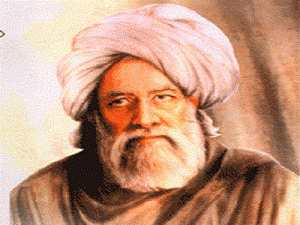
Bulleh Shah, Master of Paradox by Raj Ayyar
A great master of paradox, of both..and, as well as neither/nor logic, Bulleh Shah is one of the outstanding mystical voices in Indian Sufi Islam, inviting comparison with Rumi, Hafiz and Kabir.
I love the fact that his complex neither-nor logic includes atheism as an option–not typical in the Sufi or other mystical traditions.
‘The day before, Bulleh Shah was an atheist.
He worshipped idols yesterday.
Bulleh loves the Muslim and salutes the Hindu.
I know not who I am.
I am neither a believer going to the mosque,
nor a non-believer.
I am neither among sinners, nor among saints.
I belong neither to water, fire, nor air.
I know not who I am.
Nor am I born of Adam and Eve,
I have given myself no name.
–Bulleh Shah: The Mystic Muse tr. K.S. Duggal
Bulleh Shah belongs to that great company of world mystics (circa 17th cent.), who deconstruct and mock all culturally programmed labels, all modes of separatist naming, that bestow a clear-cut religious or non-religious identity. He lived in the state of Punjab, centuries before the Partition, often near present day Lahore in Pakistan. He had a great respect for Sikhism, and embraced Sikhism, Islam and Hinduism, while at the same time refusing to be identified as any of that, or even as a ‘theist’. As he frankly claims in the quoted passage, he has his atheistic as well as his theistic days!