A look under Indus Basin in Pakistan

India has been providing unhindered access to Pakistan of 79% of Indus Basin waters as per the Indus water treaty

Over 400 million acre feet of fresh water exists in Pakistan’s riverine aquifers and may help manage its water scarcity if ever India pulls the plug.

According to Dawn, the groundwater system underneath Pakistan’s flowing rivers in the Indus plains has at least 400 million acre feet (MAF) of pristine water. This storage is so large that it is equivalent to more than three years of the mean annual flow of the Indus (or 1,000 days of storage, after excluding polluted areas) So even if India blocks Indus water to Pakistan, it can still survive, for three years.

Read Original Article


Fragile Childhood | Vanisha Uppal

One day during a conversation with my 12 year old daughter Vrinda, she told me that “Aannya, my friend, is just an average student of my class”

“And how can you say that?” I asked

Vrinda: “She scored 80% marks in the exams, and most of my classmate gets more than 90% marks”

I made fun of the situation and said “In that case you must be considered a below average student as you scored 75%”

We ended up laughing.

All the concept of right and wrong has mostly been taught by our parents and teachers, then why the children are held responsible for their attitude?

While I was writing this article, coincidentally, Neha a friend, called up and said, “I am so pissed off with this system of education. My son’s teacher gave him less marks on writing the answers in his own words. The school just gives students marks for reproducing answers through rote learning. How to make them understand that bookish language is not as important as the understanding of the subject?”

I asked “But why are you bothered about him getting less marks?”

When Vrinda, my daughter was in the primary class, one day she came to me and said “mom, how to learn the text book answers? It is difficult to memorize word by word from the notes”

I said “It is very simple, just read it once carefully and write what you understood in your own words, like a story”

She did exactly that and she found it easy. After her school test she told me that her teacher did not give full marks on her answers.

I said, “But I am very happy that you understood the concept”

We hugged each other and celebrated her performance. She did the same for another few academic years. She was more relaxed during her exams and gradually not only did she scored better marks, but also became more creative and independent.

We cannot change the world by telling others not to pressurize our child; but it is in our hand not to pressurize them. As a parent the balance is missing in us; either we over pamper our child or send them to the boarding school to disciple them.

One day I thought it will be nice to give surprise to my friend by making a sudden visit. I rang the doorbell of her house. Her son opened the door. He is 12 years old and told me that mom was not at home. I asked him “how are your studies and school?”

He said “mom has sent me to the boarding school. And now I am on vacation”

I said, “Oh, how do you find the new place?”

He said, “Aunty,first year was very difficult but now I have adjusted”

The way he said that, something touched me. When we are at the job, we work as per norms. We make adjustments according to others, but what comforts us at the back of our mind is, when will the day will be over and we can go back home and relax in the way we want.

The net situation would be like this; we send kids daily to the school for some hours. At home they are free to sit, sleep, play and talk; to demand their favorite food and attention; to get a hug whenever they want. The power of hug is often underestimated. The simplest thing can change a child to a happy child. A hug means acceptance, it is a need like air, water and food.

No one can handle and love our child better than us. There always will be some challenges dealing with our children, their tantrums, anger, frustration and other negative emotions. Nectar cannot be attained without holding the poison in throat.

I still remember, when I used to annoy papa or misbehave. He never shouted or made face or said any harsh words to us. What I saw in his eyes was rather amazing; infinite Ocean of love and patience. It was so very beautiful; how his anger used to transform into love every time. No theory, no psychology; only pure love that he had inside him. Surprisingly my anger vanished by seeing those loving eyes. Sometimes I intentionally pushed him to be angry at me to see those eyes again. I was deeply in love with those eyes and wanted the same for myself. He is no more, but, whenever I close my eyes, I can feel his love.

I love you so much papa.


Don’t Mess With Modi in Texas / New York Times

An Oped by a New York Times columnist, Roger Cohen, suggests a change of outlook and an attempt to balance the anti India rehetoric that has been bane of this News Paper so far, on the Kashmir issue.

Talking about Imran Khan, Cohen is very scathing, he says in his Op. Ed, “Suggesting Modi has sympathy for the Third Reich, comparing him to a Fascist leader and stating that he may commit “genocide,” is to protest too much. Raising the possibility of nuclear war is reckless. All this suggests his bluff has been called.”

“If Pakistan is so concerned about Nazi Germany”, Cohen asks, “it might begin by recognizing the State of Israel. Whether Pakistan really wants a solution in Kashmir, the region that justifies its bloated military budget, and whether it can ever transparently demonstrate that its intelligence services have stopped finding uses for radical Islamism in its various violent forms, remain open questions”

Expressing concern about Pakistan’s Western neighbor, He postulates, “They are important questions for the United States, as it contemplates a military withdrawal from Afghanistan. A quandary for Trump now will be how to secure Pakistani support, rather than suffer an incensed Pakistan’s sabotage, if he moves forward with his promise to bring American troops home.”

“Modi will not turn back from his elimination of Kashmir’s autonomy. That phase of Indian history is over. Trump and Modi are both forceful, media-savvy politicians. But they are not alike. Modi, a self-made man from a poor family, is measured, ascetic, not driven by impulse. Trump was born on third base. He’s erratic, guided by the devouring needs of his ego. I’d bet on Modi to transform India, all of it, including the newly integrated Kashmir region.”

Read full NYT article


Financial Trouble at an Iconic American Hydropower Giant

Can Hydropower compete financially with Solar energy. This podcast says it all

To listen click here


Watch “Bury Kitchen Scraps Directly in Garden and This Happens” on YouTube

How to create live compost in your Kitchen Garden. Please watch this video and take note of the Dos and Don’ts to get perfect nutrients for your soil.


A wing and a prayer for ‘Howdy Modi!’ – The Hindu

Photo: Reuters

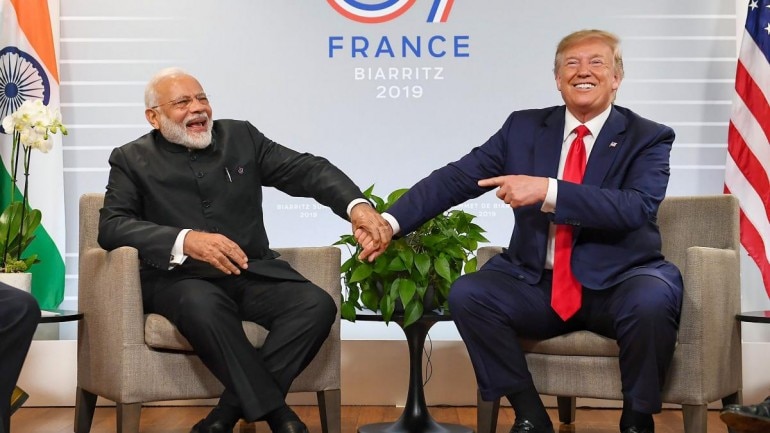
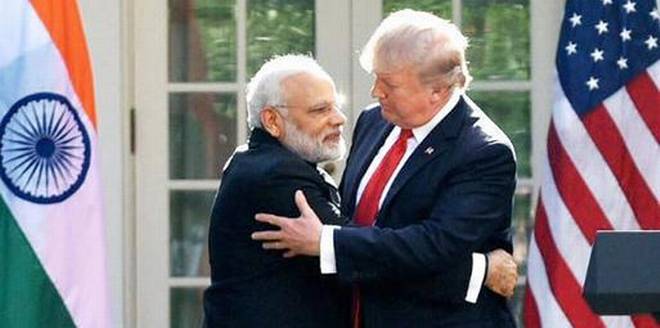
The die has been cast for a massive rally by Indian Americans in Houston on Sunday, September 22, 2019 to honour Prime Minister Narendra Modi. Rallies for Indian Americans have become larger each time Mr. Modi visits the U.S. ever since his appearance in the Madison Square Garden. No other Prime Minister of India has drawn as many people to such rallies as he has done in the United States.

An added attraction of the event is that President Donald Trump will become the first President of the United States to participate in a rally to honour a visiting foreign leader. He is likely to be accompanied by several Senators, Congressmen and others from both the parties. Several announcements, including some understanding on trade and other matters are expected. By all accounts, it is going to be game changing event in India-U.S. relations.

Read Source


Use of groundwater for construction banned in city | Deccan Herald

Even though digging new borewells was disallowed in many cities, builders were allowed to use borewells for construction. This led to misuse of ground water after cogroundwatermpletion of the structure.

To improve the groundwater levels in the city, the Karnataka Groundwater Authority (KGA)-appointed committee has decided to refuse permission to use borewell water for building construction.

“Builders were giving ‘construction as the reason while seeking permission to dig borewells. In some places, the groundwater is as good as drinking water. We can’t let freshwater be wasted on construction. So, from now on, builders should only use treated water,” a senior BWSSB official told DH.

Read More


RIP Articles 370 & 35 a / Krishan Tyagi

Krishan Tyagi a former BBC correspondent elaborates on the issue
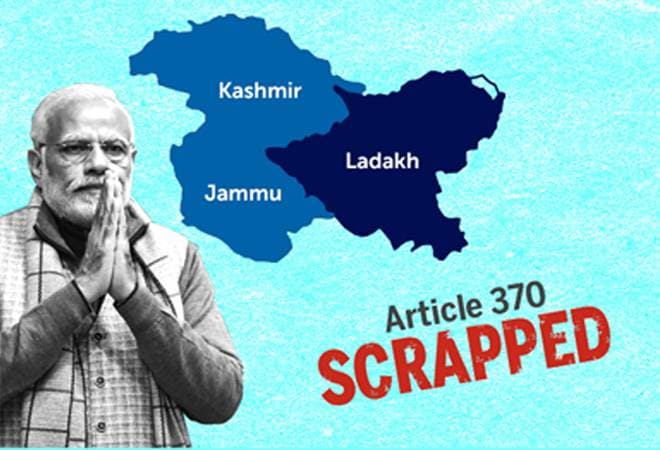
The Article 370 in the Constitution of India, which came into effect in 1949, a special status to the state of Jammu & Kashmir (J&K) under which the state had a separate constitution (adopted in November 1956) and a separate flag. It allowed the state a jurisdiction to make its own laws in all matters except finance, defence, foreign affairs and communications. That meant the residents of the state lived under different laws from the rest of the country in matters such as property ownership, employment and citizenship. The Article denied property rights in the region to the Indian citizens from outside J&K.

At the same time, the Constitution of Jammu & Kashmir 1956 in its Preamble recognised the accession of the state to India on 26th October, 1947 through the Instrument of Accession signed by former king of Jammu & Kashmir Hari Singh, committed to the concept of single Indian citizenship, and defined the State as an integral part of the Union of India.

Some aspects of Article 370 got diluted over the decades in the fields of judicial system and public administration.

The article was drafted in Part XXI of the Indian Constitution: Temporary, Transitional and Special Provisions.

Article 35A

Under the Article 370 of the Indian constitution, in 1954 another amendment in the Constitution was made, called Article 35A, through an Executive Order (called Presidential order), meaning without the approval of Indian Parliament. Article 35A permitted the legislative assembly of Jammu & Kashmir to define permanent residents of the region. The Article forbid non-J&K citizens of India from permanently settling, buying immoveable property, holding local government jobs, or winning education scholarships in the state.

Article 35A, referred to as the Permanent Residents Law, also barred female residents of Jammu & Kashmir from property rights in the event that they married a person from outside the state. The provision also extended to such women’s children.

Evidently, the Article clearly discriminated against women. To quote an example, former chief minister of J&K Farooq Abdullah marrying a lady of British origin loses no property rights, but his daughter Sara lost all her property rights in J&K because of marrying someone who is not from J&K.

Apart from the Article 35A discriminating against women, these Articles also created an anomalies in the Indian democracy. While Jammu & Kashmir’s “Permanent Residents” could buy property, have government jobs and settle permanently in any other part of India, nonJ&K citizens of India were not allowed to do the same in Jammu & Kashmir. Another problem emanating from Article 35A, known in Britain as ‘the West Lothian Question’ was that the MPs and Union ministers coming from J&K could vote on legislation for the rest of India on subjects in the Union and Concurrent lists of the Constitution of India, the Indian parliament, ie, MPs from other states, had no right to legislate on those subjects for J&K.

As mentioned, Article 35A did not have any parliamentary sanction and was supposed to be temporary too.

The Government of India revoked Article 35A through a Presidential Order and abrogated Article 370 by passing an Act through the Indian Parliament in August 2019.

Written by Krishan Tyagi, Editor, Mirror to Mirror (mirrortomirror.org)



These reef-building corals may be at risk of extinction • Earth.com

Reef-building corals in the Red Sea may be at risk of extinction due to the way that spawning events have changed over time, according to a new study.

Broadcast spawning involves the release of both eggs and sperm into open water. But in recent years, spawning events of reef-building corals in the Red Sea are out of sync due to climate change and human activities, which has reduced fertilization success.

See Source


Water found for first time on potentially habitable planet, say astronomers – The Hindu

K2-18b is now the only planet orbiting a star outside the Solar System known to have both water and temperatures that could be potentially habitable

Astronomers have for the first time discovered water in the atmosphere of an exoplanet with Earth-like temperatures that could support life as we know it.

K2-18b, which is eight times the mass of Earth, is now the only planet orbiting a star outside the Solar System, or ‘exoplanet’, known to have both water and temperatures that could be potentially habitable, according to the study published in the journal Nature Astronomy.

The planet orbits the cool dwarf star K2-18, which is about 110 light years from Earth in the Leo constellation, researchers said.

Read Source